Both are called "Rife machines," but they deliver signals in fundamentally different ways. This guide compares the electronics, signal path, carrier use, hardware, setup and practical trade-offs — without assuming that one technology is automatically more effective. For the broad picture, start with our main Complete Guide to Rife Machines →
A contact Rife machine sends an electrical signal through conductive accessories that touch the user. A plasma Rife machine uses high-frequency electronics to excite gas inside a plasma tube, producing electromagnetic output around the tube. The two systems can use similar frequency concepts, but their hardware, coupling and practical use are different.
Why the contact vs plasma distinction matters
Search for a Rife machine and you quickly encounter products that look nothing alike. One may be a pocket-sized electronic device connected to adhesive pads. Another may fill a desktop with generators, amplifiers, cables and a glowing plasma tube.
Both can be discussed within the broad Rife tradition, but treating them as technically interchangeable hides the most important part of the story: how the signal reaches the user.
Frequency numbers alone do not define a system. To compare devices meaningfully, you need to consider the complete chain:
The signal chain matters
Frequency
How fast the signal repeats.
Waveform
Sine, square, pulse or more complex signal.
Modulation
How one signal changes another.
Output stage
How the electronics drive the load or plasma tube.
Delivery
Direct conductive contact or electromagnetic field.
For a deeper explanation of frequency, amplitude, carriers, sweeps and signal shaping, read How Does a Rife Machine Work? Frequencies, Signals & Delivery Explained →
What is a contact Rife machine?
A contact Rife machine is a frequency device that delivers its electrical output through conductive accessories touching the body.
Common accessories include:
Adhesive electrodes
Conductive pads can be placed at selected locations and connected by cable to the output stage.
Conductive wristbands
Reusable conductive straps can provide a larger contact surface than small adhesive pads.
Socks or handholds
Conductive socks, foot plates and cylindrical hand electrodes are other common implementations.
The user and the electrodes form part of the electrical circuit. That means the actual output depends not only on what the generator is producing internally, but also on the electrical load connected to it.
How does the electrical path work in a contact system?
A simplified contact system looks like this:
frequency generator → waveform / modulation → output electronics → cable → electrode → conductive path → second electrode → return path
The body is not a uniform resistor. Electrical characteristics vary with tissue type, hydration, electrode size, pressure, skin condition, frequency and placement.
That is why a signal measured directly at the generator output with a laboratory load may not look exactly the same as the signal that develops across a real person's skin.
For technically minded buyers, this raises useful questions:
- What voltage is specified?
- What current can the output stage deliver?
- At what load was the specification measured?
- What waveform is used?
- Does the device regulate voltage, current or neither?
- What accessories were the electronics designed to drive?
Those questions tell you more than a long list of frequency numbers alone.
What is a plasma Rife machine?
A plasma Rife machine uses a gas-filled tube as part of the final output system. High-frequency electrical energy excites the gas inside the tube, creating visible plasma.
The tube then functions as a radiating element within the system.
A simplified architecture is:
frequency generator → modulation / carrier → RF amplification → matching / coupling electronics → plasma tube → electromagnetic field
This generally requires more hardware than a small contact generator. Depending on the system, that can include:
- one or more signal generators;
- radiofrequency carrier generation;
- an amplifier;
- matching or coupling components;
- a plasma tube;
- power supplies and cooling;
- computer software or a dedicated controller.
The exact design varies widely, so "plasma Rife machine" is itself a category rather than one standardized device architecture.
Contact vs plasma Rife machine: key differences
| Feature | Contact Rife machine | Plasma Rife machine |
|---|---|---|
| Primary delivery | Electrical signal through conductive accessories | Electromagnetic output from a plasma tube |
| Direct body contact | Usually required | Not required as the primary delivery method |
| Typical hardware | Generator + output stage + electrodes | Generator + RF/amplifier electronics + plasma tube |
| Setup complexity | Low to moderate | Moderate to high |
| Portability | Often high | Usually lower |
| Electrode placement | Part of the setup | Not central to plasma operation |
| Carrier frequencies | Possible, depending on design | Commonly important to the RF/plasma architecture |
| Manual programming | Ranges from preset to highly programmable | Often programmable, depending on system |
| Physical sensation | Can include tingling or stimulation depending on output | May produce little direct electrical sensation because no conductive contact is required |
| Space required | Can be pocket-sized | Typically desktop or larger |
| Learning curve | Low for preset devices; higher for advanced generators | Usually higher because of extra hardware and settings |
These differences describe the engineering and user experience. They do not establish that one category has superior medical outcomes.
Do contact and plasma systems use different frequencies?
Not necessarily in the simple sense of "one uses low frequencies and the other uses high frequencies." Both categories can involve multiple frequency layers.
A system might include:
- a lower-frequency program or sweep;
- a high-frequency carrier;
- amplitude or frequency modulation;
- sidebands around the carrier;
- pulsing or gating at a slower rhythm.
Plasma systems often rely heavily on radiofrequency electronics because energy must be coupled into and through the gas-filled tube. Contact systems can be simpler, but some also use a high-frequency carrier and modulation.
The presence of a carrier frequency does not automatically make a device a plasma system. Carrier and modulation describe the signal architecture; plasma describes the delivery hardware.
For the signal-processing background, see our Hoyland Sideband Method Explained → and Rife Frequencies Explained →
Electrical current vs electromagnetic field: what is the real difference?
The user is part of the circuit
Conductive accessories establish an electrical connection. Current distribution depends on electrode placement, impedance, frequency and the output electronics.
The tube becomes the radiating element
A plasma tube driven by RF electronics creates an electromagnetic field around the tube. Coupling depends on field strength, distance, geometry and frequency.
These are different ways of transferring electrical or electromagnetic energy.
Neither should be described too simplistically.
For example, it is too simplistic to say a contact device "only affects the skin between the pads." Likewise, it is too simplistic to claim that a plasma tube "broadcasts equally into every cell of the body."
Real electrical and electromagnetic exposure depends on geometry and physical parameters.
Does plasma provide broader "coverage" than contact?
It can be reasonable to say that a plasma tube creates a field in the space around it, while a contact system establishes conductive pathways between electrodes.
But the word coverage can become misleading if it is turned into a claim of uniform biological exposure.
Electromagnetic field strength changes with distance and system design. A person's position relative to the tube matters. Contact current distribution also varies with electrode position and tissue conductivity.
Instead of asking which system "covers the whole body," ask: What physical field or electrical path does the system create, under what conditions, and how has that output actually been measured?
Which type can you feel more strongly?
Contact systems are more likely to create a noticeable electrical sensation because the output is delivered through conductive accessories.
Depending on the signal and output level, users may notice:
- tingling;
- mild pulsing;
- muscle twitching;
- warmth at an electrode;
- little or no sensation.
Plasma systems can operate without the same direct contact sensation.
But sensation should not be confused with effectiveness.
A strong tingling sensation proves that nerves or muscles are responding to an electrical stimulus. It does not by itself demonstrate that a particular Rife frequency is producing a specific therapeutic effect.
Which system is more complex to set up?
In general, plasma systems require more hardware.
A compact contact device may be as simple as:
device → cable → electrodes → start
An advanced plasma installation may involve:
software → generator → RF carrier → amplifier → plasma tube → tuning / settings
That extra complexity is not inherently negative. Some technically oriented users specifically want:
- fine control over waveforms;
- multiple generators;
- custom frequency programs;
- carrier selection;
- plasma output;
- advanced experimentation.
For other users, the same features create unnecessary friction.
If your main concern is practical home operation, also read Rife Machine for Home Use: What to Look For Before You Buy →
Contact vs plasma for portability and everyday use
Small hardware
Contact electronics can be highly compact because no plasma tube or large RF amplification stage is required.
More components
The plasma tube and associated electronics usually make the setup less portable.
Experiment or routine?
The best architecture depends partly on whether you enjoy operating equipment or want a routine you can start in seconds.
Is plasma always more programmable?
No.
Programmability and delivery method are separate design choices.
You can find:
- simple preset contact devices;
- highly programmable contact generators;
- programmable plasma systems;
- systems that combine multiple delivery methods.
This matters because users sometimes compare a simple contact device with a premium plasma installation and conclude that the difference is entirely caused by "contact vs plasma."
In reality, they may also be comparing:
- preset vs programmable;
- single-function vs modular;
- compact vs laboratory-style hardware;
- low component count vs multiple amplifiers and generators.
Why are plasma Rife machines often more expensive?
Plasma hardware can add cost because the system may require an RF amplifier, specialized tube, high-voltage or high-frequency electronics, power supplies, additional shielding, cooling and more extensive control electronics.
That does not mean every plasma system is expensive, nor that every contact device is inexpensive. Advanced programmable contact generators can also cost considerably more than a compact preset device.
For a dedicated analysis of what different price levels actually buy, see Rife Machine Price: What Should You Pay? →
Is a plasma Rife machine better than a contact Rife machine?
There is no sound technical basis for a blanket answer.
"Better" depends on what you value.
You value simplicity
- you want compact hardware;
- you are comfortable using conductive accessories;
- you want a quick setup;
- portability matters;
- you do not need a plasma tube.
You value technical experimentation
- contact-free output is important to you;
- you specifically want a plasma architecture;
- you accept more equipment;
- you enjoy programming and tuning;
- you understand the additional hardware.
What should not determine the choice is an unsupported claim that a plasma tube has automatically been proven to treat disease more effectively than a contact system.
Does one delivery method have stronger clinical evidence?
Not in the way Rife marketing often implies.
The electronics behind both categories can be measured. Electrical current, carrier frequencies, modulation, RF fields and plasma discharge are real physical phenomena.
That does not establish the historical claim that a particular Rife setting selectively destroys a disease-causing organism inside the human body.
There is also no high-quality clinical basis for concluding that simply choosing plasma rather than contact delivery turns Rife therapy into an established medical treatment.
Engineering question: What signal does the device produce and how is it delivered?
Medical question: Has that specific exposure been shown in reliable clinical trials to diagnose, prevent or treat a disease?
This distinction is central to the Phipower Complete Rife Machine Guide →
Five common myths about contact and plasma Rife machines
"Plasma is always stronger, so it must be better."
Output power and clinical effectiveness are different concepts. A technically more powerful or complex field does not automatically mean a better health outcome.
"Contact devices only work directly under the electrode."
The electrical path is more complex than that. Current distribution depends on the complete electrode configuration and electrical properties of the body.
"Plasma frequencies automatically reach every cell equally."
Electromagnetic field strength varies with distance, geometry, frequency and system design. Uniform exposure should not be assumed.
"A higher carrier frequency means a better Rife machine."
Carrier frequency is one technical parameter. Waveform, modulation, amplitude, output stage and delivery method also matter.
"If I can feel the current, the frequency must be working therapeutically."
Sensation confirms electrical stimulation, not a disease-specific therapeutic effect.
Where does the Rephiro Bioharmonizer fit?
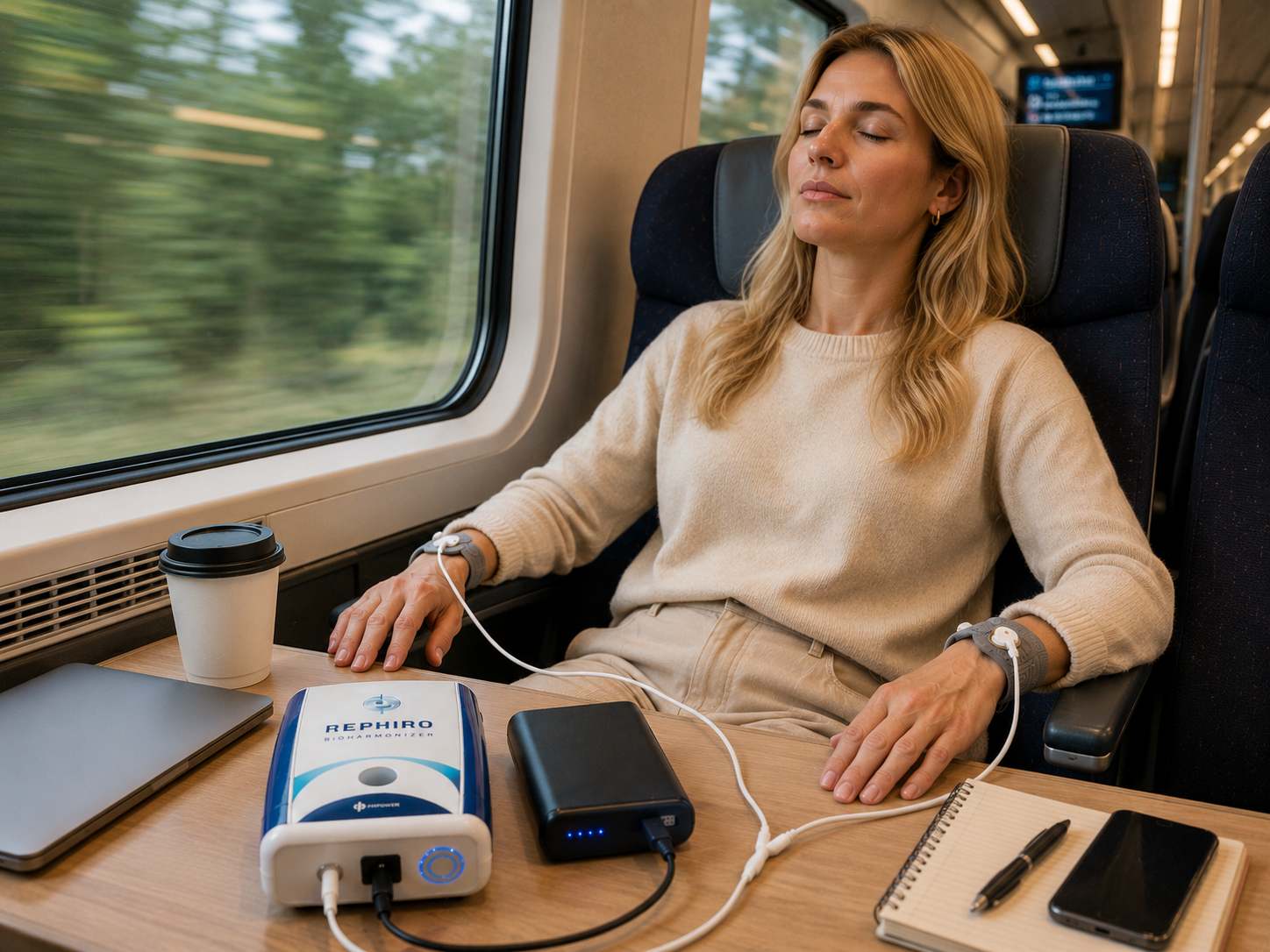
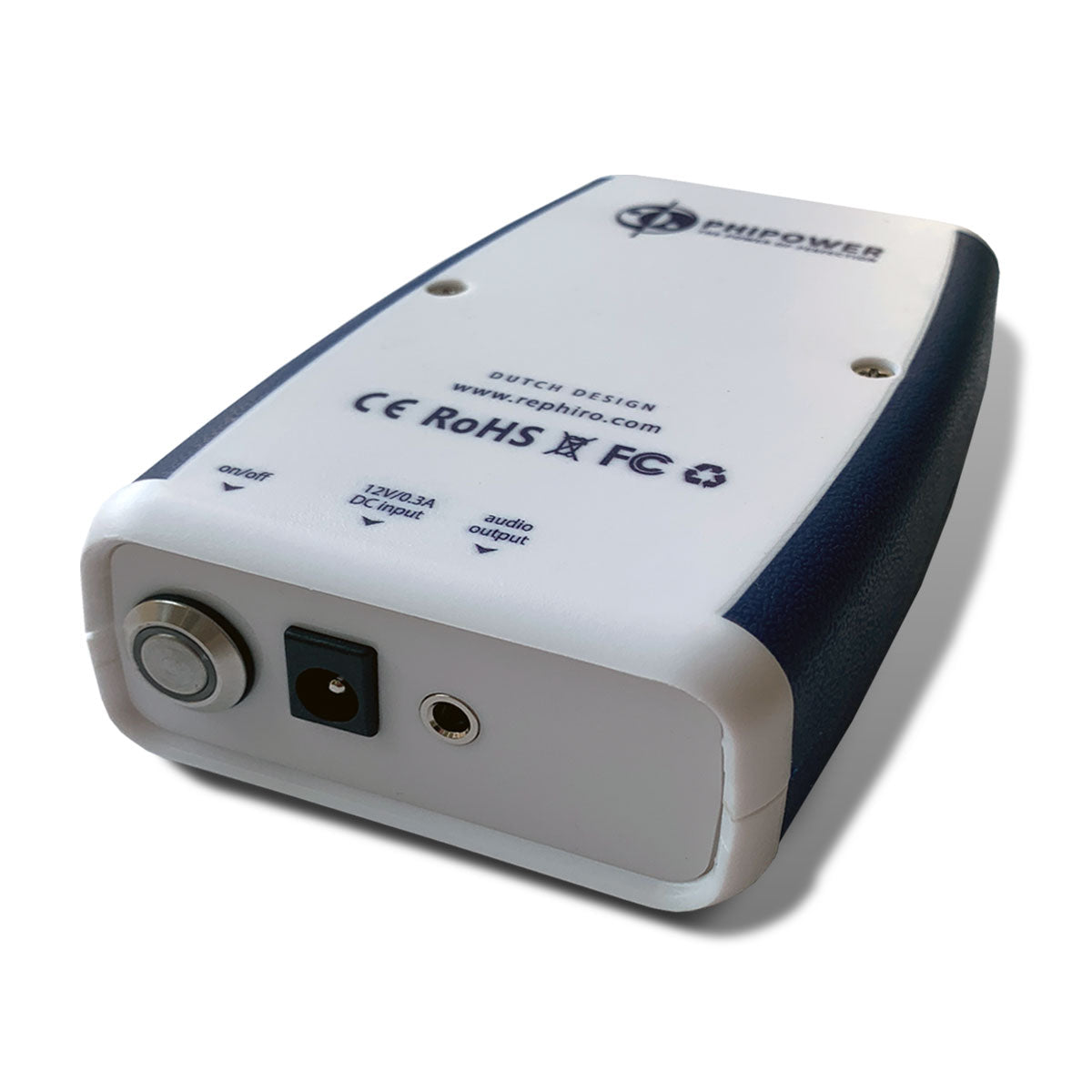
The Rephiro Bioharmonizer is a compact contact-based frequency device.
It does not use a plasma tube.
Its preset architecture combines:
~3.1 MHz
A higher-frequency carrier forms part of the electronic signal architecture.
~0.1–150 kHz
The modulation component moves automatically through a broad frequency range.
~14 Hz
A slower timing layer adds a repeating pulse or gating rhythm to the output.
Delivery is through conductive accessories such as pads, wristbands and conductive silver-fibre socks.
The design goal is different from that of a large programmable plasma installation.
Rephiro is designed for users who prefer:
An advanced plasma system may be the more appropriate choice if your specific interest is manually configurable plasma/RF experimentation.
How should you choose between contact and plasma?
Start with your actual use case rather than the marketing language.
- Decide how much equipment you want. A contact device can be very compact; plasma generally means more hardware.
- Decide whether conductive accessories bother you. Contact systems need them; plasma systems do not depend on them as the main output method.
- Decide how much manual control you need. This is separate from contact vs plasma, but it strongly affects the experience.
- Look for real specifications. Frequency ranges alone are not enough.
- Separate technical features from health claims. More complicated hardware is not clinical evidence.
- Consider support and safety instructions. Especially with any device that produces electrical or RF output.
If you want a small, direct and repeatable home routine, contact delivery is often the simpler architecture. If your priority is plasma hardware, RF experimentation and contact-free operation, then a plasma system is the category to investigate.
Frequently asked questions
The bottom line
Contact and plasma Rife machines belong to the same broad frequency-technology conversation, but they are not the same type of hardware.
A contact system uses a conductive electrical path.
A plasma system uses RF electronics and a gas-filled tube to create electromagnetic output.
That difference affects the equipment, setup, portability, physical coupling and user experience.
It does not by itself establish that one is medically more effective.
For the complete context — Rife history, frequencies, machine types, carriers, evidence, safety, prices and buying considerations — read:
Rife Machine: The Complete Guide to Rife Frequencies, Technology & Devices →
Phipower frequency products are wellness and lifestyle products, not medical devices. They are not intended to diagnose, prevent, treat or cure disease and should not be used as a substitute for appropriate medical care. Electrical and electromagnetic devices should be used according to their manufacturer's instructions and relevant safety guidance.