What does the actual evidence say — not what a program list claims?
Lyme disease is a bacterial infection with defined diagnostic criteria and antibiotic-based standard treatment. Rife devices are marketed for Lyme in some frequency lists and forums. Those are two very different evidence categories, and this guide keeps them separate.
Antibiotics remain the established, evidence-based treatment for Lyme disease. Rife machines are frequently mentioned in Lyme forums and frequency-list databases, and a small number of laboratory studies have examined electromagnetic exposure on Borrelia cultures in vitro. But no controlled clinical trial has demonstrated that Rife devices cure, treat or reliably improve Lyme disease outcomes in humans. Anyone with suspected Lyme disease should be evaluated and treated by a qualified physician.
What is Lyme disease?
Lyme disease is a bacterial infection caused by Borrelia burgdorferi (and related species), transmitted primarily through the bite of infected blacklegged ticks. Early symptoms can include a characteristic expanding rash, fever, fatigue, headache and joint or muscle pain. Untreated, the infection can spread and cause more serious neurological, cardiac or joint complications.
Diagnosis is typically clinical, supported by laboratory testing, and treatment is with antibiotics.
The standard of care for Lyme disease
Established medical guidelines recommend antibiotic therapy — commonly doxycycline, amoxicillin or cefuroxime for early localized disease, with longer or intravenous courses for more advanced presentations. This standard of care is supported by clinical trials, decades of physician experience and formal medical society guidelines.
Anyone who suspects they have Lyme disease should see a physician for diagnosis and treatment.
Why is Rife therapy discussed for Lyme disease at all?
Post-treatment complaints
Some patients report ongoing symptoms after standard antibiotic courses, driving interest in alternatives.
Frequency-list forums
Lyme-focused forums and frequency databases have long included Borrelia-labelled programs.
Rife's bacterial focus
Royal Rife's original work focused on identifying and targeting microorganisms, which Lyme advocates later connected to Borrelia.
How the Rife-Lyme connection developed
Royal Raymond Rife's original research in the 1930s focused on identifying microorganisms and their supposed "mortal oscillatory rate." Decades later, as Lyme disease became more widely recognized and diagnosed, some practitioners and frequency-list compilers added Borrelia-labelled programs to Rife-style databases — without new controlled clinical research specific to Lyme.
Read Royal Raymond Rife: History, Claims & Controversy for the full background.
Borrelia frequencies in modern frequency lists
Modern software such as Spooky2 and GB4000 can contain Borrelia- or Lyme-labelled programs among tens of thousands of entries. As explained in our companion guide, a program name in a database is not proof of provenance or effect.
Read Rife Frequency Lists, Software & Databases to understand how these lists are built and why they should be evaluated critically.
The 2002 FTC case involving a Lyme-marketed device
In 2002, the U.S. Federal Trade Commission took action against marketers who claimed a device could treat conditions including Lyme disease without adequate scientific substantiation. This case is frequently cited as an example of regulators scrutinizing unsubstantiated frequency-device health claims.
Read Is Rife Therapy Legal? for the broader regulatory picture.
What laboratory research actually exists?
A small number of published laboratory studies have examined electromagnetic or bioresonance-style exposure on Borrelia burgdorferi cultures in vitro. These are early-stage, small-scale studies — not clinical trials in humans, and not proof that any specific consumer Rife device produces the same effect.
The 2003 EHF study
A 2003 laboratory study investigated extremely high frequency (EHF) electromagnetic exposure on Borrelia-related samples. Like other early-stage lab work in this area, it examined isolated biological material under controlled conditions rather than treating Lyme disease in living patients.
Findings in a lab dish do not automatically translate into safe or effective treatment for a person.
The 2024 VFEM study
A more recent 2024 study explored variable-frequency electromagnetic (VFEM) exposure in relation to Borrelia. As with earlier work, this remains preliminary laboratory-stage research rather than a clinical trial establishing patient outcomes.
| Study | Type | Subject | Clinical trial? |
|---|---|---|---|
| 2003 EHF study | Laboratory / in vitro | Borrelia-related samples | No |
| 2024 VFEM study | Laboratory / in vitro | Borrelia exposure | No |
What is Post-Treatment Lyme Disease Syndrome (PTLDS)?
Post-Treatment Lyme Disease Syndrome (PTLDS) refers to persistent symptoms — such as fatigue, joint pain or cognitive complaints — reported by some patients after completing recommended antibiotic treatment for Lyme disease. Its underlying cause is still being researched, and it is a recognized area of ongoing medical investigation.
"Chronic Lyme disease": a contested term
"Chronic Lyme disease" is a term used by some patients and practitioners to describe long-term symptoms attributed to ongoing infection. It is not a formally recognized diagnostic category in the same way PTLDS is discussed in mainstream medical literature, and its use is debated within the medical community.
Do more antibiotics help persistent symptoms?
Mixed results
Controlled trials of extended antibiotic courses for persistent symptoms have generally not shown consistent, lasting benefit over placebo.
Not risk-free
Extended or repeated antibiotic use carries its own risks, which is why guidelines are cautious about open-ended courses.
Does Rife therapy help PTLDS or persistent symptoms?
There is no controlled clinical trial evidence that Rife devices reduce PTLDS symptoms or clear persistent infection. Reports of improvement are anecdotal and cannot rule out placebo effect, natural symptom fluctuation, or the effect of other treatments used at the same time.
The claimed "kill mechanism" — and why it's unproven in humans
Claimed steps (unverified for consumer devices)
This chain of claims has not been demonstrated in controlled human studies for consumer Rife devices treating Lyme disease.
Why in-vitro results don't confirm real-world treatment
A laboratory culture is a simplified, controlled environment: a defined concentration of organisms in a dish, exposed under precise, monitored conditions. A human body is a complex system with tissue, blood flow, immune response and an organism that may be dispersed throughout multiple organs. Effects seen in vitro do not automatically transfer to a living, infected person.
Lyme co-infections complicate the picture further
Tick bites can transmit multiple pathogens at once, including Babesia, Anaplasma, Ehrlichia and Bartonella species, alongside Borrelia. Even if a frequency were shown to affect one organism, that would not address co-infections that require separate diagnosis and treatment.
The "Herxheimer reaction" claim
Some Rife-for-Lyme advocates attribute worsening symptoms after a session to a "Herxheimer reaction" — a die-off response historically described with certain antibiotic treatments. Attributing any symptom change after a Rife session to this specific mechanism is not clinically established for frequency devices, and worsening symptoms should always be discussed with a physician rather than assumed to be a positive sign.
Should Rife therapy replace antibiotics for Lyme disease?
There is no clinical trial evidence supporting Rife devices as a substitute for antibiotic treatment of Lyme disease. Delaying or forgoing established treatment carries real medical risk.
Could a frequency device be used as a complementary wellness tool?
Some people use general wellness frequency products alongside — not instead of — medical care, for relaxation or general wellbeing rather than as a disease treatment. Anyone considering this should first discuss it with their physician, and should not treat a wellness device as a substitute for diagnosis or antibiotic treatment.
Where Rephiro fits into this picture
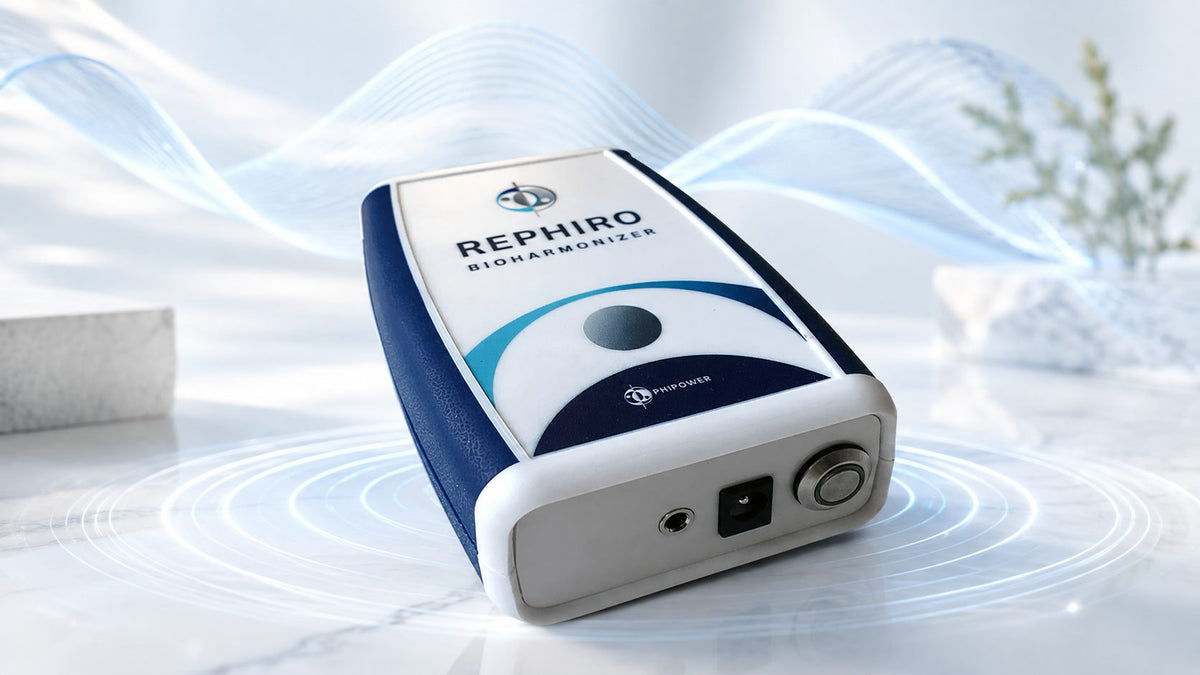
Rephiro is not marketed, designed or positioned as a Lyme disease treatment. It has no Borrelia-labelled program, no disease-frequency database and makes no claim to treat any infection.
~3.1 MHz
Preset high-frequency carrier.
0.1–150 kHz
Automatic lower-frequency sweep.
~14 Hz
Slower timing/gating layer.
None for Lyme
No disease-treatment claim of any kind.
8 questions to ask about any Rife-for-Lyme claim
| # | Question |
|---|---|
| 1 | Is this a controlled clinical trial or an anecdotal report? |
| 2 | Was it tested on humans, or only in a lab dish? |
| 3 | Is a placebo or comparison group included? |
| 4 | Was it published in a peer-reviewed journal? |
| 5 | Does the claim replace or complement medical treatment? |
| 6 | Is a specific device or generic "Rife therapy" being claimed? |
| 7 | Who is making the claim, and do they sell the device? |
| 8 | What do regulators (FDA, FTC) say about this specific claim? |
Common myths about Rife therapy and Lyme disease
No published controlled clinical trial demonstrates this.
In-vitro results don't automatically transfer to a living human body.
No consumer Rife device is FDA-cleared or approved to treat Lyme disease.
Worsening symptoms should be evaluated by a physician, not assumed to be a positive sign.
Antibiotics remain the established, evidence-based treatment for Lyme disease.
A program name in software is not clinical evidence.
Co-infections like Babesia and Bartonella require their own diagnosis and treatment.
Always check whether the person making the claim sells the device.
Official sources & further reading
Official U.S. public health information on Lyme disease diagnosis, symptoms and treatment.
Clinical practice guidelines for Lyme disease diagnosis and management.
Regulatory authority over medical device claims, including unproven disease-treatment devices.
Enforcement authority over unsubstantiated health-device advertising claims, including the 2002 case referenced above.
Research on Lyme disease, PTLDS and related infectious-disease topics.
Database for locating and reviewing the primary laboratory studies referenced in this article.
Companion Phipower guide on how Borrelia-labelled programs end up in frequency databases.
Frequently asked questions about Rife machines and Lyme disease
The bottom line
Rife devices are frequently discussed in Lyme disease communities, and a handful of early-stage laboratory studies have examined electromagnetic exposure on Borrelia cultures. But that is a long way from clinical evidence that any consumer Rife device treats Lyme disease in humans.
Antibiotics remain the evidence-based Lyme disease treatment.
Some in-vitro lab studies exist on Borrelia and electromagnetic exposure.
No clinical trial shows Rife devices cure or treat Lyme disease.
Rife Machine: The Complete Guide to Rife Frequencies, Technology & Devices →
This article is educational and does not constitute medical advice. Lyme disease is a serious bacterial infection that should be diagnosed and treated by a qualified physician. Phipower frequency products are wellness and lifestyle products, not medical devices, and are not intended to diagnose, prevent, treat or cure any disease, including Lyme disease.