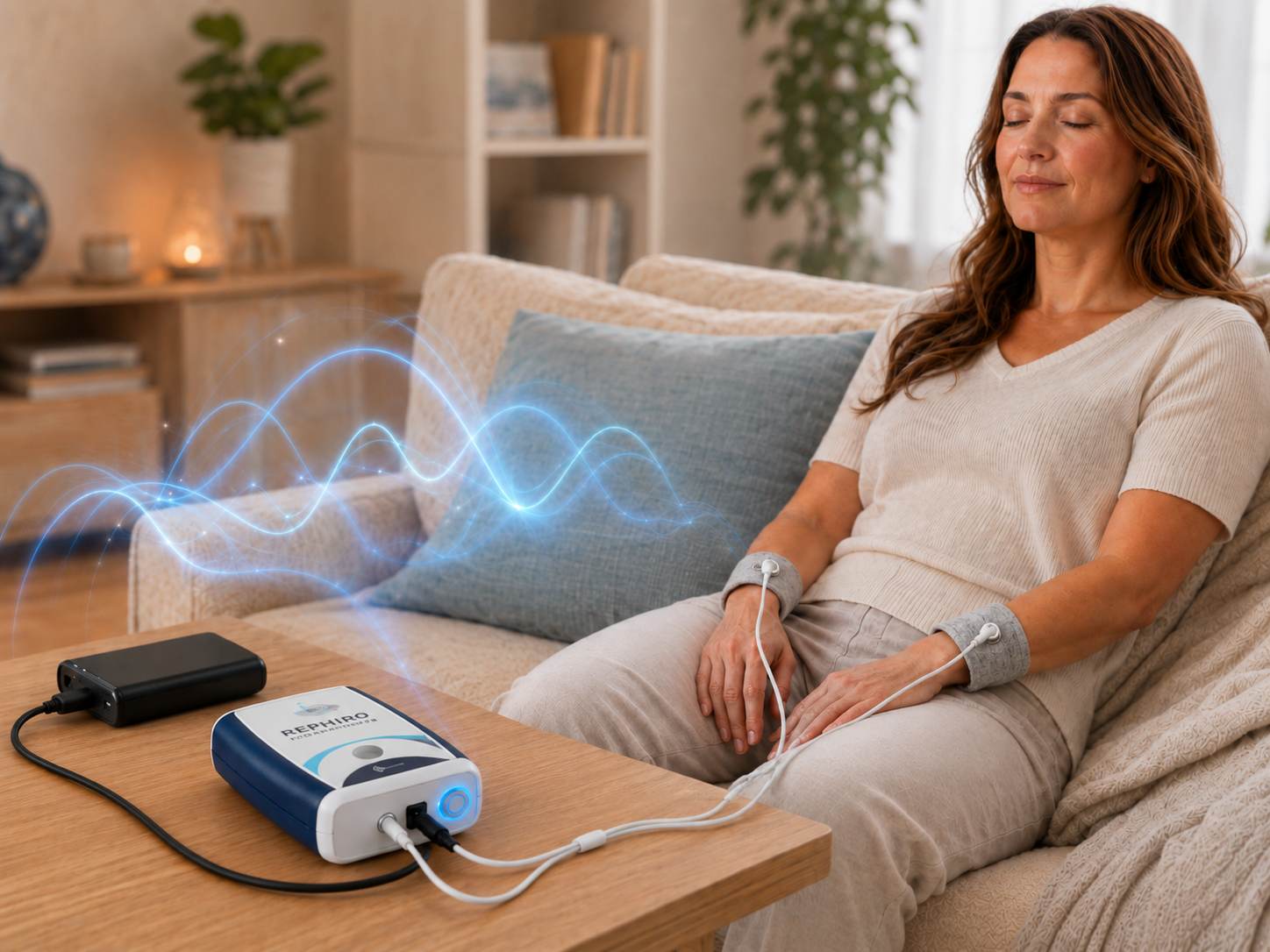
This article focuses specifically on choosing a Rife machine you can realistically use at home. For the broad history, technology, evidence and machine types, start with our main Complete Guide to Rife Machines →
The best Rife machine for home use is not necessarily the device with the most programs or the highest price. Start by deciding whether you want a simple preset contact device, a programmable contact generator or a more complex plasma system. Then compare signal specifications, setup, software, accessories, support and safety information.
Can a Rife machine be used at home?
Yes — many devices marketed as Rife machines or frequency generators are designed for personal or home use. But the phrase "Rife machine" covers very different types of hardware.
At one end are small contact devices with one button and a preset signal. At the other are systems that combine a programmable generator, computer software, external amplifiers, accessories and plasma tubes.
That means the practical question is not simply:
"Can I use a Rife machine at home?" Ask instead: "What kind of Rife system fits my home, technical experience and preferred routine?"
The three main home-use approaches
Preset contact device
The signal architecture is preconfigured. You connect conductive accessories, switch the device on and let the preset cycle run.
Best fit: users who value simplicity, portability and minimal setup.
Programmable contact generator
You can choose frequencies, programs, sweeps or waveforms. Some systems depend on a computer or dedicated software.
Best fit: technically curious users who want to experiment with settings.
Plasma system
A generator and associated electronics drive a plasma tube rather than relying only on direct contact accessories.
Best fit: users prepared for a larger setup, more components and a greater learning curve.
These categories are not a hierarchy of "weak to strong." They are different technical architectures. If you want to understand the signal path first, read How Does a Rife Machine Work? →
Home-use comparison: preset contact vs programmable contact vs plasma
| What matters at home | Preset contact | Programmable contact | Plasma system |
|---|---|---|---|
| Physical space | Very small | Small to medium | Usually larger |
| Setup time | Low | Medium | Medium to high |
| Computer/software | Usually not required | Sometimes required | Often part of the workflow |
| Manual frequency selection | Little or none | Usually extensive | Usually extensive |
| Delivery | Contact accessories | Contact accessories | Plasma; sometimes additional modes |
| Learning curve | Low | Medium to high | High |
| Best reason to choose | Ease of use | Control and experimentation | Specific interest in plasma architecture |
10 things to check before buying a Rife machine for home use
Contact pads, wristbands, hand cylinders, foot plates or plasma?
Does the seller clearly state frequency range, carrier, waveform, modulation or sweep?
Can you operate it directly, or must a computer remain connected?
Do you want control over frequencies — or do you prefer a preset cycle?
What is actually included, and what must be purchased separately?
Will it realistically stay ready to use, or become a box of cables?
Is there a clear manual, setup guide and explanation of controls?
Who helps you when a cable, accessory or setup does not work?
Check warranty length, returns, replacement parts and seller location.
Does the seller distinguish measurable electronics from unproven medical claims?
1. Start with the delivery method
The delivery method determines much of what using the device at home actually feels like.
Contact systems
Contact devices deliver an electrical signal through conductive accessories such as pads, wristbands, socks or hand-held electrodes. They can be compact and relatively easy to store.
Plasma systems
Plasma systems use additional electronics to excite a plasma tube. They generally require more hardware and more physical space.
Before buying, ask yourself whether you actually want the larger plasma setup or whether a compact contact system better matches your routine. The words contact and plasma describe different output architectures — not a simple quality ranking.
2. Look for real signal specifications
A product page that says only "uses healing frequencies" tells you very little about the electronics.
A transparent frequency device should explain at least some of the following where relevant:
The exact level of detail depends on the design, but technical specifications should be distinguishable from marketing language.
If you want a deeper explanation of what these terms mean, see Rife Frequencies Explained →
3. Decide how much software you actually want
Software is neither automatically an advantage nor a disadvantage.
A programmable system may let you:
- search large frequency databases;
- build custom frequency sets;
- adjust waveforms;
- change dwell times;
- create sweeps;
- store protocols;
- control multiple outputs.
That can be fascinating for an advanced user. But every feature also adds another decision. If your real goal is to sit down, connect the accessories, press one button and continue with your day, extensive software may become friction rather than value.
The best feature is the one you will actually use repeatedly. A technically impressive system that stays in a cupboard is not a good home-use system for you.
4. Preset or programmable: which is better at home?
You want a simple routine
You do not want to choose individual frequency lists, learn software or continually alter settings. Preset architecture makes the manufacturer — rather than the user — responsible for defining the operating sequence.
You want technical control
You enjoy experimenting with specific frequencies, waveforms and signal parameters and are prepared to learn how the system works. More control is useful only if you actually want to use it.
5. Check what is included in the box
A low advertised price can become less attractive when essential accessories are extra.
For a contact system, check whether the package includes:
- the generator/device;
- power supply or USB cable;
- output cable;
- electrode pads;
- conductive wristbands or hand electrodes;
- conductive socks if relevant;
- manual or quick-start guide;
- replacement accessory availability.
For a plasma system, also check whether the advertised price includes the plasma tube, amplifier, generator, cables and any required software or computer interface.
Our separate guide to Rife Machine Price → explains why total system cost can be more useful than headline price.
6. Think about where the device will live
This sounds trivial, but it matters enormously for home use.
A system that needs to be assembled every time creates a barrier to regular use. Ask:
Where will it sit?
Desk, bedside table, wellness room, cupboard or dedicated setup?
How much setup?
One lead and a pair of accessories — or multiple power supplies, amplifiers and interfaces?
How fast can you start?
If you have ten minutes available, can you be running in one minute or do you need to configure a system first?
7. Be cautious when the sales pitch becomes medical certainty
One of the strongest buying signals is actually how carefully the seller communicates uncertainty.
There is a clear difference between:
"The device generates an approximately 3.1 MHz carrier and a defined frequency sweep."
"This frequency cures a specific disease or selectively destroys a pathogen in the human body."
The first can be measured with appropriate test equipment. The second requires biological and clinical evidence.
Cancer Research UK states that there is no reliable evidence that Rife machines cure cancer and warns against replacing proven treatment with an unproven therapy. That does not make frequency generation unreal — it means the electronics and the medical claims must be evaluated separately.
8. Home use also means taking electrical safety seriously
Any contact device that delivers an electrical signal deserves proper instructions, intact cables and careful use.
Cancer Research UK notes reports of electrical shocks and skin rashes from some Rife devices. Separately, the U.S. FDA has reported shocks, burns, skin irritation and interference with implanted devices from some electrical stimulation products. Those FDA reports are not an evaluation of Rephiro or of all Rife systems, but they illustrate why clear electrical-safety guidance matters.
If you have a pacemaker, implanted defibrillator or another implanted electronic medical device, do not assume a contact frequency device is safe. Ask your clinician and implanted-device manufacturer and follow the frequency-device instructions before use.
Do not use damaged cables or accessories, do not improvise electrode placements that contradict the manual, and do not treat discomfort or a strong sensation as proof that "more is better."
9. Do you actually want to use frequency lists?
Many traditional Rife-style systems are built around lists of individual frequencies or programs. For some users, that is the attraction.
But a home buyer should understand what this means in practice:
Programmable home workflow
Choose
Select a program or frequency list.
Configure
Set waveform, dwell or other parameters.
Connect
Prepare the delivery hardware.
Run
Monitor the program and session.
Repeat
Save, adjust or choose another program.
A preset device replaces much of that sequence with: connect → switch on → preset cycle.
Neither approach is intrinsically better. They are designed for different personalities.
10. A home Rife device is not the same thing as playing frequencies through speakers
Searching for a home system often leads people to free "Rife frequency" audio tracks online.
A speaker or headphone creates acoustic pressure waves in air. A contact frequency device generates and delivers an electrical signal. A plasma system uses yet another architecture.
The same number expressed in Hertz does not make these physical stimuli identical.
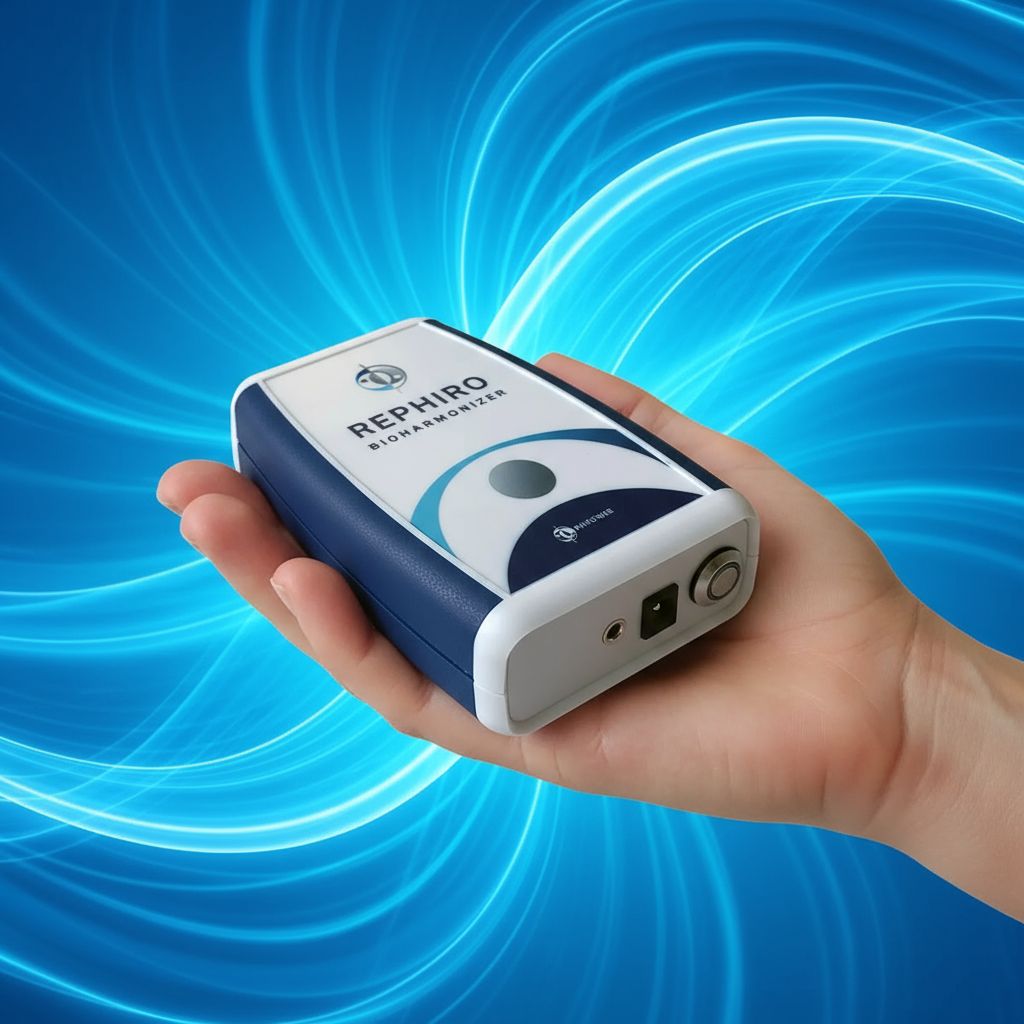
Where does the Rephiro Bioharmonizer fit for home use?
The Rephiro Bioharmonizer is deliberately positioned at the simple end of the home-use spectrum. Its architecture is preset rather than fully programmable:
~3.1 MHz
Defined high-frequency carrier architecture.
0.1–150 kHz
Automatic lower-frequency sweep.
~14 Hz
Slower repeating gating rhythm.
Contact
Pads, wristbands and conductive accessories.
It does not require users to install frequency databases, connect a computer or manually program individual frequencies. That makes Rephiro especially relevant for someone whose home-use priority is:
It is not the right choice if your main goal is extensive waveform programming, manually selected frequencies or a plasma tube. In those cases, a more configurable system may suit you better.
What is the best Rife machine for home use?
There is no universal "best" Rife machine because home users have very different priorities.
| If your priority is... | Look first at... |
|---|---|
| Press one button and begin | A preset contact device |
| Choose exact frequencies | A programmable frequency generator |
| Experiment with waveforms | A generator with detailed signal controls |
| A plasma tube | A dedicated plasma system |
| Portability | A compact self-contained contact device |
| Minimum software | A standalone preset system |
| Maximum technical flexibility | An advanced programmable platform |
Buy for the workflow you want — not for the longest feature list.
Seven questions to answer before you buy
- Do I want contact or plasma delivery?
- Do I want preset operation or manual programming?
- Am I willing to use software or a computer?
- Do I understand what signal the device actually generates?
- Are all essential accessories included?
- Is there a clear manual, support and warranty?
- Does the seller separate technical facts from unproven medical claims?
If you can answer those seven questions, comparing systems becomes much easier.
Once you have a device, how to build a simple hydration routine around each session is worth setting up early.
Frequently asked questions
The bottom line: choose a system you will actually use
A good home setup should be technically understandable, practical to operate and proportionate to your interest.
If you enjoy programming waveforms and individual frequency sets, a highly configurable generator can be rewarding.
If you specifically want a plasma architecture, accept that the hardware and learning curve will usually be greater.
If your priority is a compact, repeatable routine without software or manual frequency lists, a preset contact device can be the more logical choice.
This page answers the specific question of choosing a Rife machine for home use. For the full topic — Rife history, technology, machine types, frequencies, evidence, safety and buying context — return to our main pillar.
Rife Machine: The Complete Guide to Rife Frequencies, Technology & Devices →
For medical-evidence and safety context: Cancer Research UK — Rife machines; U.S. FDA — Electronic Muscle Stimulators; U.S. FDA — powered muscle stimulator guidance. For an example of the greater setup and software complexity possible in current multi-mode frequency platforms: Spooky2 — kit and setup overview.
These external sources do not evaluate Rephiro specifically. The FDA electrical-stimulation sources concern regulated muscle stimulators and are included only to illustrate general electrical-safety issues such as shocks, skin irritation and implanted-device interference. Phipower frequency products are wellness and lifestyle products, not medical devices, and are not intended to diagnose, prevent, treat or cure disease.