"Rife machine" is not one standardized hardware category. Some systems use conductive contact electrodes, others use plasma or RF hardware, and their electrical characteristics can differ substantially. That means safety should be assessed from the actual signal, delivery method, placement and user — not from the label alone.
Rife machines cannot all be declared "safe" or "unsafe" as one group because the devices vary widely. For contact-frequency systems, known electrical-stimulation risks include skin irritation, shocks, unsuitable electrode placement and potential interference with implanted devices such as pacemakers or ICDs. Pregnancy, epilepsy and certain heart conditions warrant medical advice before use. A Rife device should never replace proven medical care.
For the broader technology overview, read the Complete Guide to Rife Machines →
There is no single "Rife machine" safety profile
The first problem with the question "Are Rife machines safe?" is that the term covers very different devices.
A compact contact device and a high-power plasma/RF installation may share the Rife label while having very different:
- voltages;
- currents;
- carrier frequencies;
- power levels;
- waveforms;
- electrode arrangements;
- RF circuitry;
- user interfaces;
- physical hazards.
So safety needs to be evaluated at three levels:
What does it actually output?
Electrical contact, RF/plasma, waveform, amplitude, current, power supply and hardware quality.
How is it being applied?
Electrode placement, session duration, accessories, environment and whether the equipment is intact.
Who is using it?
Implanted devices, pregnancy, epilepsy, heart conditions, skin integrity and other relevant medical factors.
For the technical differences between device types, see How Does a Rife Machine Work? →
What do we actually know about Rife-machine safety?
Dedicated high-quality safety data for the broad category of consumer "Rife machines" are limited.
Cancer Research UK notes reports of electrical shocks and skin rashes associated with Rife machines, while also emphasizing that the machines have not gone through the usual process required to establish them as cancer treatments.
For contact devices, the closest established safety framework comes from other forms of transcutaneous electrical stimulation such as TENS and powered muscle stimulators.
Rephiro and other Rife-style contact devices are not automatically equivalent to TENS or EMS. We use established electrostimulation guidance here as a conservative safety reference because all involve electrical signals applied through the skin. Exact risks still depend on the specific device.
Pacemakers, ICDs and other implanted electronic devices
This is one of the clearest areas for caution.
The U.S. FDA has received reports of interference between electrical stimulators and implanted devices such as pacemakers and defibrillators.
The American Heart Association also notes that transcutaneous electrical nerve stimulation can interfere with some implantable cardioverter-defibrillators (ICDs) and, in certain circumstances, pacemakers.
If you have a pacemaker, ICD, implanted neurostimulator, insulin pump or other active implanted electronic device, do not use a contact Rife-style electrical device unless your treating specialist and the implant manufacturer have explicitly confirmed that the proposed use is acceptable.
"My device is low power" is not enough to dismiss this issue. Interference risk depends on more than total power, including waveform, current path, frequency, electrode placement and the sensing design of the implant.
Avoid creating a current path across the chest
FDA guidance for powered muscle stimulators warns against transthoracic stimulation — applying electrical stimulation across the chest — because current introduced across the thorax may affect cardiac rhythm.
For a non-medical contact-frequency device, a conservative rule is therefore:
- do not place electrodes so that the intended current path crosses the chest;
- do not improvise electrode positions around the heart;
- do not assume that a lower sensation means a harmless current path;
- follow the product's specific instructions rather than experimenting with placement.
People with known or suspected heart conditions should seek medical advice before using any unsupervised transcutaneous electrical stimulation.
Head, neck and transcerebral placement
Established electrical-stimulation guidance also advises against certain placements around the head and neck.
FDA guidance for powered muscle stimulators states that stimulation should not be applied transcerebrally. Clinical TENS guidance commonly warns against placing electrodes on the front of the neck.
Unless a particular product has been specifically designed, tested and professionally indicated for such placement, avoid:
- current paths through the head;
- electrodes across the temples;
- the front of the neck;
- placement close to the eyes or mouth.
This is an area where "frequency experimentation" should not override basic electrical-safety principles.
Pregnancy: use a precautionary approach
FDA guidance notes that the safety of powered muscle stimulation during pregnancy has not been established.
NHS guidance for TENS also advises against unsupervised use during pregnancy unless a doctor or midwife says it is appropriate.
Rife-style contact devices have not been adequately studied as a category in pregnancy.
Because of that uncertainty, do not use Rephiro during pregnancy unless a qualified healthcare professional who understands the specific device has advised that its use is acceptable.
That is a precaution based on missing safety evidence, not a claim that a particular Rife frequency has been shown to harm pregnancy.
Epilepsy and seizure disorders
Several established electrostimulation guidelines recommend caution or avoidance in people with epilepsy.
The risk cannot simply be generalized across every frequency device, but it is another situation where unsupervised experimentation is inappropriate.
If you have epilepsy or another seizure disorder:
- do not place electrodes on or around the head or neck;
- seek advice from your treating clinician before using a contact frequency device;
- stop use and seek medical advice if you experience unusual neurological symptoms.
Skin irritation, redness and electrode reactions
For contact systems, the most obvious interface is the skin.
Potential problems include:
- redness;
- itching;
- contact dermatitis;
- irritation from conductive gels or adhesives;
- localized discomfort;
- burn-like injury if current density or contact is unsuitable.
FDA and NHS electrical-stimulation guidance both recognize skin irritation as a possible adverse effect.
Inspect the skin
Do not apply electrodes to broken, infected, inflamed or highly irritated skin.
Check the contact area
Mild temporary impressions may occur, but persistent redness, pain, blistering or burning is a reason to stop.
Why damaged skin changes the electrical picture
Healthy intact skin provides part of the electrical resistance between an electrode and deeper tissues.
If the skin is broken, wet, abraded or significantly inflamed, the electrical characteristics at the contact can change.
This can make current distribution less predictable and may increase discomfort.
That is why contact electrodes should not be placed over:
- open wounds;
- fresh surgical sites;
- infected areas;
- severe rashes;
- areas with significant inflammation;
- areas with markedly reduced sensation unless professionally supervised.
What should a contact frequency device feel like?
There is no universal sensation because output parameters and accessories differ.
Depending on the signal, a user might notice:
- a mild tingling sensation;
- rhythmic pulsing;
- little or no sensation;
- occasionally mild muscle activation.
What you should not use as a goal is "the strongest sensation possible."
Pain, burning, sharp shocks or strong involuntary contractions are not evidence that a frequency is "working better." Reduce or stop use and check the equipment, accessories and instructions.
Can Rife machines cause shocks or burns?
Any electrical device can become unsafe if it is poorly designed, damaged or incorrectly used.
The FDA reports having received complaints involving shocks, burns, bruising, skin irritation and pain with some electrical stimulators. It also highlights cable and lead safety as important.
Before each session:
30-second hardware check
Power supply
Use only the intended supply.
Cables
No cuts, crushed insulation or exposed conductors.
Connectors
Fully seated, dry and undamaged.
Electrodes
Clean, intact and suitable for the device.
Skin
Intact at the planned contact area.
Do not repair mains adapters, damaged leads or cracked enclosures with improvised household fixes.
Do not combine electrical stimulation with water
Contact-frequency equipment should be kept dry unless the manufacturer specifically designs a component for wet use.
Do not use it:
- in the bath;
- in the shower;
- while swimming;
- with wet hands around mains-powered hardware;
- where cables or the power supply can fall into water.
This is basic electrical safety, independent of any Rife-specific theory.
Driving, machinery and sleep
FDA guidance for portable electrical stimulators warns against use while driving, operating machinery or during activities where involuntary muscle contractions could create an injury risk.
A similar conservative approach makes sense for contact Rife devices.
Do not use the device when:
- driving;
- cycling in traffic;
- operating machinery;
- working at height;
- bathing or showering;
- you cannot safely stop or remove the device.
Unsupervised use while sleeping is also best avoided because you cannot reliably monitor skin comfort, electrode position or device settings.
Children and vulnerable users
Electrical frequency equipment is not a toy.
Keep the device, leads, electrode accessories and power supply out of reach of young children.
Do not improvise use on a child simply by lowering the intensity. Pediatric electrical stimulation has its own medical considerations and should be professionally directed when clinically indicated.
Cancer: the biggest safety risk may be delaying effective treatment
Rife machines are often discussed online in connection with cancer.
Cancer Research UK states that there is no reliable evidence that Rife machines cure cancer.
That creates a second type of safety issue beyond the electronics:
the risk of replacing proven diagnosis or treatment with an unproven alternative.
If you have cancer or are being investigated for cancer, do not delay surgery, radiotherapy, chemotherapy, immunotherapy, hormone therapy or other medically recommended care because of claims about Rife frequencies.
Laboratory research into electromagnetic fields does exist, but that does not validate consumer Rife devices as cancer treatments.
Safety also means being careful with claims
A product can have electrically conservative hardware and still create harm if its marketing encourages users to make unsafe medical decisions.
Be cautious when a seller claims that one device can:
- cure cancer;
- eliminate Lyme disease;
- replace antibiotics;
- diagnose pathogens by frequency;
- treat serious disease without medical supervision;
- produce "detox" reactions that should always be ignored.
Symptoms that appear during or after use should not automatically be reframed as a "healing crisis."
New, severe or persistent symptoms deserve appropriate medical evaluation.
Are plasma Rife machines safer than contact devices?
Not necessarily.
Plasma and RF systems have different engineering characteristics and therefore different hazards.
Depending on the design, considerations can include:
- higher voltages;
- radio-frequency power;
- hot surfaces;
- glass plasma tubes;
- electromagnetic compatibility;
- ventilation and cooling;
- greater electrical complexity.
Contact devices have the separate issue of direct current paths through electrodes.
Neither technology should be declared safer merely because it feels weaker, is contact-free or costs more.
For the technology comparison, read Contact vs Plasma Rife Machines: What's the Difference? →
For a closely related device often mentioned alongside Rife machines, see Hulda Clark Zapper vs Rife Machine: What's the Difference? →
Safety considerations for Rephiro
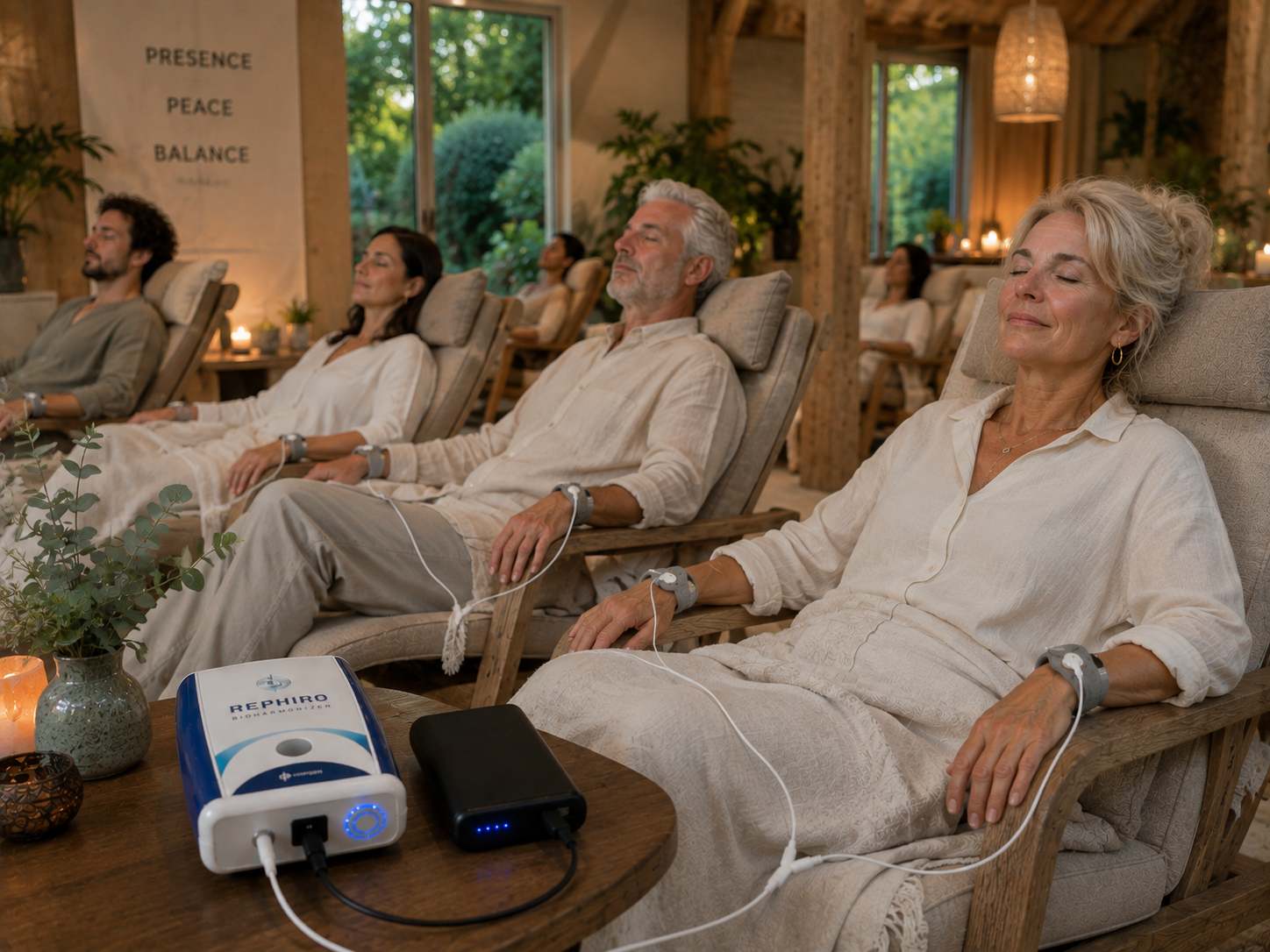
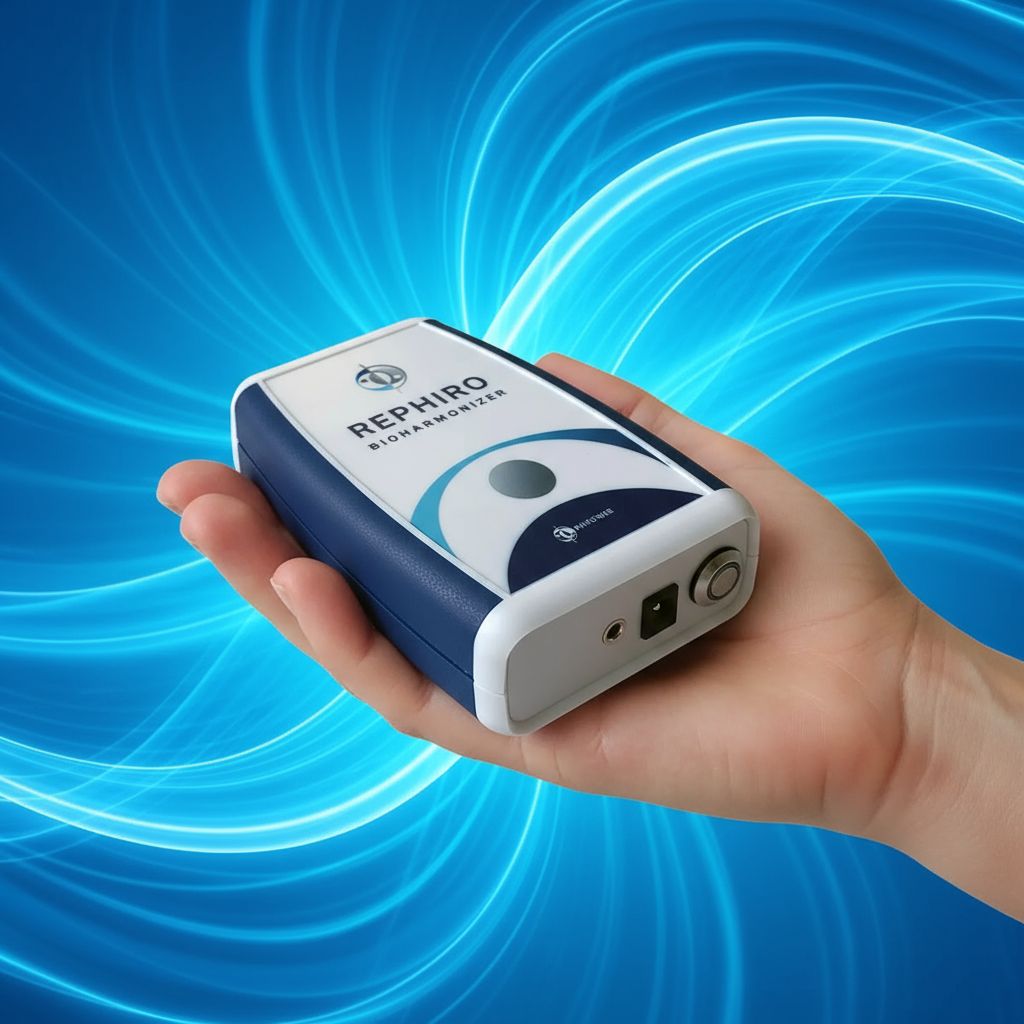
The Rephiro Bioharmonizer is a compact preset contact-frequency product.
Its architecture is based on approximately:
3.1 MHz
A high-frequency carrier in the electronic signal architecture.
0.1–150 kHz
An automatic lower-frequency sweep.
~14 Hz
A slower gating/pulsing rhythm.
Contact
Conductive accessories provide the electrical path.
Because Rephiro is contact-based, the most relevant practical principles are straightforward:
- use the specified power supply and accessories;
- inspect cables and contacts before use;
- use only on intact skin;
- avoid unsafe electrode paths such as across the chest;
- keep the device dry;
- do not use with an implanted electronic medical device without explicit medical clearance;
- avoid use during pregnancy unless specifically approved by a healthcare professional;
- seek advice before use if you have epilepsy or significant heart disease;
- stop if you experience pain, burning, strong shocks or unusual symptoms.
Rephiro is presented by Phipower as a wellness and lifestyle frequency product, not a medical device. Its electrical signal architecture should not be interpreted as proof of a disease-specific therapeutic effect.
A practical safety checklist before every session
| Check | What to confirm |
|---|---|
| Hydration | Arrive normally hydrated; see our guide to water and hydration during frequency-wellness use. |
| Implants | No pacemaker, ICD or other active implant unless explicitly cleared by the relevant clinician/manufacturer. |
| Pregnancy | Do not use unsupervised during pregnancy. |
| Medical conditions | Seek advice for epilepsy, significant heart disease or other relevant conditions. |
| Skin | Contact area is intact, clean and not infected or severely irritated. |
| Placement | No current path across chest; avoid front of neck, head/eyes and unsafe improvised positions. |
| Cables | No exposed conductors, loose plugs, damaged insulation or cracked connectors. |
| Power | Correct, undamaged power supply. |
| Environment | Dry, stable location; not driving, bathing or operating machinery. |
| Sensation | No painful burning, sharp shocks or uncontrolled strong contractions. |
| Medical care | Device is not being used to replace needed diagnosis or treatment. |
When should you stop using the device?
Stop the session and disconnect the device if you experience:
- burning or painful skin sensation;
- visible blistering or a burn;
- a strong unexpected electric shock;
- persistent dizziness or faintness;
- new chest pain or palpitations;
- unexpected neurological symptoms;
- a damaged cable, connector or power supply;
- smoke, overheating or unusual odor from the hardware.
Urgent or severe symptoms should be medically assessed rather than attributed to "detox" or a frequency reaction.
Safety should influence which Rife machine you buy
Before purchasing any electrical frequency system, look for:
- clear manufacturer identity and contact details;
- complete operating instructions;
- defined technical specifications;
- clear warnings and precautions;
- replacement accessories supplied for the actual product;
- an appropriate power supply;
- credible warranty and support;
- no pressure to discontinue medical treatment.
Be wary when the seller provides pages of disease claims but almost no electrical specifications, safety instructions or company information.
For the full buying framework, read Rife Machine for Home Use: What to Look For Before You Buy →
Safety sources & further reading
Consumer safety information covering reports of shocks, burns, skin irritation and interference with implanted devices.
Includes warnings concerning transthoracic and transcerebral stimulation and precautions involving pregnancy, heart problems, epilepsy and skin conditions.
International safety and essential-performance standard for nerve and muscle stimulators, including TENS and EMS. Referenced here as context, not as a claim that every Rife device falls under or complies with this standard.
Discusses possible interaction between TENS electrical stimulation and implanted cardiac rhythm devices.
General precautions regarding pacemakers, epilepsy and pregnancy.
Evidence and safety overview, including reported shocks/rashes and the lack of reliable evidence that Rife machines cure cancer.
Frequently asked questions about Rife machine safety
The bottom line
So, are Rife machines safe?
The responsible answer is:
it depends on the actual device, output, placement, condition of the hardware and the person using it.
For contact-frequency devices, several established electrical-stimulation precautions are highly relevant — particularly around implanted electronic devices, chest and head/neck placement, pregnancy, epilepsy, damaged skin, wet environments and defective hardware.
And there is one safety principle that applies regardless of electronics:
Do not let an unproven frequency device delay or replace appropriate medical diagnosis and treatment.
For the complete overview of Rife technology, frequencies, history, evidence, prices and buying considerations:
Rife Machine: The Complete Guide to Rife Frequencies, Technology & Devices →
This article provides general educational safety information and is not individualized medical advice. Phipower frequency products are wellness and lifestyle products, not medical devices, and are not intended to diagnose, prevent, treat or cure disease. Safety guidance from TENS/EMS sources is cited as a conservative reference for transcutaneous electrical stimulation and does not imply that Rephiro is a TENS/EMS device or has the same regulatory status.