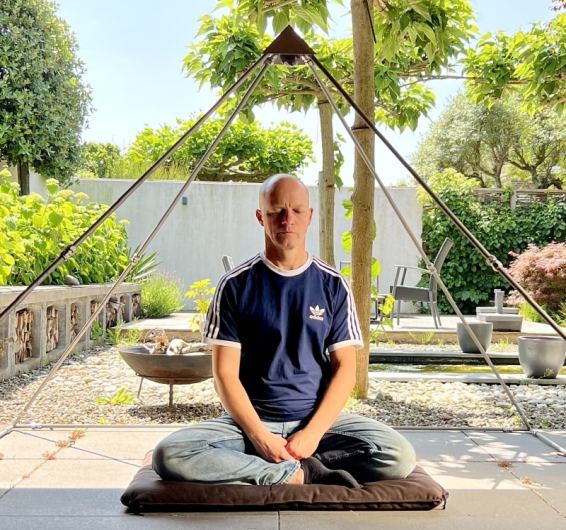
A home meditation pyramid works best when it becomes part of your environment rather than another object you have to set up perfectly. Choose a calm location, give the structure enough room, keep the atmosphere simple and build a ritual you can repeat without friction.
Can you create a meditation pyramid space at home?
Yes — and the best home setup is usually simpler than people expect.
You need a stable floor, enough room for the footprint plus access, a relatively quiet location, comfortable lighting and a setup that is easy to return to.
1. Start by choosing the right room
Quiet and private
Useful for a personal practice if doors, wardrobes and walkways remain clear.
Accessible and visible
Works well if one calm corner can be separated from the busiest household route.
Best for permanent setup
A dedicated room makes it easy to leave the pyramid assembled and ready.
A transition space
A compact meditation zone can create a clear boundary between work and quiet time.
More freedom
Useful for a larger pyramid or a more permanent wellness environment.
Outdoor option
Possible in calm, dry conditions on level ground with extra attention to wind.
What a simple home meditation corner can look like
You do not need a "spiritual room." A clear floor zone, a comfortable seat and one consistent place are enough.
2. Measure the footprint before you buy
For the full buying decision, see How to Choose a Meditation Pyramid.
3. Leave more room than the exact footprint
The minimum base dimensions are not the same as comfortable usable space. Leave enough clearance to enter, adjust a cushion, clean around the frame and avoid accidental impact.
4. Permanent or temporary setup?
Leave it standing
Best in a dedicated room or corner. The space is always ready, which reduces friction before practice.
Assemble when needed
Best in multi-use rooms or when you need the floor space for everyday life.
5. What should go underneath the pyramid?
No special floor is required. Wood, laminate, tile, a firm carpet, a meditation mat or a rug can work as long as the base remains stable and level.
Choose comfort before aesthetics
Your cushion, mat or chair should support the posture you can actually maintain. A beautiful setup is not useful if your body is uncomfortable. For posture guidance, read How to Use a Meditation Pyramid.
6. Use lighting that helps you settle
Excellent for morning practice when direct glare is controlled.
Useful in the evening and visually calm.
A safer ritual-light option than open flame.
Should you use candles?
They are not necessary. Open flames create avoidable risk around rugs, cushions and a physical frame. LED candles or warm lamps provide atmosphere with less risk.
7. Decide whether your space is silent or sound-based
Silence, quiet music, mantra, singing bowls, humming or nature sounds can all work. The room should support attention rather than become another source of stimulation.
8. Keep personal objects intentional
A few meaningful objects usually work better than filling the area. A journal, plant, simple lamp, crystal, cushion or the referenced amethyst orgonite sphere can be enough.
What role can crystals play at home?
Crystals can be used as symbols, objects of intention, aesthetic elements or meditation focal points. They should not be treated as medically proven energy generators.
9. Does the pyramid need to face north at home?
No. For ordinary meditation, room safety and usability come first. If you want a Great Pyramid-inspired ritual, you can align the square base with the true cardinal directions. See Which Direction Should a Meditation Pyramid Face?.
A simple 15-minute home ritual
- Silence your phone.
- Turn on one soft light if needed.
- Sit in your usual position.
- Take one minute to settle.
- Meditate for 10–12 minutes.
- Finish with one quiet minute.
- Write one sentence in a journal if you track your practice.
The room should make this sequence easier to repeat.
Morning or evening: when should you use your home pyramid?
Use it as a start signal
A short session can establish a deliberate beginning to the day.
Use it as a transition
A quiet session can mark the shift from activity toward rest.
Where should you store the pyramid if you dismantle it?
Keep tubes, connectors and tools together in one consistent storage place. Avoid locations where components can bend, get stepped on or become mixed with unrelated household items.
Can you create a meditation pyramid space in the garden?
Yes, in calm, dry conditions on level ground. Do not use a lightweight frame in strong wind, storms or unstable terrain.
Why less is often better
If every session requires rearranging crystals, changing music, moving lights and rechecking orientation, the ritual can become more complicated than the meditation.
Consistency is usually more useful than adding more layers.
Common home-setup mistakes
- measure first;
- keep walkways open;
- use stable flooring;
- make the space easy to return to;
- keep lighting safe.
- forcing the pyramid into a cramped corner;
- blocking doors or storage;
- using open flames unnecessarily;
- overloading the space with objects;
- assuming every setup detail has energetic significance.
What might the space feel like once it becomes familiar?
After repeated use, simply entering the area may become a cue that it is time to slow down and practice. For first-session sensations, read What Does Pyramid Meditation Feel Like?.
Create your own Phipower meditation space
The Phipower Meditation Pyramid is designed as a portable Great Pyramid-inspired structure for home meditation, contemplative practice and repeatable personal ritual.
Frequently asked questions about using a meditation pyramid at home
The bottom line
Choose a calm location, measure the footprint, keep the room visually simple and build one short ritual you can repeat without effort.
The room does not need to look mystical. It needs to make you want to sit down and practice.
The Phipower Meditation Pyramid is a wellness and meditation product, not a medical device. Home placement, orientation, crystals and ambience are practical or ritual choices and are not presented as medical treatment mechanisms.