
Menopause is a natural biological transition, but for many women it can bring a period of considerable physical and emotional change.
Hot flashes, night sweats, disrupted sleep, mood changes, reduced energy, vaginal dryness and changes in sexual wellbeing can all occur as hormone levels fluctuate and eventually settle at lower levels.
As a result, many women look beyond conventional treatments and explore complementary approaches — from meditation and acupuncture to light, supplements and frequency-based wellness devices.
One of the questions that increasingly appears online is: Can a Rife machine help with menopause symptoms?
The short answer is important:
There is currently no good clinical evidence showing that Rife machines treat menopause or its underlying hormonal changes.
That does not mean that every interaction between electrical stimulation, the nervous system and menopause is scientifically uninteresting. Research into several forms of neuromodulation is developing.
But those technologies should not be confused with Rife machines, and early research should not be translated into claims that a frequency device can “balance hormones” or cure menopausal symptoms.
In this article, we separate those ideas carefully.
What happens during menopause?
Menopause is reached when a woman has not had a menstrual period for 12 consecutive months. The years leading up to it are known as perimenopause or the menopause transition.
During this period, ovarian production of hormones — particularly oestrogen and progesterone — becomes increasingly variable before ultimately declining. Common symptoms can include:
- hot flashes
- night sweats
- sleep disturbance
- mood changes, anxiety or low mood
- difficulty concentrating
- vaginal dryness and urinary symptoms
- changes in libido
- joint or muscle discomfort
The intensity and combination of symptoms vary considerably from one woman to another.
The NHS identifies hormone replacement therapy (HRT) as an important treatment option for menopausal symptoms, with non-hormonal options also available. NICE recommends offering HRT for vasomotor symptoms such as hot flashes and considering menopause-specific cognitive behavioural therapy.
Why are women looking at frequency-based approaches?
Menopause is not purely a reproductive event. Changes in hormone signalling interact with systems involved in body-temperature regulation, sleep, mood, cognition and autonomic nervous-system activity.
This makes it understandable that researchers have become interested in interventions that influence the nervous system.
At the same time, the wellness world contains many devices described with words such as frequency therapy, bioresonance, Rife frequencies, PEMF, electrical stimulation and neuromodulation. These terms are often treated as if they describe essentially the same technology.
They do not — and that distinction is particularly important when evaluating claims relating to menopause. See also bioresonance vs Rife machine and Rife machine vs frequency generator vs PEMF.
What is a Rife machine?
The idea of a Rife machine originates with Royal Raymond Rife, an American inventor associated with frequency experiments in the first half of the twentieth century. Modern devices described as Rife machines usually generate electrical or electromagnetic signals at selected frequencies.
Depending on the design, these signals may be delivered through hand electrodes, footplates, adhesive electrodes, plasma tubes or electromagnetic fields. The underlying historical idea was that particular frequencies might interact selectively with microorganisms or biological structures.
These historical theories are not established clinical medicine. Modern Rife-type devices also vary enormously, which means that the phrase “Rife machine” does not describe one standardized therapeutic technology. Read more in how does a Rife machine work?
Can a Rife machine treat menopause?
At present, there is no established clinical evidence demonstrating that Rife machines treat menopause. There is no accepted evidence that a Rife machine:
- restores oestrogen or progesterone
- corrects menopausal hormone levels
- eliminates hot flashes
- reverses menopause or treats vaginal atrophy
- prevents osteoporosis
- replaces established menopause treatment
That is an important distinction, because online “frequency lists” sometimes associate specific frequencies with particular symptoms or diseases. A frequency appearing in a Rife database is not the same thing as a frequency having demonstrated clinical efficacy.
What about “Rife frequencies for menopause”?
Online frequency databases frequently contain programs with names relating to menopause, hot flashes, hormonal balance, sleep, mood, female hormones and adrenal function. These lists generally originate from historical lists, practitioner experience, user-generated databases or alternative-health traditions.
They should not be interpreted as medically validated treatment protocols. There is currently no accepted scientific database showing that, for example, “frequency X stimulates oestrogen” or “frequency Y stops menopausal hot flashes”.
The presence of a precisely stated number in hertz can make such information appear highly scientific. But precision is not the same as validation. A frequency of 10 Hz or 100 kHz can be measured very accurately — that tells us the electrical signal exists. It does not tell us what clinical effect that signal has in a menopausal woman.
Background: Rife frequencies explained and where frequency lists come from.
But electrical stimulation is studied in menopause
This is where the subject becomes more interesting. Although Rife machines themselves have not been demonstrated to treat menopause, researchers have investigated other forms of electrical and neurological stimulation. These are not equivalent technologies.
For example, a 2025 randomized controlled trial of electroacupuncture for hot flashes in early postmenopausal women found the intervention did not significantly improve hot flashes compared with sham treatment, although some sleep and quality-of-life measures improved. Importantly, oestrogen, LH and FSH did not change significantly versus placebo.
An earlier randomized trial involving 360 women evaluated electroacupuncture during the menopause transition: some quality-of-life measures improved, but the differences in the primary menopause symptom score were below the threshold for a clinically important improvement.
Research is also beginning to investigate other neuromodulation approaches — a 2025/2026 pilot trial protocol studies intermittent theta-burst brain stimulation for cognitive and mood changes during the menopause transition. This is experimental neuroscience and not Rife therapy.
These studies tell us something important: electrical or frequency-based interventions cannot be considered one single category. Different frequencies, waveforms, intensities, electrodes, anatomical targets and biological mechanisms can produce entirely different effects.
A frequency alone is not a treatment
Suppose two devices both produce a signal at 14 Hz. That does not mean that the devices have the same biological effect. The actual exposure also depends on waveform, voltage, current, carrier frequency, modulation, pulse duration, electrode configuration, tissue contact and session duration.
The same principle applies to established medical technology: electrical stimulation of a peripheral nerve is fundamentally different from electromagnetic brain stimulation — even though both can be described in hertz.
This is why Phipower does not consider a list of frequencies by itself to be proof of a therapeutic effect. More on the underlying physics: carriers, modulation and sidebands.
What does current menopause evidence support?
For women experiencing significant menopausal symptoms, there are considerably better-established options. Hormone therapy remains one of the principal evidence-based treatments, particularly for vasomotor symptoms such as hot flashes and night sweats — the Menopause Society describes it as the most effective treatment for bothersome vasomotor symptoms.
For women who cannot or do not want to use HRT, several non-hormonal approaches can be considered with a healthcare professional. The appropriate approach depends on symptoms, age, health history, personal preferences and individual risk factors.
Where can frequency wellness fit?
There is an important middle ground between “this device treats menopause” and “frequency-based wellness has no conceivable role in someone’s routine”.
A person may use non-medical wellness technology because she finds the ritual calming, meditative, relaxing, pleasant, conducive to taking a break or useful as part of an evening routine. Those are very different claims from treating menopause.
For someone experiencing a turbulent period of life, deliberately creating periods of quiet, relaxation and self-care can itself be valuable. A frequency wellness device can therefore be approached as a wellness experience, without claiming that it modifies oestrogen or treats hot flashes.
Menopause, sleep and relaxation
Sleep is a particularly relevant example. Night sweats can disrupt sleep directly, while mood changes and anxiety can make sleep more difficult. The NHS lists sleep problems among common symptoms that appropriate menopause treatment can improve.
This does not establish that Rife frequencies improve sleep. But it does explain why some women choose to incorporate relaxing routines around meditation, breathing, reduced evening stimulation, calming music and gentle wellness sessions.
If a frequency device is used in this context, it is more accurate to think of it as part of the ritual around relaxation, rather than as treatment of the endocrine cause of menopause.
Can frequency technology “balance hormones”?
This is a claim that deserves particular caution. Menopause involves physiological changes in ovarian hormone production and the hypothalamic-pituitary-ovarian axis.
If a device is claimed to increase oestrogen, restore progesterone or normalize FSH, those are testable biological claims — and they require appropriate clinical evidence. At present, there is no good evidence that a Rife machine achieves this.
Interestingly, even trials of electroacupuncture that reported changes in some subjective menopause measures did not necessarily find corresponding changes in oestrogen, LH or FSH. Therefore, Phipower does not present frequency wellness technology as a way to “balance female hormones”.
Rife therapy should not replace menopause care
This is particularly important when symptoms are severe. Persistent or unusual symptoms deserve appropriate medical assessment, and not every symptom occurring around midlife is necessarily caused by menopause.
Medical support is especially important with issues such as unexplained bleeding, significant depression, severe sleep disturbance, persistent pelvic symptoms, new breast changes, cardiovascular symptoms or significant osteoporosis risk.
A frequency device should not be used to postpone diagnosis or replace effective treatment.
What is Rephiro?
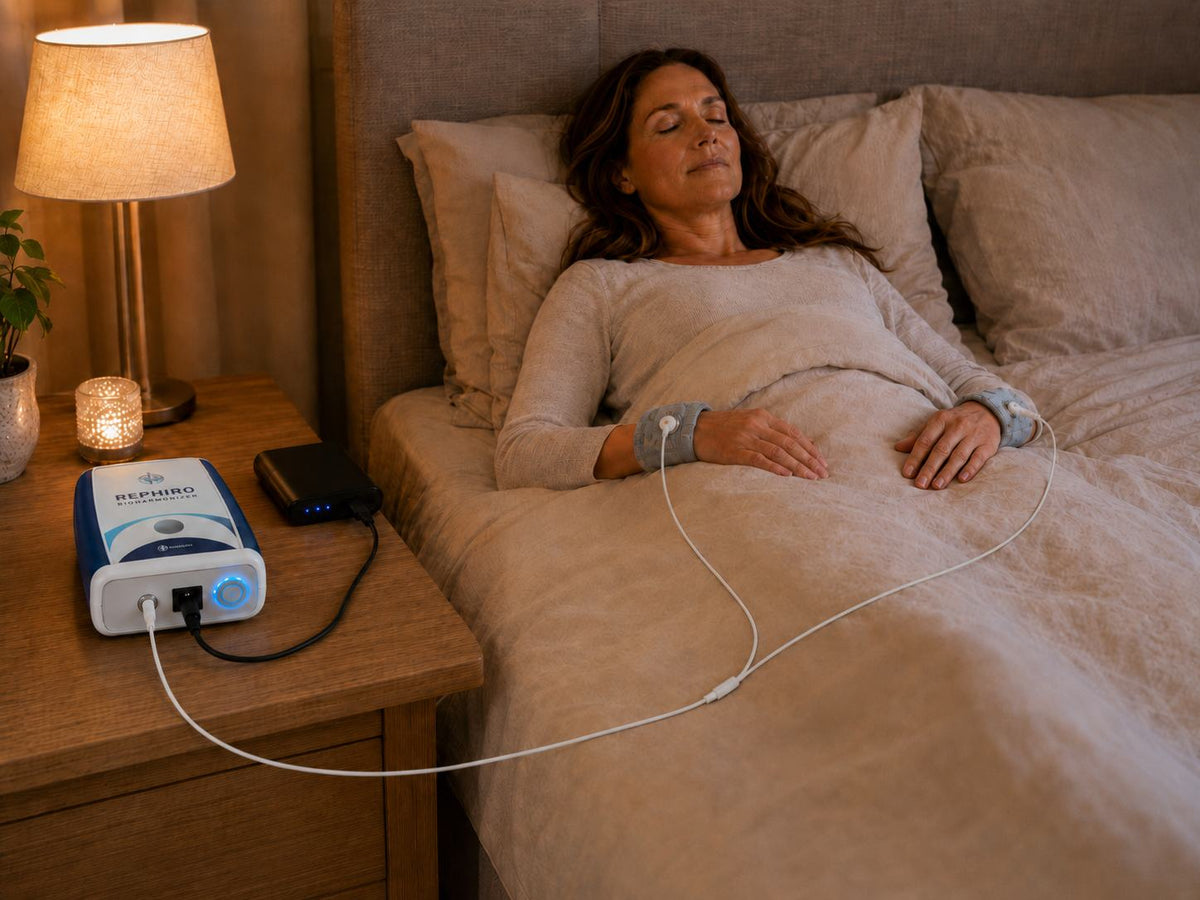
For people interested in frequency technology from a wellness rather than medical perspective, Phipower developed the Rephiro Bioharmonizer — a compact contact-based frequency wellness device.
Rather than requiring the user to select hundreds of individual condition-specific frequencies from a database, the device uses a predefined operating sequence. Its signal architecture includes:
- approximately 3.1 MHz carrier frequency
- a modulation sweep across approximately 0.1–150 kHz
- approximately 14 Hz pulsing
- a programmed active and rest cycle
The electrical signal is delivered through contact with the device. Rephiro is therefore quite different from a conventional programmable Rife frequency generator — see Rephiro vs traditional Rife machines.
Rephiro and menopause
Phipower does not claim that Rephiro treats menopause. We also do not claim that Rephiro increases oestrogen, restores progesterone, regulates FSH, eliminates hot flashes or reverses menopausal changes. There are currently no clinical trials demonstrating these effects for Rephiro.
Instead, Rephiro is intended as a frequency wellness device. Someone going through perimenopause or menopause may choose to include it in a personal relaxation or wellbeing routine in the same way that she might make deliberate time for meditation, quiet breathing or another non-medical wellness ritual.
That distinction matters.
A different way to approach frequency wellness
Traditional Rife systems often encourage users to ask: “Which frequency should I use for my symptom?” Rephiro takes a different approach.
Instead of building the experience around a disease or symptom database, it uses a predefined sweep through a wide frequency range. That means the user does not have to diagnose herself or select a supposed “menopause frequency”.
For Phipower, that is also a more responsible way of presenting frequency wellness. The focus moves from which frequency treats my condition? toward how can I integrate a short frequency-based wellness session into my routine?
A possible evening wellness ritual
For someone interested in using Rephiro as part of a broader wellbeing routine during menopause, the emphasis could simply be on creating a moment of reduced stimulation.
- Create a quiet environment — reduce screens, notifications and other distractions.
- Sit or lie comfortably — allow the session to become a deliberate pause rather than another task.
- Use Rephiro according to its instructions — there is no need to select a menopause-specific frequency.
- Breathe slowly and naturally — the aim is not to “force” a physiological response.
- Observe your experience — feeling calmer is a subjective experience, not proof of a change in hormone levels.
- Keep established menopause care separate — continue any treatment or professional advice independently of the wellness ritual.
What should you realistically expect?
The most evidence-aware expectation is also the simplest: do not expect Rephiro to treat menopause.
If you enjoy frequency-based wellness, you may appreciate the short structured session, the physical ritual, taking time away from external stimulation, combining it with meditation or slow breathing, and exploring frequency technology personally.
Whether someone experiences relaxation, warmth, calmness or nothing in particular is subjective. Those experiences should not be converted into medical claims.
Safety comes first
Rephiro should always be used according to its product instructions. Because it is an electrical contact device, additional caution is appropriate for people with implanted electronic medical devices or other situations in which electrical stimulation may be unsuitable.
If you are uncertain whether a frequency device is appropriate for you, discuss it with a qualified healthcare professional before use. And if menopause symptoms are substantially affecting sleep, mood, sexual health or quality of life, discussing evidence-based menopause care with a doctor or menopause specialist remains the appropriate first step. See also are Rife machines safe?
The Phipower view: curious, but evidence-aware
Frequency technology is an interesting field precisely because electrical and electromagnetic signals can interact with biological systems. Medicine already uses carefully defined forms of electrical and electromagnetic stimulation — but that fact does not validate every frequency claim.
At Phipower, we therefore separate the signal we can measure from the biological effect that still needs to be demonstrated.
For menopause, the distinction is currently clear: there is no established evidence that Rife machines or Rephiro treat menopause or restore menopausal hormone levels. Rephiro belongs instead in the category of non-medical frequency wellness.
More background in the complete Rife Machine guide.
Explore Rephiro
Frequency wellness without a disease-frequency database. The Rephiro Bioharmonizer is designed for people who want to explore frequency technology without programming individual frequencies or selecting protocols for diseases.
Predefined signal: 3.1 MHz carrier · 0.1–150 kHz sweep · ~14 Hz pulsing · automatic session cycle. Compact, simple and designed for personal wellness use.
Rephiro is not a medical device and is not intended to diagnose, treat, cure or prevent menopause or any other disease or medical condition.
Frequently asked questions
Can a Rife machine help with menopause?
There is currently no good clinical evidence showing that Rife machines treat menopause or restore menopausal hormone levels. Frequency devices should not replace established menopause treatment.
Are there Rife frequencies for menopause?
Online databases contain frequency lists labelled for menopause and related symptoms, but these lists are not clinically validated treatment protocols.
Can frequencies balance oestrogen and progesterone?
There is no established evidence that consumer Rife or frequency-wellness devices normalize oestrogen, progesterone, FSH or other menopause-related hormones.
Is electrical stimulation being studied for menopause?
Yes. Researchers have investigated technologies including electroacupuncture and are exploring other forms of neuromodulation. Results vary, and these techniques are technologically and biologically different from Rife machines.
Is Rephiro a menopause treatment?
No. Rephiro is a frequency wellness device. Phipower does not present it as a treatment for menopause or menopausal symptoms.
Can I use Rephiro as part of a menopause wellness routine?
Someone interested in frequency wellness may choose to include Rephiro in a relaxation or wellbeing routine, provided the device is appropriate for them and used according to its instructions. This should remain separate from medical menopause treatment.