The label "Rife" is less important than the intended use and the claims.
A seller can change the regulatory position of a product through its website, product page, instructions, testimonials and advertising — even without changing the electronics.
Rife-style technology is not automatically prohibited simply because it uses frequencies. The regulatory problem begins when a seller makes medical claims without the regulatory status and scientific support those claims require. In the United States, intended disease use can bring a product within FDA medical-device law, while the FTC regulates deceptive or unsubstantiated advertising. In the EU, medical intended purpose can bring a product under the MDR, including conformity-assessment, CE-marking and claims requirements.
For the technology itself, start with the Complete Guide to Rife Machines →
"Is Rife therapy legal?" is the wrong first question
The word therapy already creates part of the problem.
Regulators do not usually classify an entire historical concept called "Rife therapy" as one legal or illegal category. They regulate specific products, intended uses, commercial claims, labeling, distribution and medical-device activities.
A better set of questions is:
- What does the device physically do?
- What does the manufacturer say it is for?
- What claims appear on the product page?
- Are disease names mentioned?
- Are testimonials implying treatment or cure?
- Is it being marketed as a medical device?
- If so, what regulatory pathway has it followed?
The same hardware can create different regulatory issues depending on its intended purpose and marketing.
United States: FDA and FTC play different roles
Product status, labeling & medical-device regulation
FDA regulates medical devices and the conditions under which regulated devices can be marketed in the United States.
Advertising & substantiation
FTC focuses on whether advertising is truthful, non-deceptive and supported by adequate evidence.
For a Rife-machine seller, both can matter at the same time.
When can a frequency product become an FDA medical device?
FDA explains that a product may meet the medical-device definition when it is intended for use in the diagnosis of disease or in the cure, mitigation, treatment or prevention of disease, among other medical purposes.
That means claims such as:
- "treats Lyme disease";
- "kills cancer cells";
- "eliminates parasites";
- "reduces arthritis";
- "prevents viral infection"
are not merely enthusiastic wellness language.
They communicate a medical intended use.
Regulators can evaluate the overall intended use and the total message communicated to consumers.
What is FDA's General Wellness policy?
FDA reissued its General Wellness: Policy for Low Risk Devices guidance in January 2026.
The guidance describes FDA's compliance policy for certain low-risk products intended to promote a healthy lifestyle.
At a high level, general-wellness positioning is much safer when it is:
- about maintaining or encouraging a general state of health;
- unrelated to diagnosis, cure, mitigation, prevention or treatment of a disease or condition;
- low risk.
This does not create a magic phrase that turns every electrical product into an unregulated wellness device.
The actual intended use, product characteristics and claims still matter.
"Designed for a personal frequency wellness ritual" is fundamentally different from "treats cancer, Lyme disease or infection."
"FDA registered" does not mean FDA approved
This is one of the most important consumer-protection points.
FDA explicitly says that establishment registration and device listing do not denote approval, clearance or authorization.
FDA also states that it does not issue device registration certificates.
| Marketing phrase | What it actually means |
|---|---|
| FDA Registered | May refer to facility registration/listing; not approval. |
| FDA Certified | FDA warns that it does not "certify" medical-device registration in this way. |
| FDA Cleared | Usually refers to a successful 510(k) substantial-equivalence determination. |
| FDA Approved | Used for devices that actually receive an FDA approval such as PMA approval; not interchangeable with registration. |
A buyer evaluating a frequency device should therefore look for an actual FDA clearance/approval record where such authorization is claimed.
What does the FTC require?
FTC advertising law applies to health-related products broadly.
Its Health Products Compliance Guidance emphasizes two core principles:
- advertising must be truthful and not misleading;
- objective product claims must have adequate substantiation before they are advertised.
For health and safety claims, FTC expects competent and reliable scientific evidence. For many health-benefit claims, randomized controlled human clinical testing is generally the type of evidence expected.
A seller is responsible not only for literal claims, but also for health claims consumers reasonably take away from testimonials, images, charts and context.
Has the FTC ever taken action over Rife claims?
Yes.
FTC enforcement history includes Rife-related electronic therapy devices.
In 2001, the FTC's Operation Cure.All described enforcement against a seller marketing products including a Beck-Rife unit, Portable Rife Frequency Generator and PC-Rife devices with claims involving cancer, AIDS and other serious diseases.
The complaint said the marketer lacked a reasonable basis for those claims and stated there were no competent and reliable clinical studies demonstrating that the products were effective in treating or curing those diseases.
In 2002, another FTC matter involved "Acoustic Lightwave Therapy" described as based on Rife-machine technology and marketed for serious health conditions. The FTC alleged the claims lacked substantiation.
The legal risk is not the word "frequency." It is selling a health-related product with disease claims that are not adequately substantiated.
Can testimonials create a medical claim?
Yes.
Imagine a product page that says:
"For general wellness only."
But directly underneath it publishes customer stories such as:
- "My tumor disappeared."
- "It cured my Lyme disease."
- "I stopped my medication."
The disclaimer does not automatically erase the implied advertising message.
FTC guidance says marketers are responsible for express and implied claims conveyed to reasonable consumers.
Reviews should focus on genuine non-medical product experience — usability, build quality, delivery, design and general ritual experience — rather than unverified disease-treatment outcomes.
Can you discuss Royal Rife's historical medical claims?
Yes, but historical education should be clearly distinguished from product promotion.
FTC guidance recognizes that historic or traditional uses can sometimes be described, but warns that the communication must not misleadingly imply present-day efficacy that lacks scientific support.
For Phipower, this means an article can say:
"Royal Raymond Rife claimed…"
while also clearly explaining:
"This historical claim has not been established as a clinically proven effect of Rephiro."
That distinction is one reason the Phipower Knowledge Center separates history, physics, evidence and product pages.
European Union: the Medical Device Regulation (MDR)
The EU framework uses a similar central concept: intended purpose.
Under MDR Article 2, a medical device includes an instrument or apparatus intended by the manufacturer for purposes including:
- diagnosis;
- prevention;
- monitoring;
- prediction;
- prognosis;
- treatment;
- alleviation of disease.
Crucially, the MDR defines intended purpose by reference to the information supplied by the manufacturer in the label, instructions for use, promotional or sales materials and statements, as well as the clinical evaluation.
It can help define the product's intended purpose.
EU MDR Article 7: claims matter
Article 7 of the MDR prohibits misleading claims in labeling, instructions, making available, putting into service and advertising.
It specifically prohibits conduct such as:
- attributing functions or properties the device does not have;
- creating a false impression about treatment or diagnosis;
- failing to communicate likely risks associated with intended use;
- suggesting uses outside the intended purpose for which conformity assessment was carried out.
This is directly relevant to frequency-device marketing.
When does CE marking enter the picture?
If a product is placed on the EU market as a medical device, it must comply with the applicable MDR requirements before lawful market placement.
Depending on classification, that can involve:
- a documented intended purpose;
- risk management;
- technical documentation;
- clinical evaluation;
- conformity assessment;
- quality-management obligations;
- post-market surveillance;
- where applicable, notified-body involvement;
- EU declaration of conformity;
- CE marking.
The Dutch IGJ states that medical devices sold or distributed in Europe must comply with European and national rules, and that medical devices must have the required CE marking and/or EU declaration of conformity.
What about the Netherlands?
In the Netherlands, the Inspectie Gezondheidszorg en Jeugd (IGJ) supervises medical-device market compliance.
IGJ explains that manufacturers, importers, distributors and webshop sellers of medical devices must comply with European MDR requirements and Dutch medical-device law.
The regulator can inspect companies and ask for documents showing compliance.
The classification and claim strategy should be decided before scaling international marketing.
Changing product copy later from wellness to disease treatment can change the regulatory analysis, even when the hardware stays identical.
What about the United Kingdom?
The UK has its own medical-device regulatory regime and MHRA oversight.
The exact requirements depend on Great Britain versus Northern Ireland and the applicable device framework.
The same practical principle remains useful:
medical claims create a materially different regulatory position from general wellness positioning.
Because UK rules continue to evolve, manufacturers selling there should check current MHRA requirements at the time of market placement rather than relying on an old blog article.
Is it illegal for a consumer simply to own or use a Rife machine?
That is different from the question of whether a manufacturer or seller may lawfully market a product for treating disease.
FDA's core role is regulating medical-device products and their sale in the United States; FDA also states that it generally does not regulate the practice of medicine by healthcare practitioners using legally marketed devices.
This article does not give a state-by-state or country-by-country opinion on private possession or individual use.
The important commercial distinction is:
| Question | Regulatory issue |
|---|---|
| Can a person purchase/use a frequency product? | May depend on jurisdiction, product and circumstances. |
| Can a seller say it cures cancer? | Creates serious FDA/FTC and equivalent regulatory issues unless appropriately authorized and substantiated. |
| Can a doctor use an already legally marketed device off-label? | In the U.S., FDA generally does not regulate the practice of medicine, but promotion rules still apply. |
| Can a manufacturer promote the unapproved use? | Different question from a clinician's practice-of-medicine decision. |
What does "off-label" mean — and why doesn't it solve the marketing problem?
In U.S. healthcare, a practitioner may sometimes use a legally marketed device for an unapproved use within a legitimate practitioner-patient relationship.
FDA explains that this practice-of-medicine principle does not erase other legal restrictions, including restrictions related to promotion.
Therefore:
"Doctors can sometimes use devices off-label" ≠ "a manufacturer can advertise any disease claim it wants."
Where does Rephiro fit?
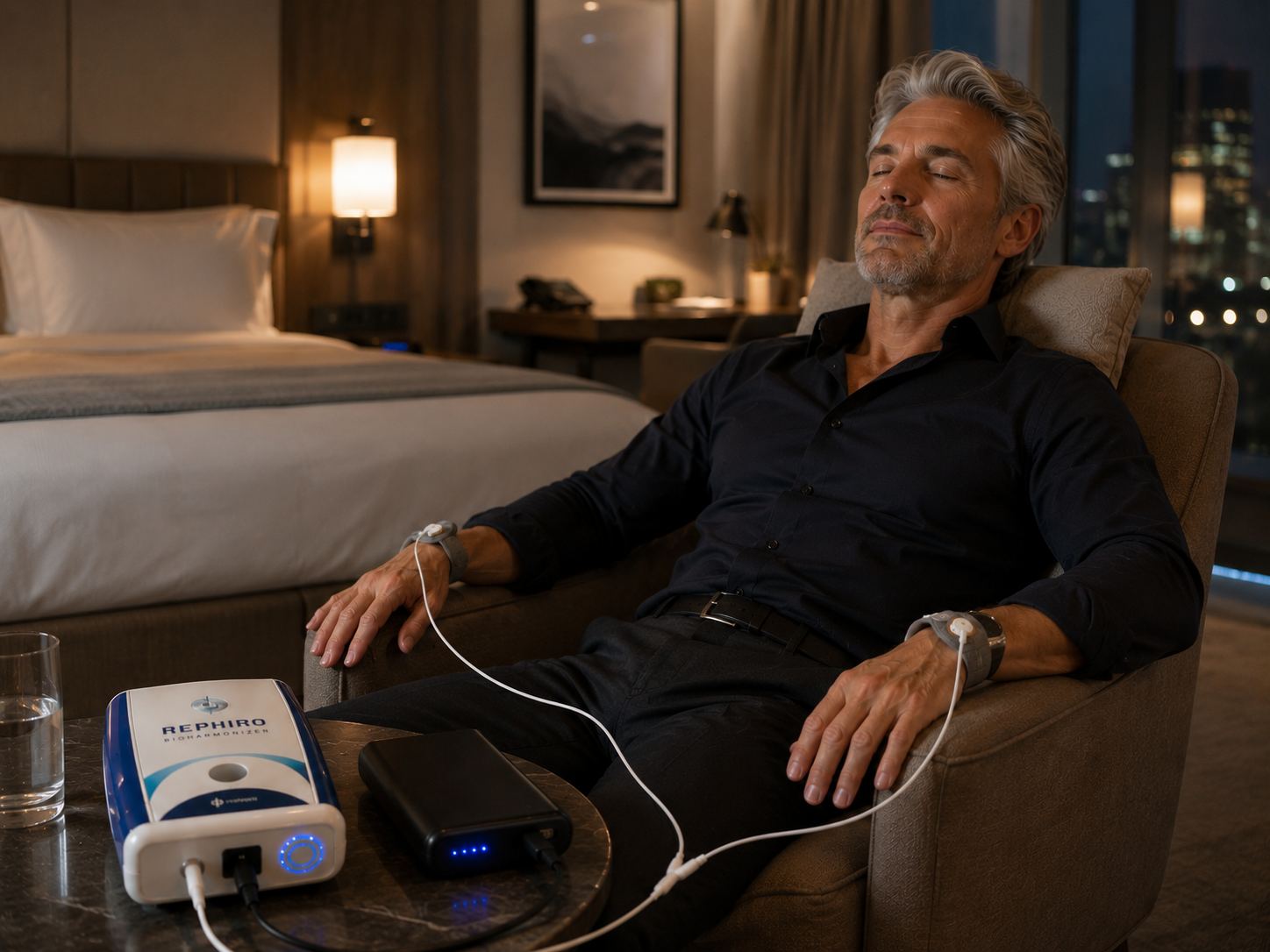
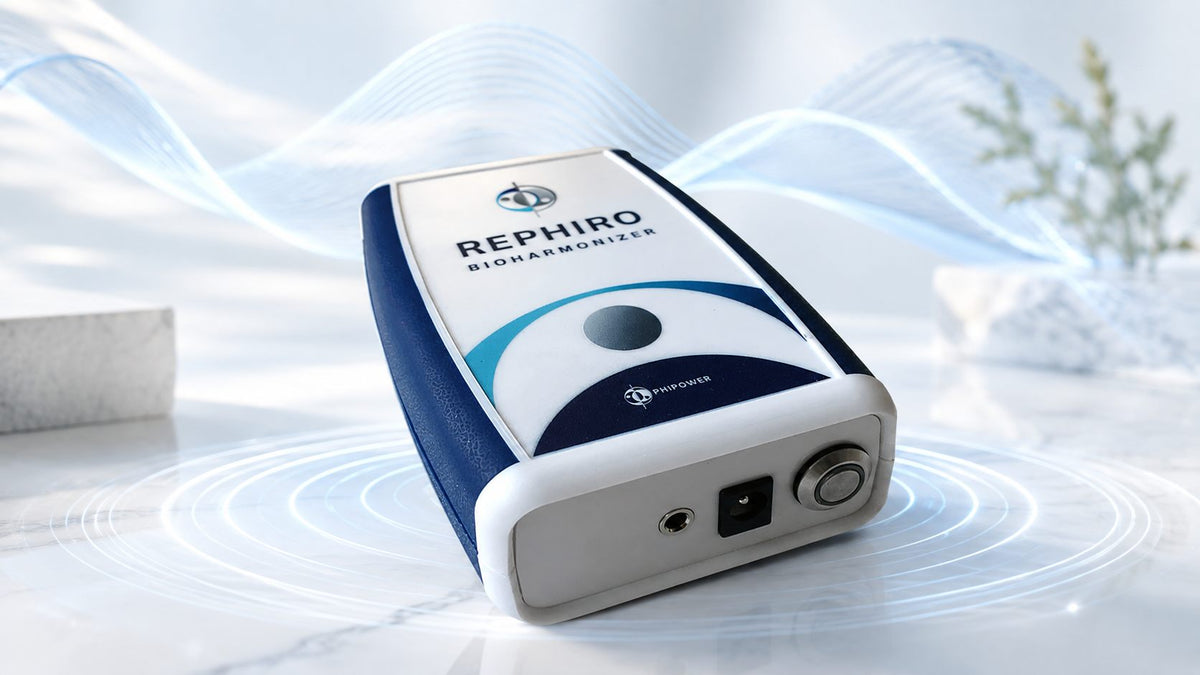
Phipower positions Rephiro Bioharmonizer as a wellness and lifestyle frequency product.
It is not presented as a device intended to:
- diagnose disease;
- treat cancer;
- eliminate Lyme disease;
- kill parasites;
- replace prescribed treatment.
Its technical architecture can be described factually:
~3.1 MHz
Electrical signal specification.
0.1–150 kHz
Automatic lower-frequency sweep.
~14 Hz
Timing/gating layer.
Wellness
No disease-treatment intended use claimed here.
Calling a product "wellness" is not itself a legal determination. The complete claims, instructions, technical design and target market still need to remain consistent with that positioning.
What should a Rife-device website avoid?
For a wellness-positioned frequency product, high-risk content includes:
- disease-specific treatment claims;
- "cure" language;
- unsubstantiated claims about killing pathogens in the body;
- customer testimonials describing cures;
- before/after medical claims;
- using scientific papers on different technologies to imply the product itself is clinically proven;
- misleading "FDA Registered" certificates;
- claiming CE marking proves therapeutic efficacy;
- promoting uses outside any certified intended purpose.
What can a responsible wellness site focus on instead?
A lower-risk content strategy focuses on verifiable product and educational information:
Measure what the device outputs
Carrier, sweep, pulse timing, waveform, voltage, current and spectrum.
Explain history and physics
Clearly separate historical Rife claims from established scientific findings.
Describe use without disease promises
Setup, routine, portability, operation, design and customer service.
This is why the Rephiro Technical Test is strategically valuable: first-party measurements create trust without needing disease claims.
10-point regulatory checklist for frequency-device marketing
| # | Check before publishing |
|---|---|
| 1 | Is the intended purpose written clearly and consistently? |
| 2 | Does any page mention diagnosis, prevention, cure, treatment or mitigation of disease? |
| 3 | Do testimonials imply a disease benefit that the page itself avoids stating? |
| 4 | Are scientific studies actually about the marketed product and claimed use? |
| 5 | Are FDA registration, clearance and approval described correctly? |
| 6 | If sold as an EU medical device, is the intended purpose covered by conformity assessment? |
| 7 | Are CE and EU-conformity claims documented? |
| 8 | Do product instructions, website copy, affiliates and ads tell the same regulatory story? |
| 9 | Are safety warnings consistent with the product and intended use? |
| 10 | Has jurisdiction-specific regulatory advice been obtained before making medical claims? |
Seven common regulatory myths
"Rife machines are banned everywhere."
No. Regulatory status depends on the product, intended use, claims and jurisdiction.
"If I write 'not a medical device,' FDA rules cannot apply."
A disclaimer cannot override contradictory disease claims or actual intended use.
"FDA registered means FDA approved."
FDA explicitly says it does not.
"A customer testimonial is not our claim."
Advertising law can include implied claims conveyed through testimonials and context.
"CE means clinically proven."
CE conformity is not a blanket statement that every imaginable therapeutic claim is proven.
"Historical Rife claims can be copied into product marketing because they are old."
Historical education and present-day efficacy advertising are different things.
"If a doctor can use something off-label, a seller can advertise the off-label use."
No. Practice-of-medicine discretion and manufacturer promotion are separate regulatory questions.
Official regulatory sources
Current FDA guidance describing its compliance policy for certain low-risk products intended to encourage a healthy lifestyle.
FDA overview of medical intended use and general-wellness considerations.
Official overview of device classification and premarket pathways including 510(k), De Novo and PMA.
FDA warning that registration and listing do not denote clearance, approval or authorization.
Official advertising guidance on express/implied health claims and scientific substantiation.
Historical enforcement material explicitly discussing Rife frequency generators and unsubstantiated serious-disease claims.
Official MDR text, including Article 2 definitions of medical device/intended purpose and Article 7 on misleading claims.
Dutch regulator overview of MDR compliance, CE marking, EU declaration of conformity and distributor responsibilities.
Frequently asked questions about Rife therapy and regulation
The bottom line
So, is Rife therapy legal?
The most accurate answer is:
there is no universal legal status attached to the word "Rife." The regulatory status depends on the product, intended purpose, claims, evidence, market and jurisdiction.
For sellers, the most important dividing line is often between:
No unsupported claim to diagnose, prevent, treat, mitigate or cure disease.
Can trigger medical-device requirements, authorization questions and demanding advertising-substantiation standards.
Phipower's safest long-term strategy is therefore not to hide behind disclaimers, but to keep the entire product story coherent:
transparent technical specifications + responsible wellness positioning + no unsubstantiated disease claims.
For the complete Rife overview:
Rife Machine: The Complete Guide to Rife Frequencies, Technology & Devices →
This article is a general educational overview and not legal or regulatory advice. Rules can change and differ by jurisdiction, product classification and intended use. Manufacturers, importers, distributors and marketers should obtain qualified regulatory/legal advice before placing a frequency product on a market or making medical claims. Phipower frequency products are positioned as wellness and lifestyle products and are not intended to diagnose, prevent, treat or cure disease.