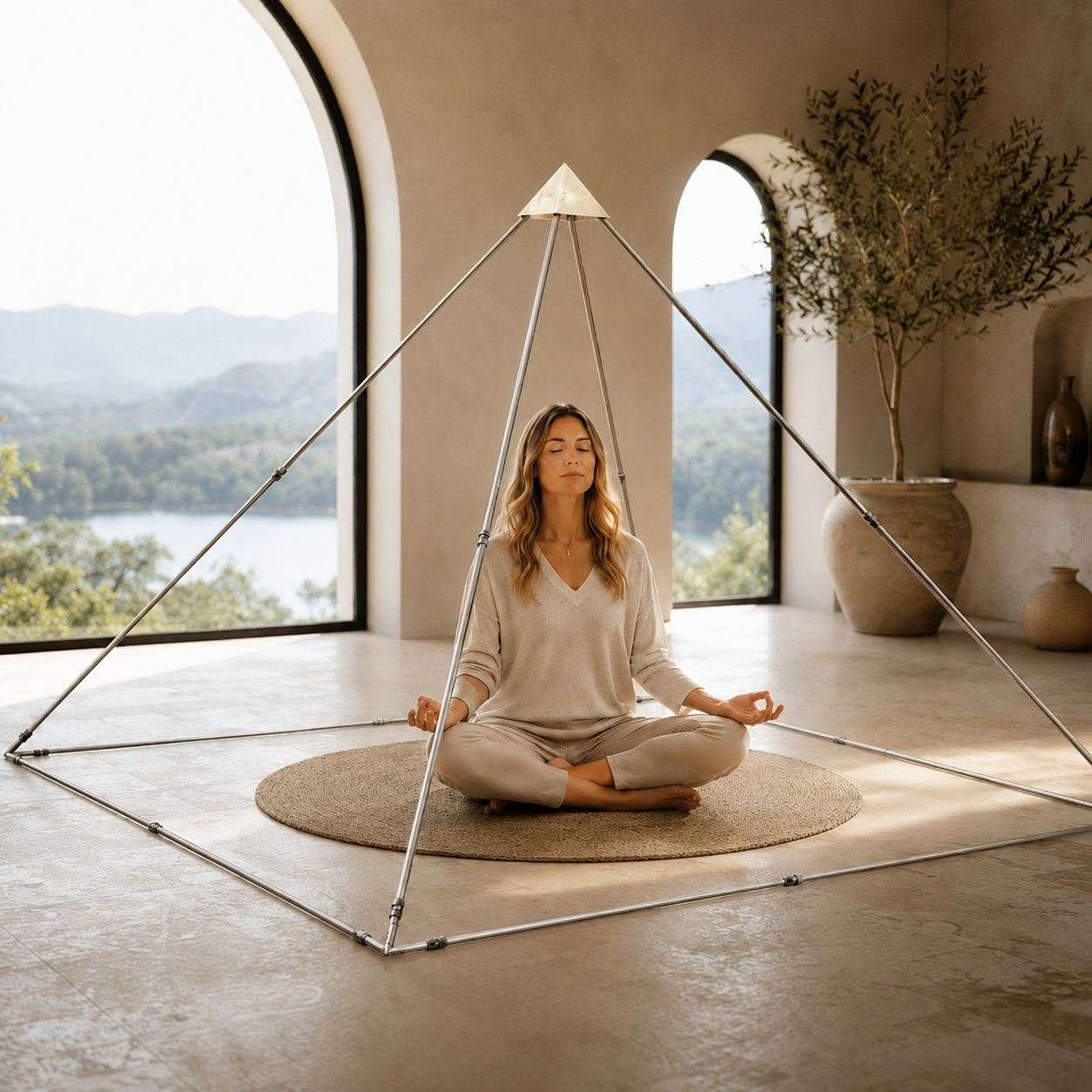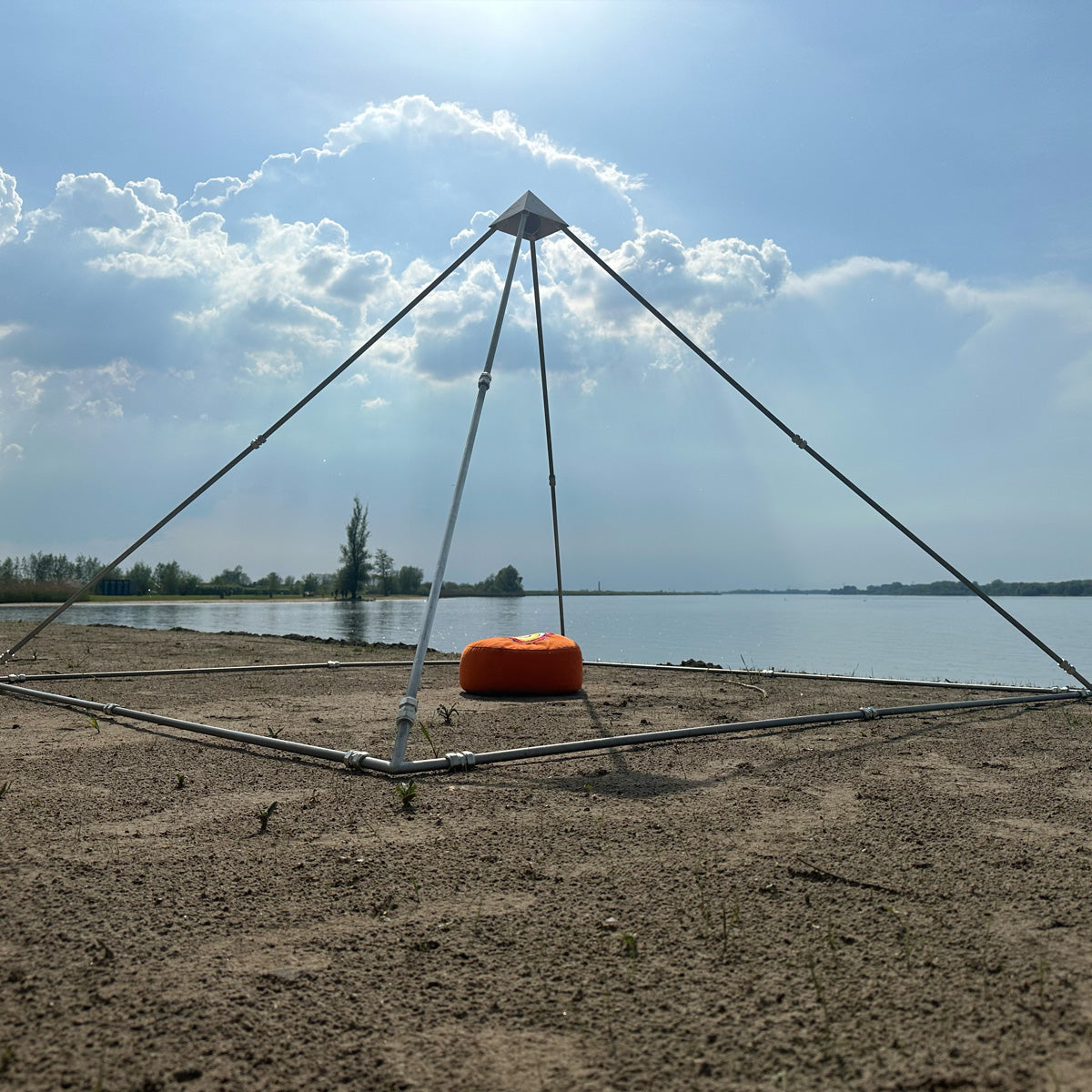
Multiple meditation pyramids can transform a retreat, yoga studio or wellness event into a distinctive individual-within-the-group experience. Each participant has a defined contemplative space, while the facilitator guides one shared session across the room or field.
Why use meditation pyramids for a group experience?
The strongest professional use case is not putting many people under one structure. It is giving each participant a clearly defined personal space while keeping the group connected through one facilitator.
Where can multiple meditation pyramids be used?
What a multi-pyramid meditation field can look like
The exact layout depends on the venue, participant number and whether the pyramids are permanent, semi-permanent or set up only for scheduled sessions.
One pyramid per participant is the clearest format
For a premium group session, one pyramid per participant offers the simplest experience design:
- everyone has equal space;
- participants are not physically crowded together;
- the visual language stays consistent;
- facilitators can guide one shared practice;
- entry and exit can be planned predictably.
You can also work with rotations instead of one unit per participant
A studio does not need to buy enough pyramids for its maximum group size on day one.
Alternative formats include:
- small premium groups;
- several pyramids within a larger open meditation class;
- 15–30 minute rotation blocks;
- private sessions between group classes;
- pyramid stations as one part of a retreat program.
Medium or Large for professional use?
More stations per room
Approx. 77 cm high with a 121 × 121 cm base. Useful when compactness, transport and a greater number of personal stations are priorities.
More space per participant
Approx. 140 cm high with a 220 × 220 cm base. Better suited to spacious studios, premium one-person stations and reclined or instrument-based practice.
How much venue space do you need?
Do not calculate room capacity using pyramid footprint alone. You also need space for:
- safe entry and exit;
- facilitator movement;
- participant belongings;
- sound equipment if used;
- fire and emergency routes;
- comfortable visual spacing between stations.
Participant flow matters as much as geometry
A professional session should feel effortless from arrival to departure. Plan:
- where people leave shoes and personal items;
- which direction they enter the pyramid area;
- how they find their assigned station;
- how the facilitator moves through the space;
- how everyone exits without congestion.
A simple 45-minute group session format
Group sound meditation works naturally with multiple pyramids
One facilitator can create a shared sound field while every participant remains in a personal station. Possible formats include:
- singing bowls from a central position;
- soft mantra;
- humming;
- guided voice;
- ambient music at low volume.
For practice design, see Meditation Pyramid for Yoga, Breathwork & Sound Meditation.
Breathwork sessions: keep the practice appropriate to the setting
Gentle seated breath awareness works well in a group pyramid format.
More intense breathwork requires greater attention to facilitator qualifications, participant screening and physical safety. The pyramid itself should never be used as evidence that a technique is safer or medically therapeutic.
Retreats: use the pyramid as a recurring ritual anchor
At a multi-day retreat, the pyramids can become the place participants return to for specific sessions. For example:
- morning silent meditation;
- midday breath practice;
- evening sound meditation;
- guided reflection;
- private contemplative time.
Repeated use can make the stations feel familiar and reduce transition time between activities.
Yoga studios: add a new format without replacing open-floor classes
A meditation pyramid does not need to replace the studio's existing yoga program. It can become a separate premium experience:
- small-group pyramid meditation;
- restorative sessions;
- breath and sound evenings;
- private appointments;
- special workshops.
Festivals and wellness events: design the experience around scheduled access
At an event, a visually strong pyramid area can attract attention — but unsupervised free-for-all access quickly creates operational problems. A better model is:
- defined session times;
- limited participants per block;
- a facilitator or host;
- clear entry and exit;
- weather contingency for outdoor use.
Outdoor meditation fields need a different safety mindset
Open space can look spectacular, but weather becomes part of the design.
Plan assembly and reset time before your first professional session
For professional use, setup is an operational process rather than a one-time novelty. Define:
- who assembles the pyramids;
- where parts are stored;
- how stations are numbered;
- how damaged or missing components are tracked;
- how long the room needs between sessions.
Storage can determine whether a multi-unit concept works operationally
Multiple portable structures need an organized storage system.
Keep complete sets together and use clear labels so that connectors, tubes and tools do not become mixed between units.
Professional sessions also need a simple cleaning routine
Even though participants may not touch every structural part, a studio should define a repeatable cleaning approach for:
- cushions and mats;
- frequently touched frame areas;
- shared accessories;
- singing bowls or props;
- floor zones between sessions.
Lighting: create atmosphere without making the venue unsafe
Soft, indirect lighting can strengthen the visual experience. For professional venues, prioritize:
- clear walkways;
- no open flames near structures or textiles;
- easy visibility during entry and exit;
- consistent light across stations.
The pyramids can become part of the venue's visual identity
A repeated geometric form across a studio or outdoor field creates a strong visual language. That can be commercially useful for:
- retreat photography;
- event promotion;
- social media;
- premium-session positioning;
- a recognizable signature experience.
Keep professional marketing claims credible
A retreat or studio does not need medical claims to make the experience attractive.
Experience-led
"Individual geometric meditation spaces for guided breath, sound and stillness."
Unsupported therapy claims
Do not promise that pyramid geometry treats disease, guarantees healing or amplifies a scientifically proven life-energy field.
Planning a professional meditation-pyramid setup?
Before requesting multiple units, define four things:
- Venue: indoor, outdoor or mixed.
- Capacity: how many participants should use pyramids simultaneously?
- Practice: silent meditation, breathwork, sound, restorative use or a combination?
- Operations: permanent installation, recurring setup or event-based transport?
With those four answers, Phipower can discuss a practical multi-unit configuration.
Phipower Meditation Pyramid for professional use
A portable Great Pyramid-inspired meditation structure that can be deployed individually or as multiple stations across a studio, retreat or event.
Frequently asked questions about professional and group meditation-pyramid use
The bottom line
Multiple pyramids can give each participant a clear personal station while one facilitator guides the room or field as a whole.
For retreats, studios and events, the key questions are not only "how many pyramids?" but also layout, participant flow, storage, reset time, practice type and how the experience will be positioned commercially.
The Phipower Meditation Pyramid is a wellness and meditation product, not a medical device. Professional sessions should be marketed as meditation and wellness experiences rather than as treatments for disease.