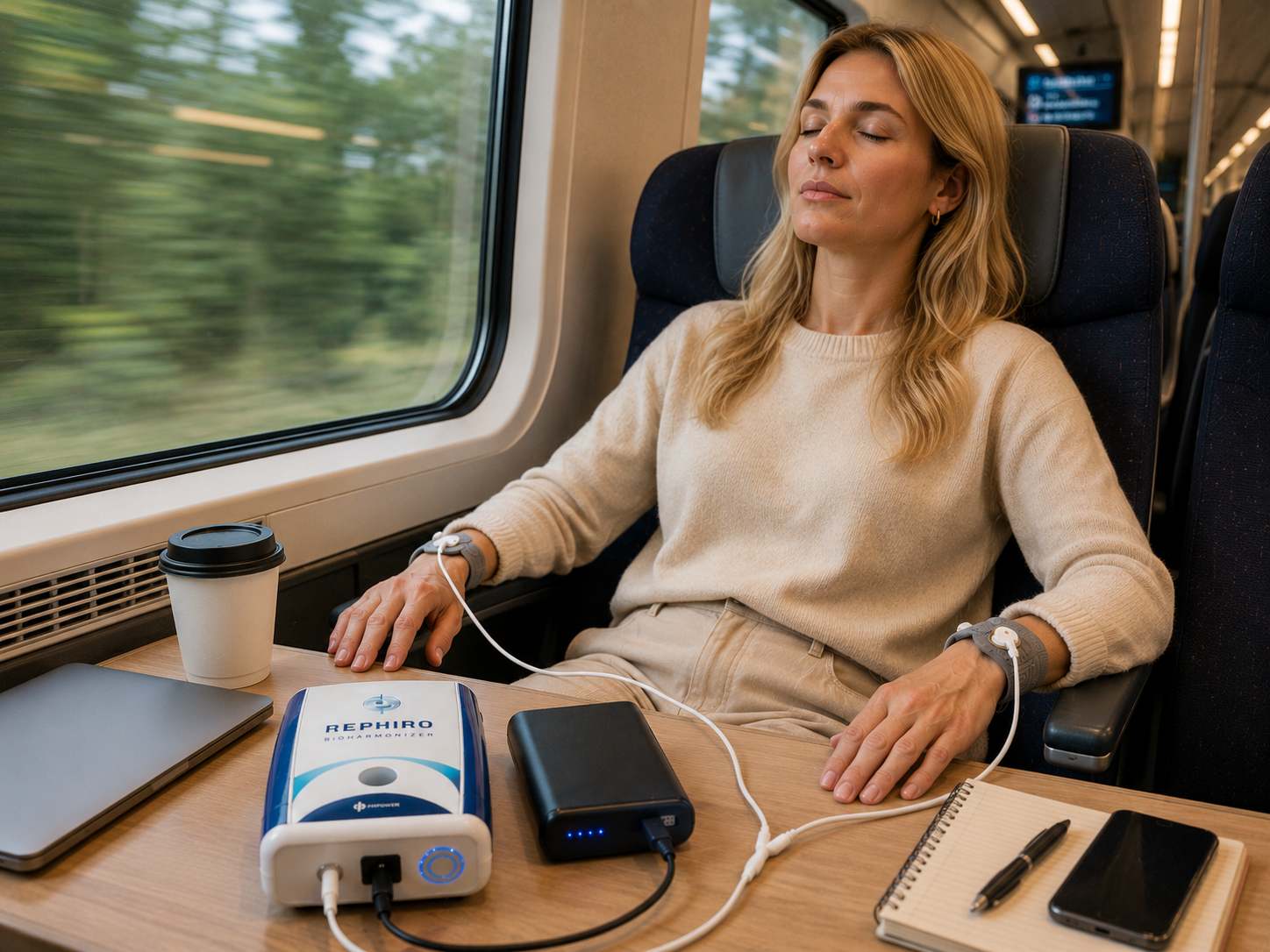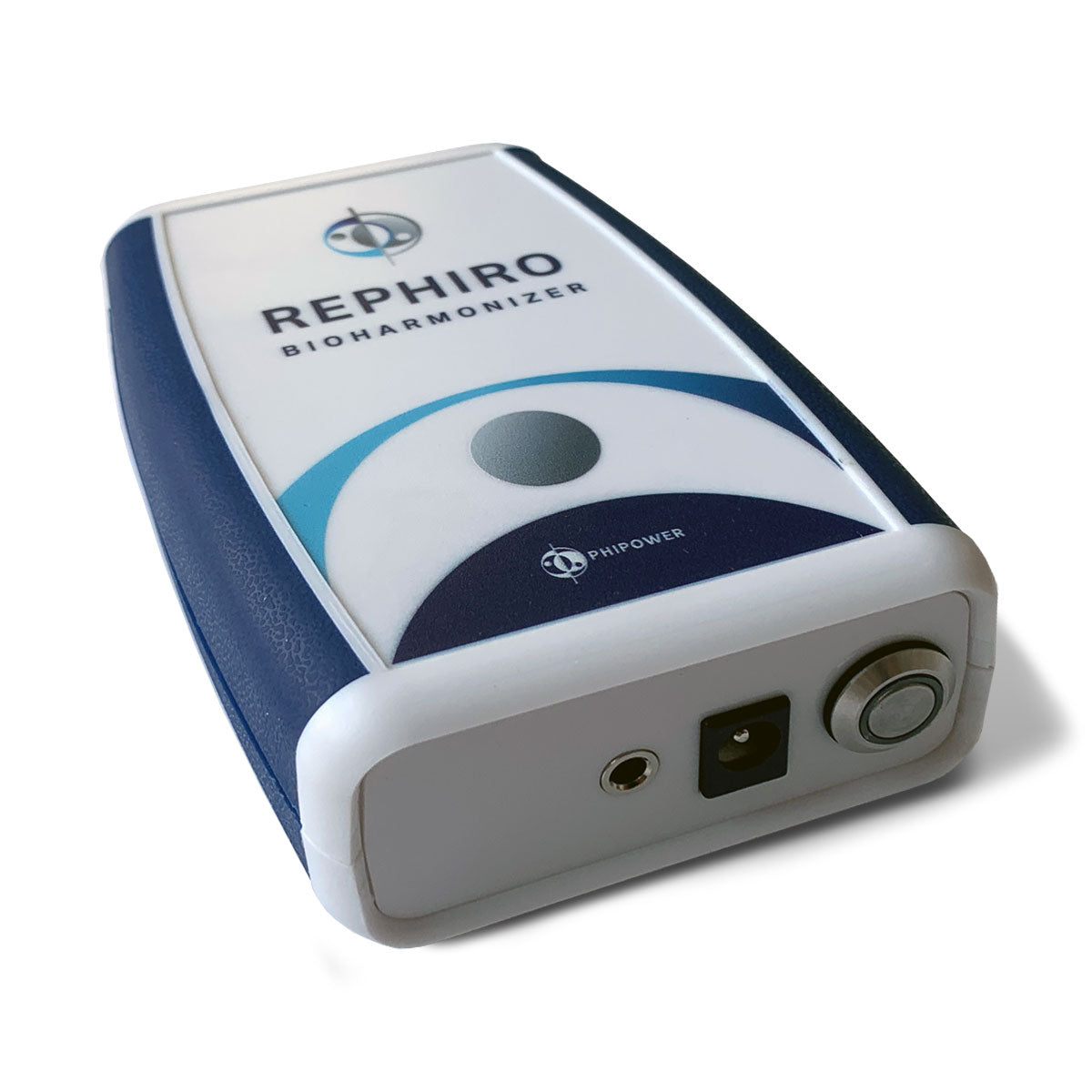
A historical target-frequency concept — not a modern clinically validated treatment database.
Rife used the idea of a frequency or oscillatory condition associated with disruption of a microorganism. The scientific question is not whether resonance exists, but whether specific historical MOR values can be reproduced, delivered through a body and shown to produce reliable clinical outcomes.
MOR stands for Mortal Oscillatory Rate. In the historical Rife tradition, it described an oscillatory frequency or condition that Rife believed could devitalize a specific microorganism. The term is historically documented, but the much stronger claim — that each disease has a clinically useful frequency that can be selectively applied through the human body — has not been established as a modern medical principle.
For the complete context, start with the Rife Machine pillar →
What exactly does "Mortal Oscillatory Rate" mean?
The phrase can be understood literally:
Mortal — intended to be destructive to the target organism.
Oscillatory — involving a repeating electrical or electromagnetic signal.
Rate — the repetition frequency, expressed in cycles per second.
In historical Rife material, MOR became shorthand for a target frequency associated with a microorganism.
It is important, however, not to turn the historical definition into proof.
The existence of MOR records tells us what Rife and collaborators believed they were observing. It does not by itself establish that those values are reproducible disease-treatment frequencies.
Is MOR really an original Rife term?
Yes — the term is part of the documented historical Rife tradition.
Collections of Rife laboratory records include early pathogen-and-frequency notes described as Mortal Oscillatory Rates. Those records are especially useful because they show that the concept was not invented only by modern frequency-device sellers.
However, the historical record is fragmented.
Some surviving materials are original notes; others are later transcriptions, compilations or reconstructions. Even archival collections warn that some older transcriptions may not be perfectly reliable.
Always ask: "What is the source of this frequency?"
Original lab record? Later typed transcription? Beam Ray reconstruction? Audio-frequency conversion? Practitioner list? Software database? Those are not equivalent sources.
For the broader biography and documentation, see Royal Raymond Rife: His Microscopes, Frequency Experiments, Claims & Legacy →
How did Rife claim to identify an MOR?
Later Rife descriptions portray a process in which a microorganism was observed while frequency settings were varied.
The reported goal was to find a setting associated with a visible disruptive response.
Simplified historical MOR concept
This workflow is historically interesting, but it also raises modern experimental questions:
- Was the observed effect reproducible?
- Was the actual field frequency measured independently?
- Were temperature and other confounders controlled?
- Was the organism correctly identified?
- Did independent laboratories reproduce the result?
- Did an in-vitro effect translate to patients?
Those are the kinds of questions required to move from an observation to established science.
Was Rife thinking in terms of resonance?
The MOR idea is commonly explained using resonance.
Resonance is unquestionably real in physics.
A physical system can respond strongly when driven near particular frequencies. Examples include:
- a tuning fork;
- a mechanical bridge;
- an electrical resonant circuit;
- an optical cavity;
- molecular vibrations under specific forms of spectroscopy.
But this is where careful reasoning matters.
Because resonance exists, it does not follow that every pathogen has one simple external "kill frequency" that can be sent through a human body while leaving surrounding tissue unaffected.
A microorganism is a complex biological system, not a single ideal oscillator.
Were Rife's original MORs audio frequencies?
One of the most important historical details is that early Rife material is not simply a list of low audible frequencies.
Historical document collections describe early MOR records in radio-frequency ranges.
This matters because modern Rife software often displays low numbers — sometimes hundreds or thousands of Hertz — leading users to assume that the original method was equivalent to playing a tone.
That is too simple.
Rife-era equipment evolved, and later systems involved carriers, modulation and different ways of producing frequency components.
An audio-frequency number appearing in a modern list is not automatically the original RF MOR recorded in early Rife laboratory material.
MOR vs carrier frequency
These terms are often confused.
A carrier frequency is a higher-frequency signal used as part of a modulation system.
An MOR is the historical target-frequency concept.
They can be related in some architectures, but they are not the same definition.
| Term | Meaning | Example role |
|---|---|---|
| MOR | Historical target oscillatory rate | A frequency believed to affect a specific organism |
| Carrier | Higher-frequency signal used for modulation | Provides the central RF frequency |
| Modulating frequency | Lower-frequency signal modifying the carrier | Creates amplitude/frequency variation |
| Sideband | Spectral component produced around a modulated carrier | Carrier ± modulation frequency |
Where do sidebands enter the Rife story?
Philip Hoyland is strongly associated with the electrical engineering of later Rife-era frequency equipment.
Modern technical reconstructions often focus on a carrier-and-modulation architecture. In ordinary amplitude modulation, the main sidebands appear at:
fc − fm and fc + fm
For example, a 3.1 MHz carrier modulated by 10 kHz can produce components around 3.090 MHz and 3.110 MHz.
This is standard signal-processing physics. What remains historically debated is exactly how every Rife/Beam Ray-era instrument was configured and which spectral component should be identified as the biologically relevant target.
For the full technical treatment, read How the Hoyland Sideband Method Works →
Why do modern MOR and Rife frequency lists disagree?
This is one of the strongest reasons not to treat every online frequency list as an original Rife document. Differences can arise from:
Different historical records
Not every list comes from the same notebook, device era or transcription.
RF-to-audio reinterpretation
Later systems sometimes used lower-frequency values to generate or approximate higher-frequency components.
Later practitioner additions
Modern databases can include values developed decades after Rife.
Additional sources of disagreement include:
- harmonic relationships;
- typing or transcription errors;
- rounding;
- different units;
- different carrier assumptions;
- device-specific software conversions.
What about harmonics?
A nonsinusoidal periodic waveform contains frequency components beyond its fundamental. A square wave, for example, contains a sequence of odd harmonics.
This means that two devices set to the same displayed base frequency can produce different spectra if their waveform shapes differ. It also helps explain why later Rife literature sometimes discusses harmonic relationships between apparently different values.
But the existence of harmonics should not be used as a way to declare every frequency equivalent to every other frequency. The actual amplitude and spectral content need to be measured.
See also Rife Frequencies Explained: What Are They & Where Do They Come From? →
Can you simply play an MOR through speakers?
If an MOR value is in the audio range, you can create an acoustic tone with the same numerical frequency. But that does not reproduce the same physical delivery as an electrical or RF exposure.
| Same numerical frequency | What actually oscillates? |
|---|---|
| Audio playback | Air pressure after loudspeaker conversion |
| Contact generator | Electrical voltage/current through a conductive path |
| Plasma/RF system | High-frequency electrical/electromagnetic field architecture |
So a 1 kHz audio file and a 1 kHz electrical contact signal share a repetition rate, but not a delivery mechanism.
Read Can You Hear Rife Frequencies? → for the complete explanation.
Can biological systems respond to frequency?
Yes, biological responses can depend on frequency under specific experimental conditions. This broad point is not controversial. Examples across biophysics and medicine include:
- electrical nerve and muscle stimulation;
- radio-frequency heating;
- ultrasound;
- pulsed electromagnetic fields;
- Tumor Treating Fields in defined oncology settings.
But these examples reinforce rather than weaken the need for specificity. For each effect you need to know:
- what kind of field or energy is used;
- the frequency;
- amplitude or field strength;
- waveform;
- dose and exposure duration;
- geometry and coupling;
- the biological target;
- the clinical evidence.
Frequency matters — but frequency alone is not a treatment.
What evidence would be needed to validate a specific MOR?
A modern test of a historical MOR would need more than observing a change once under a microscope.
A credible validation pathway
That pathway would allow a historical claim to become a testable scientific question.
MOR and cancer claims
The MOR concept became strongly linked to Rife's historical cancer claims.
Modern evidence does not establish consumer Rife machines or historical MOR lists as cancer treatments.
That distinction is particularly important because modern oncology does include legitimate electric-field therapies — but those therapies use defined medical devices, carefully engineered fields and device-specific clinical trials.
For the evidence review, see Rife Machine and Cancer: What Does the Evidence Actually Say? →
Does Rephiro use MORs?
Rephiro does not require users to choose disease-labelled MOR values. Its current specified architecture uses:
~3.1 MHz
A higher-frequency carrier.
0.1–150 kHz
An automatic lower-frequency sweep.
~14 Hz
A slower timing/gating layer.
Contact
Conductive electrical accessories.
This is intentionally different from a system where the user selects a named pathogen or disease from a frequency database.
For the product architecture comparison, see Rephiro vs Traditional Rife Machines →
Can the signal architecture be measured?
Yes. Unlike disease claims, many electronic questions are directly measurable:
- Is a carrier present?
- What is its frequency?
- What is the sweep range?
- What is the pulse rate?
- What sidebands and harmonics appear?
- What voltage/current is produced under load?
This is why Phipower's technical approach should separate electronic verification from biological interpretation.
See the dedicated measurement page: Rephiro Technical Test: What Does It Actually Output? →
How should you read an MOR list?
Before assuming a number is meaningful, ask seven questions:
| # | Question | Why it matters |
|---|---|---|
| 1 | What is the original source? | Separates archival material from later compilations. |
| 2 | What units are used? | Hz, kHz and MHz differ by factors of thousands. |
| 3 | Is it direct, carrier, modulation or sideband? | The same displayed number can play different roles. |
| 4 | What waveform? | Waveform changes harmonic content. |
| 5 | What delivery method? | Audio, contact and plasma are not equivalent. |
| 6 | Has the actual signal been measured? | Software settings are not the same as verified output. |
| 7 | What evidence supports the biological claim? | A frequency list is not a clinical trial. |
Seven common MOR misconceptions
"Every number in a modern Rife list is an original Rife MOR."
No. Modern lists can contain later additions, conversions and device-specific values.
"MOR means an audible tone."
No. Early Rife records include RF-range values, and the term describes a target-frequency concept rather than an audio format.
"Resonance proves MORs."
Resonance is real; a clinically useful microorganism-specific MOR still requires experimental evidence.
"If 1 kHz works electrically, 1 kHz audio is identical."
The repetition rate may match, but the physical stimulus does not.
"Different MOR lists can all be made equivalent through harmonics."
Harmonics are real, but equivalence depends on actual spectral amplitude and signal architecture.
"A sideband is just another name for the carrier."
No. Sidebands are separate spectral components created around a modulated carrier.
"A historical MOR value is proof of medical effectiveness."
No. Historical records generate hypotheses; clinical claims require clinical evidence.
Historical sources & further reading
Archive describing late-1920s to 1932 laboratory records in which "Mortal Oscillatory Rates" were recorded, with original-document and transcription material.
Large collection of historical articles, correspondence, laboratory material and instrument documentation, including notes on transcription authenticity.
Context on Rife's microscopes, frequency experiments, Beam Ray and historical claims.
Technical explanation of carriers, modulation and sidebands.
Evidence-focused review separating historical claims from modern electric-field oncology.
Frequently asked questions about Mortal Oscillatory Rates
The bottom line
Mortal Oscillatory Rate is a genuine historical Rife term.
It describes the idea that a particular oscillatory frequency or condition could disrupt a specific microorganism.
But three things should remain separate:
historical MOR records → modern signal reconstruction → clinical evidence.
The first tells us what was recorded. The second asks what signal the equipment actually produced. The third asks whether a defined device and protocol improve health outcomes.
Treat MOR as a historically important, testable hypothesis — not as a pre-validated medical frequency database.
For the complete overview of Rife history, technology, frequencies, evidence and device types:
Rife Machine: The Complete Guide to Rife Frequencies, Technology & Devices →
This article is historical and educational. Phipower frequency products are wellness and lifestyle products, not medical devices, and are not intended to diagnose, prevent, treat or cure disease. Historical MOR terminology and laboratory records should not be interpreted as clinical validation of disease-specific frequency treatment.