
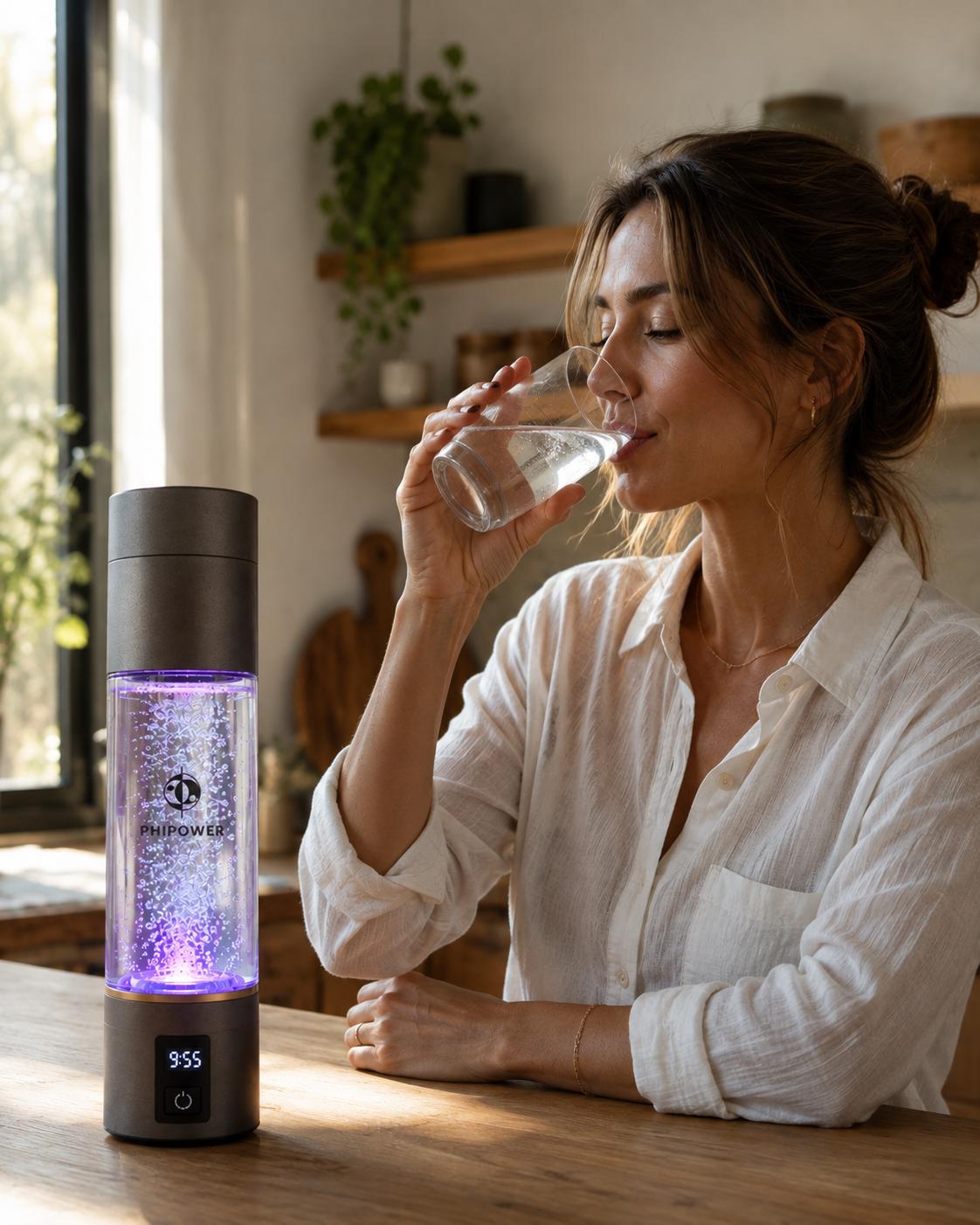
What are the potential benefits of hydrogen water?
Hydrogen water, also known as hydrogen-rich water (HRW), is drinking water containing additional dissolved molecular hydrogen gas (H₂). Scientific studies have investigated whether drinking it may influence oxidative stress, inflammatory signalling, exercise-related outcomes and metabolic health.
Some laboratory experiments and small human clinical trials have produced encouraging findings. However, the results are not consistent across all studies, and many proposed benefits remain unproven.
The most important distinction is between an interesting biological effect and a clinically meaningful improvement in health.
For example, a study may detect a change in a blood biomarker without demonstrating that participants feel better, experience fewer symptoms or have a reduced risk of disease.
At present, hydrogen-rich water is best understood as an emerging area of biomedical research rather than an established medical treatment.
Hydrogen water benefits at a glance
| Research area | What studies suggest | Current conclusion |
|---|---|---|
| Oxidative stress | Changes in certain oxidative stress biomarkers have been reported. | Preliminary and inconsistent human evidence |
| Inflammation | Some studies report changes in inflammatory markers. | Clinical significance remains uncertain |
| Exercise performance | Selected small trials report improvements in particular performance measures. | Mixed results; more research needed |
| Exercise recovery | Some recovery-related outcomes improved in small studies, while others did not. | Not established for routine use |
| Cholesterol and metabolism | Small average changes in selected lipid measurements have been reported. | Insufficient for treatment recommendations |
| Energy and fatigue | Some studies report changes in fatigue-related measures. | No proven general energy-enhancing effect |
| Ageing and longevity | Experimental interest in cellular stress responses. | No demonstrated human anti-ageing benefit |
| General health and prevention | Many possible applications have been proposed. | No established broad preventive benefit |
The overall picture: molecular hydrogen is scientifically interesting, but the evidence does not currently justify broad claims that drinking hydrogen-rich water reliably improves health.
1. Hydrogen water and oxidative stress
One of the main reasons hydrogen water attracts scientific attention is its possible relationship with oxidative stress.
What is oxidative stress?
Every day, the human body produces reactive oxygen species (ROS).
These reactive molecules play important roles in normal biological processes, including immune defence, cellular communication and metabolism.
However, when reactive species are produced in excessive amounts or are not appropriately regulated, they can contribute to damage involving proteins, lipids and DNA.
This imbalance is commonly described as oxidative stress.
The body already maintains complex antioxidant defence systems, including enzymes and other protective molecules.
Researchers are investigating whether molecular hydrogen can influence these systems.
How might H₂ influence oxidative stress?
A widely cited study by Ohsawa and colleagues, published in Nature Medicine in 2007, investigated molecular hydrogen in experimental models of oxidative injury.
The researchers reported protective effects under their study conditions and proposed that H₂ could interact with certain highly reactive oxygen species.
This study helped establish the modern scientific interest in molecular hydrogen.
Later research expanded the proposed mechanisms to include possible effects on cellular signalling and antioxidant defence pathways.
For example, some researchers have investigated molecular hydrogen in connection with Nrf2, a regulatory protein involved in the body's responses to cellular stress.
However, it remains uncertain which mechanisms are responsible for the observed findings, particularly in humans.
Does drinking hydrogen water reduce oxidative stress?
Some human trials have reported improvements in selected oxidative stress markers after hydrogen-rich water consumption.
Other studies have found limited or nonsignificant changes.
Differences in study design, population, hydrogen concentration and measurement methods make direct comparisons difficult.
Scientific conclusion: there are plausible experimental reasons to study H₂ and oxidative stress, but a consistent, clinically meaningful antioxidant benefit from drinking hydrogen water has not been established.
2. Hydrogen water and inflammation
Inflammation is a natural biological response to injury, infection and cellular stress.
It helps the immune system respond to threats and supports tissue repair.
Problems can arise when inflammatory processes become dysregulated.
Scientists have investigated whether molecular hydrogen may influence some of the cellular pathways involved in inflammatory regulation.
Which mechanisms are being studied?
Potential mechanisms include:
- Modulation of inflammatory signalling pathways.
- Changes in selected cytokine measurements.
- Interactions with oxidative stress responses.
- Possible effects on cellular protective systems.
Researchers have paid particular attention to signalling pathways associated with NF-κB and Nrf2.
These pathways are involved in many normal biological functions and are not specific to hydrogen.
What have human studies found?
Some clinical trials involving hydrogen-rich water have reported changes in inflammatory biomarkers.
However, the direction and magnitude of the changes differ between studies.
Additionally, a change in an inflammatory marker does not automatically indicate an improvement in a disease or health condition.
Scientific conclusion: hydrogen-rich water is being investigated for possible effects on inflammatory signalling, but it has not been established as a treatment for inflammatory disorders.
3. Hydrogen water and exercise performance
Exercise research is one of the more frequently investigated applications of molecular hydrogen.
Researchers are interested in whether hydrogen-rich water might influence exercise-related oxidative stress, fatigue, muscular performance or recovery.
What does research on athletes show?
A 2024 randomised, double-blind, placebo-controlled crossover study investigated hydrogen-rich water in 18 trained young men.
Participants consumed hydrogen-rich water or placebo water during a short supplementation period associated with resistance training.
The hydrogen-rich water condition showed improvements in certain muscular endurance measures, including the number of repetitions and total power output during the exercise protocol.
However, the researchers did not find significant improvements in several recovery-related outcomes, including muscle soreness and subjective recovery scores.
This distinction matters.
A favourable result in one performance measure does not mean that every aspect of athletic performance or recovery improves.
A 2025 study involving elite female athletes
Another randomised, double-blind, placebo-controlled study investigated hydrogen-rich water in 22 elite female athletes participating in handball and skeleton sports.
The researchers reported changes in certain exercise-related, biochemical and body-composition measurements.
However, the study did not demonstrate statistically significant improvements in its questionnaire-based stress and recovery outcomes.
The study was also small, used hydrogen-generating tablets and disclosed commercial interests involving molecular hydrogen.
These factors should be considered when interpreting the results.
What do systematic reviews show?
A 2024 systematic review and meta-analysis by Zhou and colleagues combined 27 publications involving 597 participants.
The researchers reported small favourable effects on selected measures, including lower-limb explosive power, perceived exertion and blood lactate.
However, they did not establish significant overall improvements in aerobic endurance, anaerobic endurance or muscular strength.
An important limitation: this review evaluated multiple molecular hydrogen delivery methods, not exclusively hydrogen-rich drinking water. Its results cannot automatically be attributed to hydrogen water alone.
Can hydrogen water improve athletic performance?
The available research suggests that selected exercise outcomes may be worth investigating further.
But it does not yet establish that hydrogen-rich water reliably improves performance across different sports, training levels or populations.
Scientific conclusion: exercise-related findings are interesting but mixed. Larger independent trials using standardised hydrogen-water protocols are needed.
4. Hydrogen water and muscle recovery
Muscle recovery is related to several processes, including metabolic regulation, tissue repair, inflammation and restoration of normal muscle function.
Because intense exercise temporarily influences oxidative and inflammatory signalling, researchers have explored hydrogen-rich water as a possible recovery-related intervention.
What has been observed?
A 2024 crossover trial involving elite fin swimmers examined hydrogen-rich water during a demanding training schedule.
The researchers reported favourable outcomes in selected recovery-related measurements.
Other trials, however, have not demonstrated consistent improvements in muscle soreness or perceived recovery.
This means the findings cannot yet be generalised to everyday exercise, resistance training or recreational sport.
Does hydrogen water reduce muscle soreness?
There is not enough consistent clinical evidence to make that claim.
Some investigations report improvements in selected markers, but findings vary according to the study protocol and the outcome measured.
Normal recovery remains strongly influenced by appropriate nutrition, sleep, training load and sufficient hydration.
Scientific conclusion: hydrogen water may be relevant to further research on exercise recovery, but it is not an established recovery intervention.
5. Hydrogen water and metabolic health
Metabolic health is another active research area.
Scientists have investigated hydrogen-rich water in connection with cholesterol levels, glucose regulation and other markers associated with metabolic function.
What does the 2026 meta-analysis show?
In March 2026, Ye and colleagues published a systematic review and meta-analysis in Diabetology & Metabolic Syndrome.
The analysis included 13 randomised controlled trials involving 757 participants.
Most participants were adults with overweight or obesity, frequently accompanied by metabolic health conditions.
The investigators examined changes in several blood lipid measurements.
Main results
| Measurement | Average difference associated with hydrogen-rich water |
|---|---|
| Total cholesterol | −6.71 mg/dL |
| LDL cholesterol | −3.21 mg/dL |
| HDL cholesterol | −1.16 mg/dL |
| Triglycerides | No statistically significant difference |
The reductions in total cholesterol and LDL cholesterol were statistically detectable, but the authors described them as clinically modest.
The small reduction in HDL cholesterol should not be presented as an improvement.
Importantly, the analysis did not demonstrate that hydrogen-rich water reduces cardiovascular events or provides meaningful cardiovascular protection.
The researchers concluded that the results did not support routine use of hydrogen-rich water as a lipid-lowering therapy.
Does hydrogen water lower cholesterol?
Some trials suggest small changes in particular lipid markers in selected populations.
However, this is not sufficient evidence to recommend hydrogen-rich water for cholesterol management.
For individuals with elevated cardiovascular risk, established medical guidance and appropriately indicated treatments remain important.
What about blood sugar and insulin sensitivity?
Hydrogen-rich water has also been investigated in populations with metabolic disorders.
Some individual trials have examined glucose-related or insulin-related biomarkers.
At present, there is insufficient consistent evidence to recommend hydrogen water for blood sugar control or diabetes treatment.
Scientific conclusion: metabolic studies provide useful research questions, but current evidence does not establish hydrogen water as an effective metabolic treatment.
6. Hydrogen water, energy and fatigue
Many people encounter hydrogen water through claims about energy and vitality.
But the word energy can mean different things.
It may refer to:
- Subjective feelings of alertness.
- Perceived tiredness.
- Physical endurance.
- Cellular energy metabolism.
- Recovery after physical activity.
These outcomes are not interchangeable.
Does hydrogen water increase cellular energy?
Mitochondria play central roles in cellular energy metabolism.
Some experimental research has investigated the relationship between molecular hydrogen, mitochondrial function and cellular stress responses.
However, demonstrating an effect on a cellular pathway is not the same as proving increased energy in a person.
Hydrogen is not a nutritional energy source in the way carbohydrates, fats and proteins are.
Can hydrogen water reduce fatigue?
Some small studies have reported changes in exercise-related fatigue measures.
Results differ across populations, exposure methods and protocols.
There is currently insufficient evidence that drinking hydrogen-rich water reliably reduces everyday fatigue in otherwise healthy individuals.
Scientific conclusion: molecular hydrogen may influence certain fatigue-related research outcomes, but general claims about increased energy remain unproven.
7. Hydrogen water and healthy ageing
Oxidative stress, cellular signalling and mitochondrial regulation are involved in the biology of ageing.
This has encouraged researchers to investigate possible relationships between molecular hydrogen and age-related cellular processes.
What are scientists studying?
Research topics include:
- Oxidative stress responses.
- Cellular defence mechanisms.
- Inflammatory signalling.
- Metabolic regulation.
- Age-associated biomarkers.
Most proposed anti-ageing mechanisms remain experimental.
Can hydrogen water slow or reverse ageing?
There is no convincing clinical evidence that hydrogen-rich water extends human lifespan, reverses biological ageing or prevents age-related diseases.
A change in a biomarker should not be interpreted as proof of a longer or healthier life.
Scientific conclusion: healthy ageing remains an interesting area for basic research, but anti-ageing claims for hydrogen water are not established.
8. Other potential benefits under investigation
In addition to exercise and metabolism, scientists have explored molecular hydrogen in a broad range of experimental settings.
These include neurological research, cardiovascular physiology, immune signalling and other specialised areas.
However, much of this literature involves animal experiments, small clinical trials or delivery methods other than drinking water.
It is essential not to treat all molecular hydrogen research as evidence for hydrogen-rich drinking water.
For example, findings from hydrogen gas inhalation cannot automatically be applied to a hydrogen water bottle.
Likewise, experimental studies involving hydrogen-enriched saline do not establish that consumer hydrogen water produces the same biological exposure.
Claims that require particular caution
Current evidence does not justify broad claims that hydrogen water:
- Prevents or cures cancer.
- Treats Alzheimer's or Parkinson's disease.
- Reverses ageing.
- Detoxifies the body.
- Replaces prescribed medication.
- Provides guaranteed improvements in immunity.
- Eliminates chronic inflammation.
- Prevents cardiovascular disease.
Some of these topics may be investigated in specialised research, but such research does not make them established benefits of a commercial hydrogen water product.
9. Why do hydrogen water studies produce different results?
One of the challenges in this research field is the considerable variation between studies.
Different hydrogen concentrations
Some investigations use relatively low dissolved H₂ concentrations, while others use more concentrated or temporarily supersaturated water.
The reported concentration is not always independently measured.
Different total hydrogen amounts
Hydrogen exposure depends on both concentration and water volume.
For example, 500 ml of water containing 2 mg/L H₂ contains approximately 1 mg of dissolved hydrogen.
The same volume at 6 mg/L would contain approximately 3 mg, assuming the stated concentrations are present when measured.
However, hydrogen can escape from water during storage and handling.
Different study populations
Studies may involve healthy adults, trained athletes, older participants or people with specific medical conditions.
Results from one population may not apply to another.
Different study durations
Some studies evaluate a single exposure, others several days, and some extend over weeks or months.
These protocols are difficult to compare directly.
Different outcome measurements
A trial measuring blood biomarkers does not necessarily answer the same question as a study measuring exercise performance or symptoms.
Small study populations
Many hydrogen water trials involve relatively few participants.
Small studies can produce unstable estimates and may not reliably detect adverse effects or differences between groups.
Commercial involvement
Some hydrogen research receives support from companies or investigators with commercial interests in hydrogen products.
Industry involvement does not automatically invalidate a study, but funding sources and declared conflicts of interest should be considered alongside study design and independent replication.
What would stronger evidence require?
Future research should ideally include:
- Larger randomised, double-blind, placebo-controlled trials.
- Clear descriptions of the hydrogen generation method.
- Independent measurements of dissolved H₂.
- Consistent reporting of the actual hydrogen amount consumed.
- Appropriate follow-up periods.
- Clinically meaningful outcome measurements.
- Transparent reporting of adverse effects and conflicts of interest.
- Independent replication by different research teams.
These improvements would make it easier to determine whether hydrogen water produces meaningful and reproducible benefits.
10. Is more hydrogen better?
Hydrogen water makers often advertise concentrations in parts per million (ppm) or parts per billion (ppb).
These units describe the dissolved hydrogen concentration.
For example:
- 1,000 ppb = 1 ppm.
- 3,000 ppb = 3 ppm.
- 6,000 ppb = 6 ppm.
At typical drinking-water densities, 1 ppm corresponds approximately to 1 mg of dissolved hydrogen per litre.
Does 6,000 ppb provide greater benefits than 1,500 ppb?
At the same water volume and measurement time, 6,000 ppb represents four times the dissolved hydrogen content of 1,500 ppb.
That is a measurable physical difference.
However, there is no established clinical dose-response relationship showing that four times the dissolved H₂ delivers four times the physiological benefit.
Higher concentration should therefore be understood as a technical specification rather than a guarantee of greater effectiveness.
Why measurement matters
Dissolved hydrogen concentration can change after generation because H₂ gradually escapes into the surrounding atmosphere.
Factors such as temperature, container design and time after preparation influence the remaining concentration.
Reliable product comparisons should therefore use reproducible measurement protocols.
To understand the technology and measurements in more detail, explore our Hydrogen Water: Complete Guide to Science, Technology and Hydrogen Water Makers.
11. Is hydrogen water safe to drink?
Hydrogen-rich water has generally been well tolerated in the relatively small human studies conducted so far.
However, this does not establish comprehensive long-term safety in every population or guarantee the quality of every hydrogen-generating product.
The most important practical considerations include:
Drinking-water quality. A hydrogen generator does not automatically remove microorganisms, heavy metals or other contaminants. Always start with water that is safe to drink.
Generator design. Materials, membranes, electrodes and electrolysis conditions influence device performance and the potential formation of unwanted by-products.
Cleaning and maintenance. Follow the manufacturer's instructions to maintain the equipment properly.
Individual health circumstances. People with kidney, heart or other conditions requiring fluid restrictions should follow their healthcare professional's advice.
Avoiding excessive claims. Hydrogen-rich water should not replace medical treatment, medication or evidence-based healthcare.
There is also no established daily hydrogen-water intake that is optimal for everyone.
12. Should you drink hydrogen water?
For someone interested in molecular hydrogen technology, hydrogen-rich water offers a practical way to explore dissolved H₂ through drinking water.
The technology can produce a measurable change in the water's gas content.
However, whether that change provides a noticeable personal health benefit is a separate question.
A balanced decision should consider:
- The current limitations of the scientific evidence.
- The reliability and transparency of the equipment.
- The actual dissolved hydrogen concentration.
- Water quality and maintenance requirements.
- Cost, convenience and personal preferences.
Hydrogen-rich water should be considered an optional wellness technology, not a medical necessity.
Ordinary safe drinking water remains an effective foundation for daily hydration.
13. Explore hydrogen-rich water with Phipower
At Phipower, we believe emerging water technologies should be explained through measurable characteristics and transparent scientific information.
Our goal is to distinguish between established chemistry, experimental biological findings and health claims that require additional evidence.
Phipower Hydrogen Water Bottle: 6000 ppb
The Phipower Hydrogen Water Bottle is a portable generator designed to prepare hydrogen-rich drinking water using dual-chamber PEM/SPE electrolysis.
Published product specifications include:
- Up to 6,000 ppb (6 ppm) dissolved H₂ under suitable operating conditions.
- A 270 ml drinking bottle.
- An approximately five-minute generation cycle.
- Rechargeable battery operation.
- A membrane-based electrolysis system.
The advertised concentration is a product specification, not a guarantee of a particular amount of hydrogen in every preparation or a specific health outcome.
Actual hydrogen concentration depends on water composition, temperature, equipment condition, generation conditions and measurement timing.
Discover the Phipower Hydrogen Water Bottle
Our products are designed for consumer wellness use. They are not intended to diagnose, treat, cure or prevent disease.
Frequently asked questions about hydrogen water benefits
What are the main benefits of hydrogen water?
Studies have investigated possible influences on oxidative stress, exercise-related outcomes and metabolic biomarkers. Some small trials report favourable findings, but broad health benefits remain unproven.
Is hydrogen water good for you?
Hydrogen-rich water is generally well tolerated in available short-term human studies when produced using suitable equipment and safe drinking water. Whether it provides meaningful additional health benefits remains uncertain.
Is there scientific proof that hydrogen water works?
It is scientifically established that water can contain measurable dissolved molecular hydrogen. Some biological effects have been reported, but reliable clinical benefits across the general population have not been established.
Does hydrogen water reduce inflammation?
Some experimental and human studies report changes in inflammatory markers. These findings do not establish that hydrogen water treats inflammatory disease.
Does hydrogen water help with exercise recovery?
Some small studies suggest favourable changes in selected exercise or recovery measurements, while others report no significant effects. There is insufficient evidence to recommend it as an established recovery intervention.
Can hydrogen water improve energy levels?
Some exercise studies have examined fatigue-related outcomes, but hydrogen-rich water has not been shown to consistently increase everyday energy levels.
Does hydrogen water help with cholesterol?
A 2026 meta-analysis found small average reductions in total and LDL cholesterol in selected adults with overweight or obesity, mainly those with metabolic conditions. The changes were not considered large enough to justify using hydrogen water as a cholesterol-lowering treatment.
Does hydrogen water slow ageing?
No reliable clinical evidence shows that drinking hydrogen-rich water reverses ageing or extends human lifespan.
Is 6,000 ppb hydrogen water more effective?
It contains more dissolved hydrogen per litre than lower-concentration water, assuming accurate measurement. However, greater health benefits from higher concentrations have not been established.
Can you drink hydrogen water every day?
Daily consumption has been studied in several human trials, generally with favourable short-term tolerability. However, there is no universally established optimal daily dose, and long-term evidence remains limited.
Can hydrogen water replace supplements or medication?
No. Hydrogen-rich water should not replace prescribed medication, appropriate nutrition, necessary supplements or professional healthcare.
Explore more in the Phipower Hydrogen Knowledge Center
Hydrogen water is one part of the broader scientific field of molecular hydrogen.
Continue exploring related topics:
Molecular Hydrogen (H₂): Science, Delivery Methods and Research. An introduction to the physical properties of H₂, proposed biological mechanisms and different ways to deliver molecular hydrogen. Read the guide
Hydrogen Water: The Complete Guide. Our central knowledge guide explaining dissolved hydrogen, PEM/SPE technology, concentration measurements, safety and hydrogen water generators. Read the guide
PEM/SPE Hydrogen Water Technology. Explore the engineering behind membrane electrolysis, hydrogen generation and gas separation. (Coming soon)
Hydrogen Water Concentration: 1500 vs 3000 vs 6000 ppb. Discover how concentration is measured and why more dissolved hydrogen does not automatically mean greater health effects. (Coming soon)
Molecular Hydrogen: Drinking vs Inhaling H₂. Compare the two major hydrogen delivery methods and understand how their technical characteristics differ.
Conclusion: promising research, important unanswered questions
The scientific investigation of hydrogen-rich water has grown considerably since the first modern studies of molecular hydrogen.
Laboratory experiments and clinical trials have explored possible relationships with oxidative stress, inflammatory signalling, exercise physiology and metabolic regulation.
Some findings are encouraging.
Yet important questions remain about reproducibility, clinical relevance, long-term safety, effective exposure and differences between individuals.
Hydrogen-rich water is scientifically measurable, and its biological effects are being investigated. But it is not currently established as a general treatment or a guaranteed way to improve health.
For Phipower, this distinction is central to our approach.
We believe that the most valuable wellness technologies are those accompanied by transparent product specifications, accessible scientific explanations and a clear understanding of what research can and cannot demonstrate.
Scientific references
- Ohsawa I. et al. (2007) Hydrogen acts as a therapeutic antioxidant by selectively reducing cytotoxic oxygen radicals. Nature Medicine, 13, 688-694. DOI: 10.1038/nm1577 Foundational experimental research investigating molecular hydrogen and oxidative injury.
- Dhillon G. et al. (2024) Hydrogen Water: Extra Healthy or a Hoax? A Systematic Review. International Journal of Molecular Sciences, 25(2), 973. DOI: 10.3390/ijms25020973 Systematic review of 25 publications examining potential benefits and limitations of hydrogen-rich water research.
- Zhou K. et al. (2024) Can molecular hydrogen supplementation enhance physical performance in healthy adults? A systematic review and meta-analysis. Frontiers in Nutrition, 11, 1387657. DOI: 10.3389/fnut.2024.1387657 Meta-analysis of 27 publications involving 597 participants, evaluating different molecular hydrogen delivery methods and selected exercise outcomes.
- Effects of 8 days intake of hydrogen-rich water on muscular endurance performance and fatigue recovery during resistance training (2024). Randomised, double-blind, placebo-controlled crossover study involving 18 trained men. Read the study on PubMed Central
- Sl\u00e1de\u010dkov\u00e1 B. et al. (2024) Hydrogen-rich water supplementation promotes muscle recovery after two strenuous training sessions performed on the same day in elite fin swimmers: randomized, double-blind, placebo-controlled, crossover trial. Frontiers in Physiology, 15, 1321160. DOI: 10.3389/fphys.2024.1321160
- Ogannisyan M. et al. (2025) Hydrogen-Rich Water Decreases Muscle Damage and Improves Power Endurance in Elite Athletes: A Randomized, Double-Blinded, Placebo-Controlled Trial. Journal of Lifestyle Medicine, 15(1), 8-17. DOI: 10.15280/jlm.2025.15.1.8 Small trial involving 22 elite female athletes; commercial relationships related to molecular hydrogen were disclosed.
- Ye H. et al. (2026) The effect of hydrogen-rich water interventions on lipid profiles in adults with overweight or obesity and associated metabolic disorders: a systematic review and meta-analysis of randomized controlled trials. Diabetology & Metabolic Syndrome, 18, Article 114. DOI: 10.1186/s13098-026-02124-0 Meta-analysis of 13 randomised controlled trials involving 757 participants. The authors concluded that the observed lipid changes were clinically modest and did not justify routine therapeutic use.
Scientific disclaimer: this article is educational and does not provide medical advice. Studies of hydrogen-rich water vary in design, population and quality. Findings from individual studies do not establish that commercial hydrogen products provide the same results. Phipower hydrogen devices are consumer wellness products, not medical treatments. Consult an appropriately qualified healthcare professional concerning medical conditions or treatment decisions.