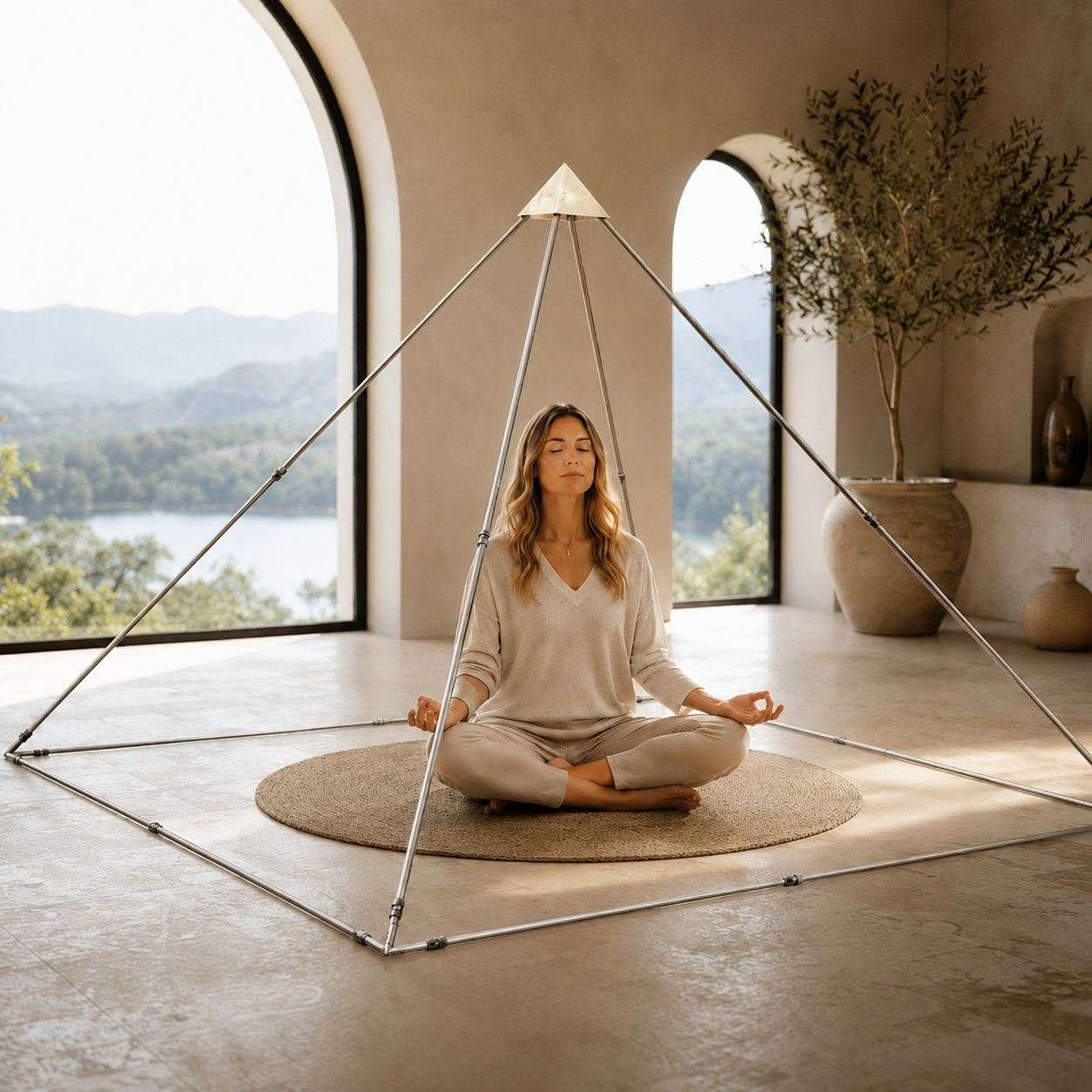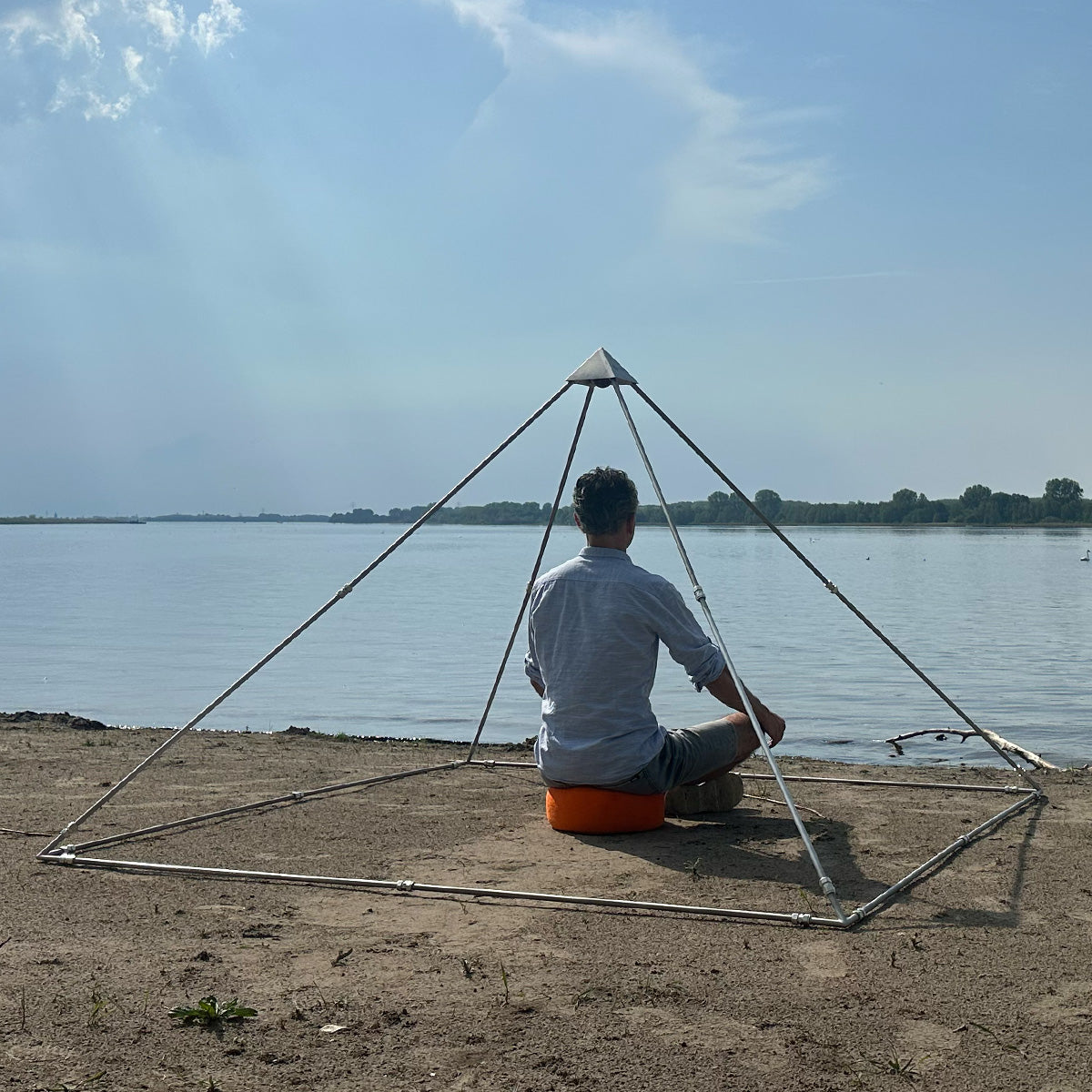
A meditation pyramid does not need to be used for silent sitting alone. It can also frame gentle breathwork, mantra, humming, singing bowls, yoga nidra and restorative practices — provided the practice fits safely within the available space.
Which practices work well inside a meditation pyramid?
1. Breathwork: the simplest practice to combine with a meditation pyramid
Breathwork is a natural fit because the body can remain seated and relatively still.
Good starting options include:
- simple breath awareness;
- slow nasal breathing;
- equal-count breathing;
- box breathing;
- gentle extended exhalation;
- soft humming on the exhale.
Start with breath awareness before advanced techniques
You do not need a complicated breathing method.
For many people, simply noticing the breath at the nose, chest or abdomen is enough to make the pyramid session feel deliberate and focused.
10–15 minutes of normal breathing with gentle attention is often more sustainable than chasing intense breathwork experiences.
Can you practice pranayama inside a meditation pyramid?
Yes, especially gentle seated techniques.
More advanced breathing methods may involve strong ventilation, long breath holds or significant physiological stress. If you practice those, follow qualified instruction and stop if you feel dizzy, faint, panicky or unwell.
The pyramid does not make an intense breathwork technique automatically safer or more effective.
2. Sound meditation: voice, tone and repetition
Sound meditation can be as simple as one repeated tone.
Does pyramid geometry amplify sound?
Sound perception is influenced by the room, the listener's position, surfaces, instrument placement and the geometry around them.
A lightweight open-frame meditation pyramid may change the subjective sense of space, but it should not be assumed to create a predictable acoustic amplification or healing-frequency effect.
Any actual acoustic effect can be measured with microphones and frequency-response testing.
Mantra meditation works especially well in a defined space
The pyramid can function as a visual container for repetition.
You can:
- sit comfortably;
- choose one short mantra;
- repeat it silently or softly;
- let the rhythm synchronize naturally with the breath;
- finish with one minute of silence.
Humming: a bridge between breath and sound
Humming is useful because it combines exhalation, vibration and auditory attention in one simple act.
It can also make the transition from active thinking to quiet meditation feel more gradual.
No special frequency is required.
Can you use singing bowls inside the pyramid?
Yes, if there is enough room to place and play them safely.
A single bowl is often enough for personal practice.
Keep it:
- within comfortable reach;
- clear of the pyramid frame;
- at a volume that feels pleasant rather than overwhelming;
- on a stable surface or cushion.
3. What kind of yoga works inside a meditation pyramid?
Still or low-movement practices are the best match.
Restorative & meditative yoga
Seated poses, supported forward folds, gentle stretches, yoga nidra and breath-led stillness can work well.
Dynamic yoga
Vinyasa, standing flows, wide arm movements and balance sequences generally require more open space.
Yoga nidra under a meditation pyramid
Yoga nidra is primarily a guided, reclined awareness practice, so physical space matters more than movement.
If lying down is important to you, check the actual base dimensions before buying.
The Large Phipower configuration is the more practical option for expanded or reclined positions because of its larger footprint.
Restorative practice: use the pyramid as a boundary, not a cage
The structure should support your position rather than constrain it.
If a bolster, blanket, chair or reclined posture touches the frame or forces you into a narrower position, move the practice outside the pyramid or choose a larger configuration.
Why dynamic movement is usually better outside the pyramid
Dynamic practice requires free space above and around the body.
Inside a fixed frame, wide arm movements or quick transitions increase the chance of bumping tubes or connectors.
Move freely outside it, then sit, breathe or rest inside it.
A combined practice can work better than forcing everything into one mode
You can structure a session in layers:
A simple 20-minute breath + sound pyramid session
- 2 minutes: settle into the center of the pyramid.
- 5 minutes: slow, natural nasal breathing.
- 5 minutes: repeat a mantra or hum softly.
- 6 minutes: sit in silence.
- 2 minutes: notice how you feel before leaving.
Can you combine crystals with breath and sound?
Yes — but keep them secondary.
A crystal can remain as a symbolic object near the apex or meditation seat while the breath or sound remains the actual practice.
For a dedicated ritual guide, see Pyramid Meditation with Crystals.
How to set up a breathwork or sound corner at home
A simple setup is enough:
- the meditation pyramid;
- a cushion, chair or mat;
- one bowl or sound source if desired;
- soft lighting;
- enough clearance to enter and leave safely.
For room setup and storage, read Meditation Pyramid at Home.
Breathwork and sound: practical safety
- begin gently;
- stay seated for breathwork if you are unfamiliar with it;
- keep sound at comfortable volume;
- leave enough space around instruments;
- stop if you feel unwell.
- forceful hyperventilation;
- long breath holds;
- very loud bowls or speakers;
- standing movement inside a small frame;
- anything that causes dizziness or loss of balance.
Which Phipower size works best for these practices?
Best for seated breath and mantra
Approx. 77 cm high with a 121 × 121 cm base. Suits compact personal practice and smaller rooms.
Better for instruments and reclined practice
Approx. 140 cm high with a 220 × 220 cm base. Gives more clearance for bowls, chairs and restorative positions.
For the full product-selection criteria, see How to Choose a Meditation Pyramid.
How can breath and sound change the experience?
Breath and sound add strong sensory anchors.
You may notice:
- less mind-wandering;
- stronger body awareness;
- greater sense of immersion;
- more noticeable vibration from your own voice;
- a clearer transition into silence.
For first-session sensations, read What Does Pyramid Meditation Feel Like?.
Do sound and breath activate "pyramid energy"?
There is no robust evidence that breathwork, mantra or singing bowls activate a unique healing-energy field in a meditation pyramid.
They can, however, make the practice feel more immersive and structured.
For the evidence review, see Does Pyramid Energy Exist?.
When the pyramid is not the best place for the practice
Use the room rather than the structure when the practice needs:
- wide arm movements;
- standing balance;
- fast transitions;
- multiple participants;
- large instruments;
- more floor space than the base provides.
One structure, several meditation practices
The Phipower Meditation Pyramid is designed as a Great Pyramid-inspired environment for silent meditation, breath awareness, mantra, sound and other still contemplative practices.
Frequently asked questions about yoga, breathwork and sound in a meditation pyramid
The bottom line
That simple distinction keeps the practice comfortable, flexible and easy to repeat.
A meditation pyramid can become more versatile when it supports several contemplative methods without pretending that every practice needs to happen inside the frame.
The Phipower Meditation Pyramid is a wellness and meditation product, not a medical device. Breathwork, sound and yoga practices are described here for general wellness use and are not presented as treatments for disease.