
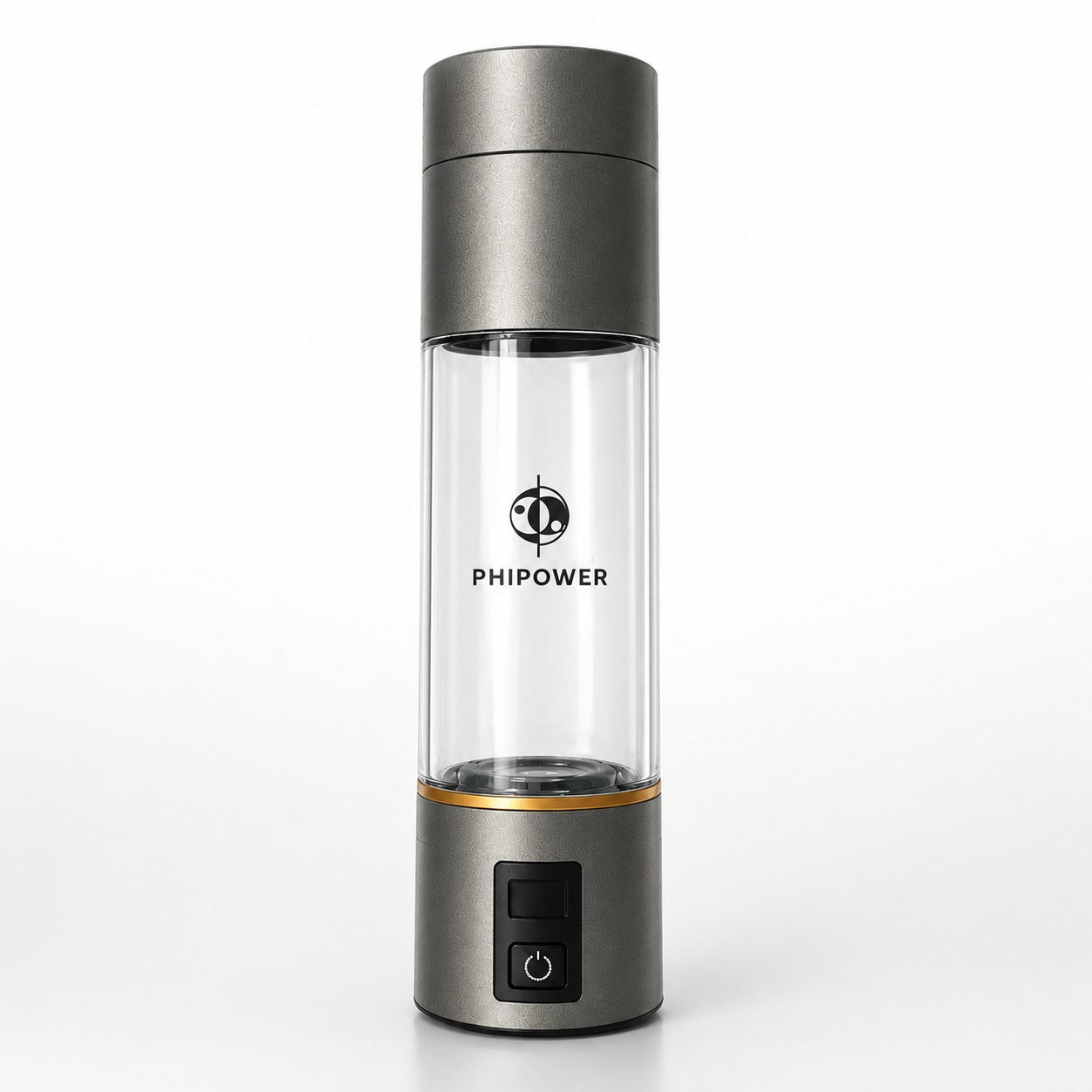
What is the best hydrogen water maker?
The best hydrogen water maker reliably produces measurable dissolved molecular hydrogen (H₂), uses suitable drinking-water materials, operates safely and fits your daily routine. A high advertised concentration such as 6000 ppb is an interesting technical specification, but not sufficient evidence of superior quality or health benefits.
The market includes portable hydrogen water bottles, countertop generators, alkaline water ionizers, hydrogen tablets and specialised gas-dissolution systems. Some advertise 1500 ppb, others 3000, 6000 or more. Prices, technologies and descriptions vary widely. The way to separate a well-designed generator from impressive marketing is to evaluate it on measurable criteria.
The 12 things to check before buying
- Generation technology: PEM/SPE, tablets or another method
- Measured H₂ concentration: verified ppm, ppb or mg/L
- Bottle capacity: how much water per cycle
- Gas separation: how hydrogen and oxygen are managed
- Electrode materials: construction, coatings, quality
- Drinking-water safety: food-contact materials, by-products
- Generation time: how quickly a serving is ready
- Portability & battery: charging, size, convenience
- Cleaning & maintenance: membrane care, reliability
- Hydrogen retention: what happens after the cycle
- Warranty & support: service, documentation, parts
- Price & long-term value: total cost of ownership
Choose the right hydrogen generation technology
Every hydrogen water maker aims to produce drinking water containing dissolved H₂, but technologies get there through different processes.
PEM/SPE hydrogen water makers
PEM stands for Proton Exchange Membrane, SPE for Solid Polymer Electrolyte: closely related aspects of membrane-based electrolysis. Electricity splits water into hydrogen and oxygen, a proton-conducting membrane separates the compartments, and in a suitably engineered generator the H₂ is directed into the drinking water.
- ✓Integrates into rechargeable portable devices
- ✓No hydrogen tablets required
- ✓Controlled separation of electrochemical reactions
- ✓Often simple one-button operation
- ✓Repeated fresh hydrogen generation
Important: PEM/SPE does not automatically guarantee a particular H₂ concentration. Performance depends on membrane quality, electrode construction, operating current, water composition and gas dissolution, and engineering quality varies widely between devices labelled PEM/SPE.
Which technology is best?
No technology is universally superior. For a portable, rechargeable consumer product, a properly designed PEM/SPE generator offers a practical balance between repeatability and convenience.
Related guide: How Does a PEM/SPE Hydrogen Water Maker Work?
Understand hydrogen concentration: ppm and ppb
Concentration is one of the most advertised characteristics of hydrogen water makers, and one of the most misunderstood. PPM means parts per million, PPB parts per billion. For dilute dissolved hydrogen in drinking water, 1 ppm by mass is approximately 1 mg of H₂ per litre.
Is 6000 ppb better than 1500 ppb?
At equal volume, 6000 ppb is four times the dissolved H₂ concentration of 1500 ppb: a real physical difference. It does not establish four times the health benefit. There is currently no reliable general-use clinical dose-response relationship showing that a particular H₂ concentration delivers superior outcomes.
Why measurement conditions matter
Near 25°C, water equilibrated with pure hydrogen at about one atmosphere contains around 1.6 mg/L dissolved H₂.2 Higher concentrations are possible through pressure or temporary supersaturation, but may be lost after generation or when the container is opened.
Ask the manufacturer: “Has the advertised dissolved H₂ concentration been measured in the finished water, and under which conditions?” A convincing answer names the method, volume, temperature and sampling time. “Up to 6000 ppb” does not mean exactly 6000 ppb in every cycle.
Related guide: Hydrogen Water Concentration: 1500 vs 3000 vs 6000 ppb
Check bottle capacity and total hydrogen content
Concentration matters, but so does volume. A 500 ml bottle at 1500 ppb does not hold the same total dissolved hydrogen as a 270 ml bottle at 6000 ppb.
Calculated amounts, not measurements of specific products. They assume the listed concentration is present throughout the water.
A larger bottle prepares more water per cycle, but may need more space, be less convenient to carry and take longer to prepare. A smaller portable bottle suits someone who prepares a fresh serving right before drinking; a larger system suits households that need more.
Buying advice: consider how much water you want per cycle, not just the maximum advertised concentration.
Look for reliable hydrogen and oxygen separation
Electrolysis produces hydrogen and oxygen through different electrode reactions. In a conventional PEM electrolyser they occur on opposite sides of a proton-conducting membrane.1
Appropriate gas separation helps manage the reaction products and limit unwanted mixing. Some generators use a dual-chamber construction with separate compartments and gas pathways. A well-engineered dual-chamber system can have practical advantages, but it is not an independent certification of water quality. What matters:
Buying advice: look for a clear technical explanation of how the device handles hydrogen, oxygen and possible by-products. Be cautious of products that give no meaningful information about their internal construction.
Evaluate the electrode materials
Electrodes must operate in an electrically active environment while maintaining stable performance.
Electrode materials affect the electrochemical process, durability and possibly water quality. Their presence does not prove any medical benefit.
Buying advice: prioritise suitable materials, verified construction and product testing over phrases such as medical-grade hydrogen, premium molecular activation or therapeutic platinum technology.
Prioritise drinking-water safety
A hydrogen generator produces drinking water, so the safety of the complete system matters.
A hydrogen water generator is not automatically a water purifier. Hydrogen generation does not remove bacteria, heavy metals or other contaminants. Always start with water that is already safe to drink.
Useful documentation
- ✓Food-contact material information
- ✓Relevant declarations of compliance
- ✓Product-specific water-quality testing
- ✓Electrode material information
- ✓Electrical and battery-safety documentation
- ✓Clear cleaning and operating instructions
A CE marking, where applicable, does not prove an advertised dissolved hydrogen concentration or any health benefit.
Related guide: Is Hydrogen Water Safe? Scientific Evidence, Side Effects & Daily Use
Consider generation time and daily convenience
A longer cycle is not automatically better. Dissolved concentration also depends on gas-liquid contact, temperature, pressure and design; beyond a point, extra gas mostly escapes rather than dissolving. A reliable five-minute cycle can be more attractive than a complicated sequence of settings, but performance should be measured, not inferred from duration.
What makes a device practical?
Compare portability and battery performance
Some generators fit a bag or desk; others belong on a kitchen counter. Ask:
A higher mAh rating does not mean more dissolved hydrogen. It is a battery capacity figure, to be read alongside voltage, power requirements and efficiency. Look for a practical balance of battery life, size, ease of use and measured output.
Check maintenance requirements before buying
Maintenance is often overlooked, yet the condition of a generator influences its long-term performance.
Questions to ask before buying
- ✓How often does the device need cleaning?
- ✓Which cleaning products are permitted?
- ✓What happens if the membrane dries out?
- ✓Can the membrane or electrolysis assembly be replaced?
- ✓Are replacement components available?
- ✓What warranty and technical support are offered?
Understand hydrogen retention and storage
Producing hydrogen-rich water is only half the story. H₂ is a small, poorly soluble molecule; exposed to air, it gradually leaves the water. There is no universal retention time: open containers can lose much of it within hours, suitable sealed systems retain measurable H₂ much longer.
Why fresh generation is useful
A portable generator lets you prepare a serving close to drinking, so you rely less on long-term storage.
A generator that briefly reaches a high concentration but loses much of it during ordinary handling may perform differently from one with a lower but more stable concentration. Compare both initial concentration and retention.
Related guide: How Long Does Hydrogen Stay in Water?
Compare warranty, support and manufacturer transparency
A hydrogen water maker is a small electrochemical device with electrodes, membranes, circuits, seals and a battery, not an ordinary bottle. Those parts may need support over time.
Are customer reviews useful?
Yes, for ease of use, battery reliability, cleaning, leaks, shipping, support and perceived build quality. But a positive review cannot establish dissolved H₂ concentration or validate a medical claim.
A strong purchasing decision combines real user experience with measurable technical information.
Evaluate price and long-term value
Price alone does not establish quality. It may reflect:
Total cost of ownership
A reusable generator has an upfront cost and possible maintenance; tablets need little equipment but cost something every serving. Which is cheaper depends on prices, frequency of use and total servings; there is no universal break-even point. An expensive product may add features or capacity, but that does not guarantee more dissolved H₂ or greater health benefits.
The best value comes from reliable performance, appropriate safety documentation, ease of use and long-term support at a price you consider reasonable.
Portable hydrogen water bottles vs countertop generators
A countertop generator is not automatically more powerful or better at dissolving H₂; its performance must be measured just like a bottle’s. A portable bottle suits personal servings without installation; a countertop system suits larger quantities. The core questions stay the same: how much dissolved hydrogen, how safely, and how easy to maintain?
Red flags to watch for when buying
Technical terminology can make marketing claims hard to evaluate. Be cautious when a product:
How can you verify a manufacturer’s hydrogen claims?
Strong comparisons start with reproducible, direct measurements. Suitable methods include:
Sampling technique matters, because H₂ escapes during handling. A useful protocol records:
What an ideal manufacturer report includes
- ✓Clearly identified model and test date
- ✓Testing method and operating conditions
- ✓Individual and average measurements
- ✓Independent laboratory identity, where applicable
- ✓A clear statement of measurement limitations
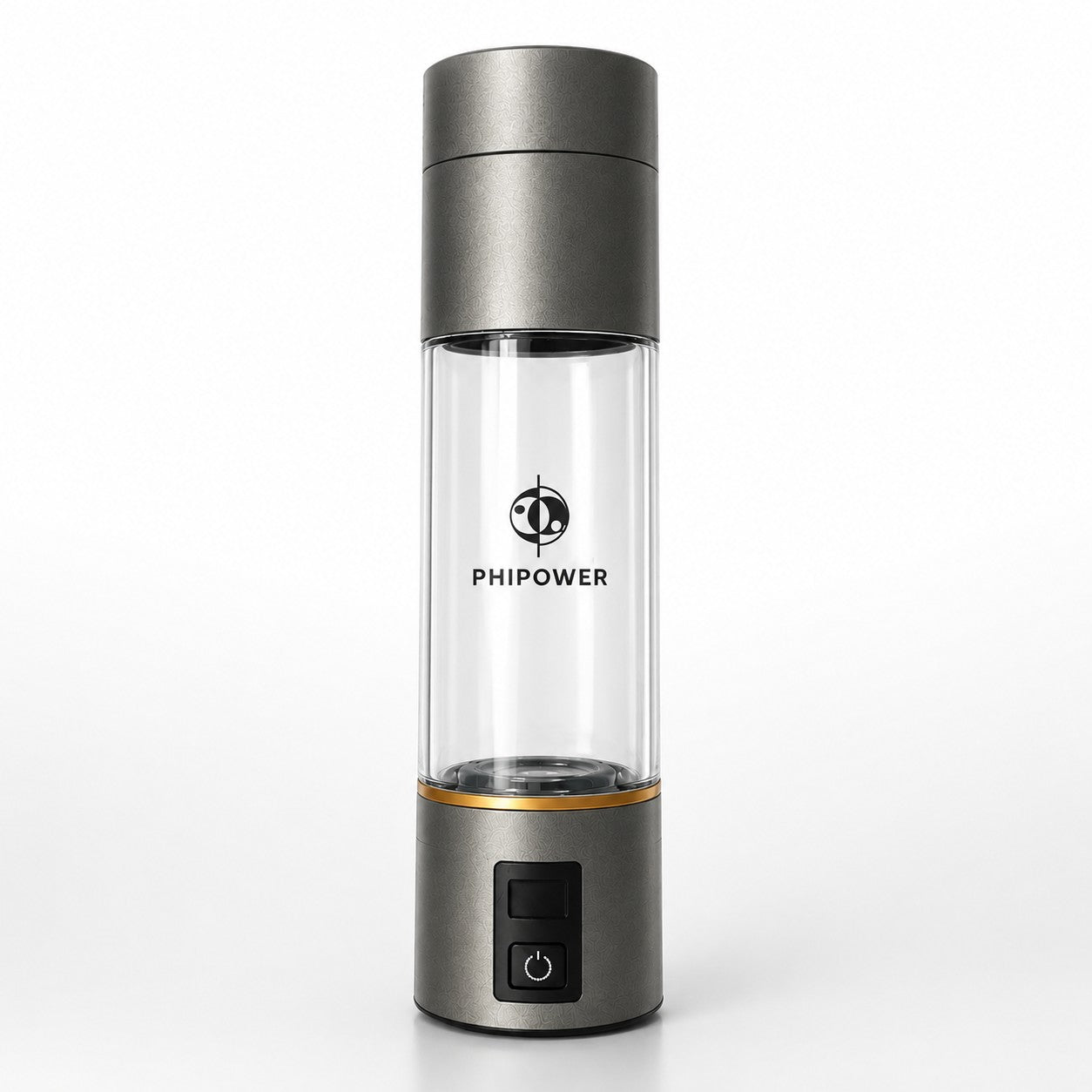
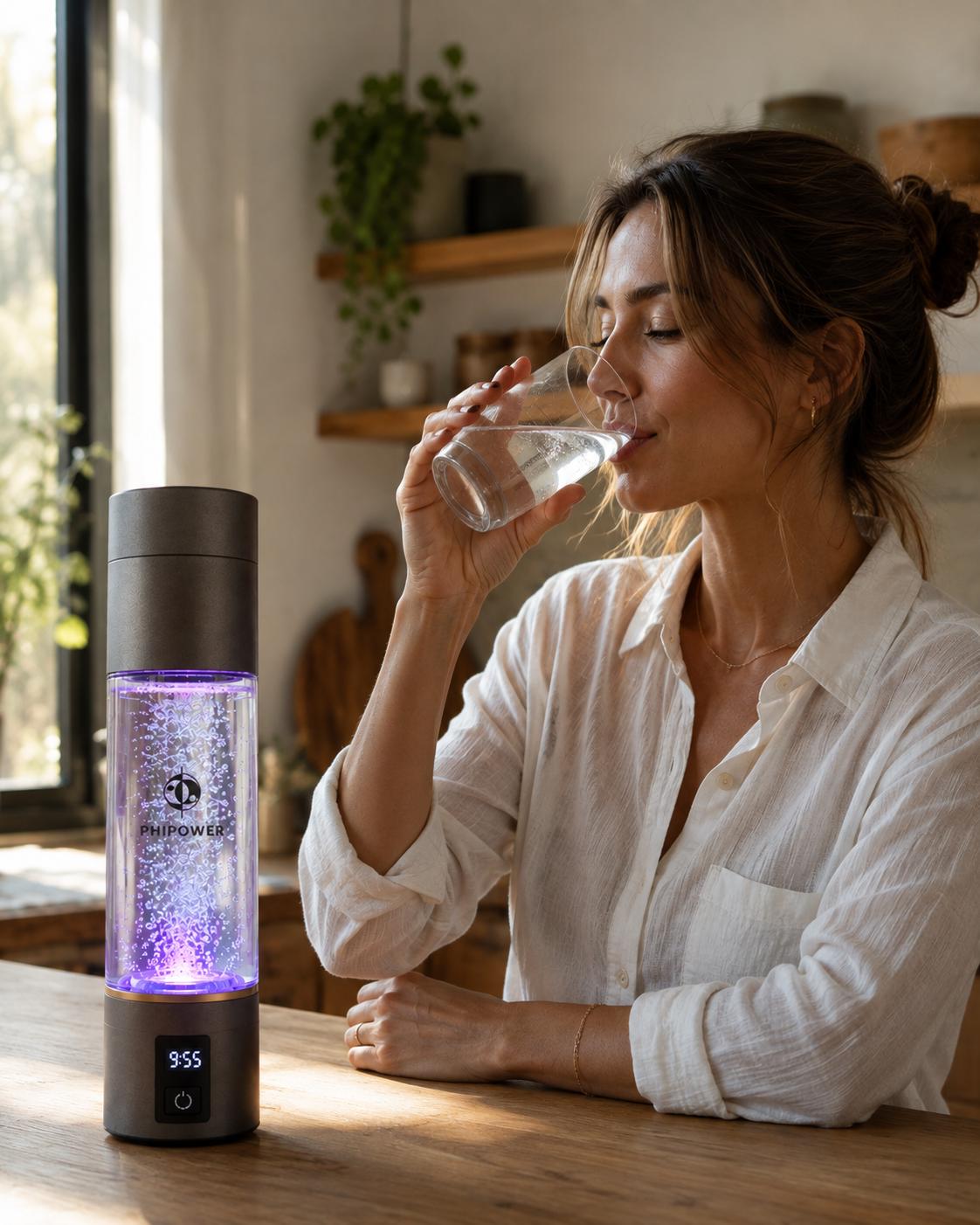
Phipower Hydrogen Water Bottle: a portable PEM/SPE option
φ · Fresh H₂ in a compact rechargeable formatThe Phipower Hydrogen Water Bottle combines a drinking compartment with a membrane-based hydrogen generator, for people who prefer preparing individual servings of freshly generated hydrogen-rich water.
What makes the design practical?
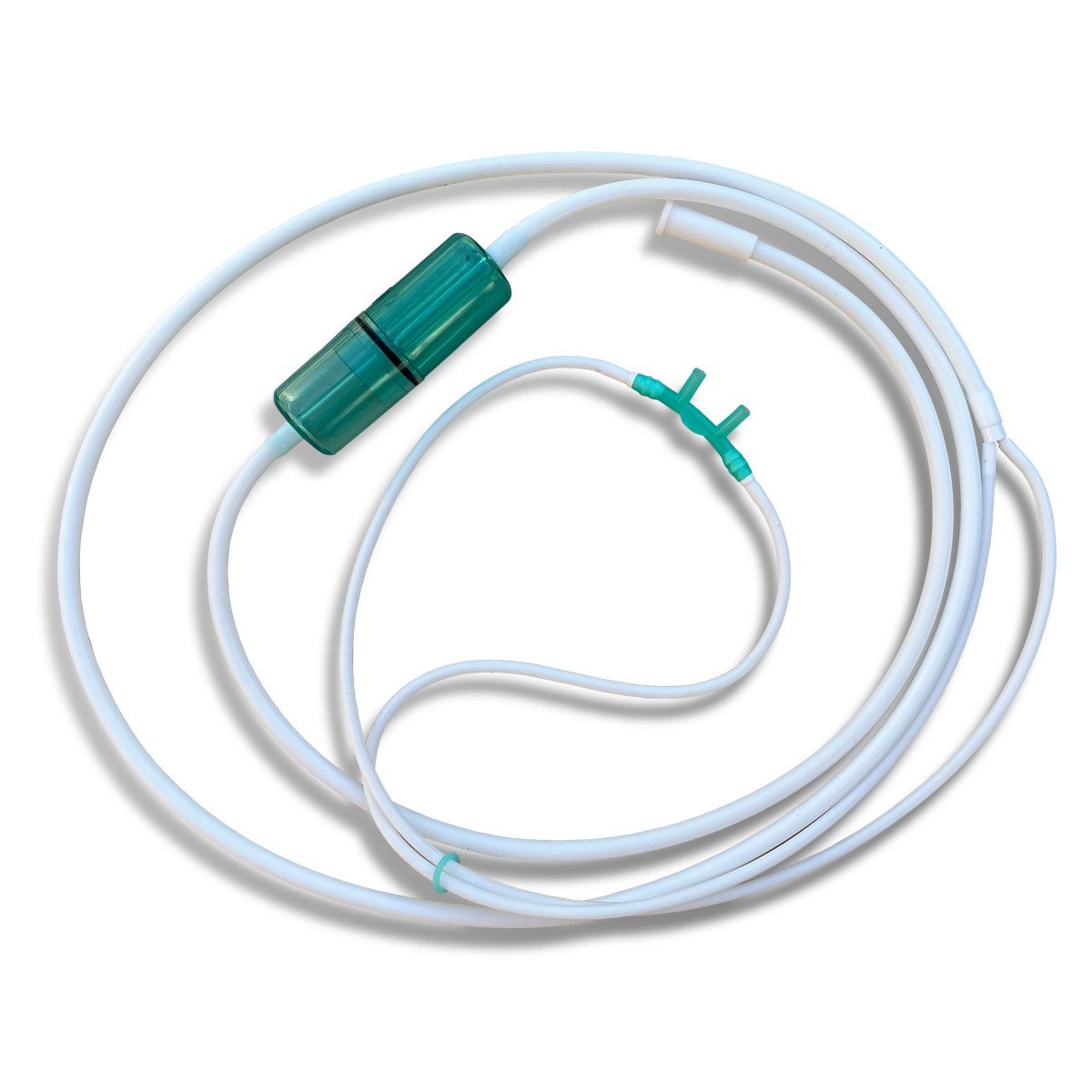
About the inhalation accessory: it is a separate feature from drinking hydrogen-rich water. Hydrogen gas is flammable and inhalation brings additional equipment and exposure considerations. The accessory is not a medical respiratory system, must not be connected to oxygen therapy equipment and should only be used according to the manufacturer’s instructions.
What consumers should verify
- ✓What dissolved H₂ concentration is consistently achieved?
- ✓Under which water and temperature conditions?
- ✓How much H₂ remains after opening?
- ✓Which product-specific safety tests are available?
- ✓What maintenance is required?
The advertised maximum of 6000 ppb is a technical specification, not proof of any health effect. Phipower hydrogen products are consumer wellness devices, not intended to diagnose, prevent, treat or cure disease.
Hydrogen water maker buying checklist
Compare products against the same criteria.
Simple decision rule: prioritise the product with better evidence of safety, reliable measured performance and accessible support. Do not automatically choose the highest advertised concentration, and do not pay extra for medical benefits that have not been established.
Frequently asked questions about choosing a hydrogen water maker
What is the best hydrogen water maker to buy?+
It depends on your priorities. Look for a reliable H₂-generation method, verified dissolved hydrogen concentration, appropriate drinking-water materials, straightforward maintenance and a supplier offering clear documentation and support.
What should I look for in a hydrogen water bottle?+
Focus on the actual dissolved H₂ concentration, generation technology, bottle capacity, food-contact materials, battery performance, cleaning requirements and warranty.
Is PEM/SPE the best hydrogen water technology?+
PEM/SPE is an established electrolysis technology suitable for compact rechargeable generators. Its presence alone does not guarantee a superior product; performance depends on the complete design.
Is a dual-chamber hydrogen water bottle better?+
A well-engineered dual-chamber system can help manage gas separation. The number of chambers alone does not prove safety or dissolved H₂ performance.
Is 6000 ppb better than 1500 ppb?+
At equal volume, 6000 ppb contains four times the dissolved H₂ concentration of 1500 ppb, assuming both are measured accurately. Greater health benefits have not been established.
How much hydrogen should a good hydrogen water maker produce?+
No dissolved H₂ concentration is established to guarantee a particular health outcome. For technical comparison, prioritise accurately measured, reproducible concentration over an unsupported target number.
Is a hydrogen water bottle worth buying?+
It may be worthwhile if you are specifically interested in preparing hydrogen-rich water and comfortable with the cost and maintenance. Meaningful health benefits beyond ordinary hydration have not been established for the general population.
Are hydrogen water makers safe?+
Safety depends on drinking-water quality, materials, electrolysis design, electrical protection and correct maintenance. A PEM/SPE label or BPA-free claim alone does not establish complete safety.
Does a hydrogen water maker remove contaminants?+
No. A hydrogen generator is not automatically a water purification device. Always use drinking water that is already safe.
Are expensive hydrogen water makers better?+
Not necessarily. More expensive equipment may offer extra features or capacity, but dissolved hydrogen performance and safety should be evaluated separately.
How long does a hydrogen water maker last?+
Lifespan depends on manufacturing quality, electrolysis components, water composition, operating conditions and maintenance. There is no universal service life.
Do hydrogen water makers require replacement filters?+
Some reusable generators need no routine cartridges, others use replaceable components. Check the manufacturer’s maintenance requirements.
Do hydrogen tablets work as well as electrical generators?+
Both can introduce molecular hydrogen into water. Performance depends on formulation, preparation conditions and measured dissolved concentration; neither is automatically superior.
Can I use tap water in a hydrogen water maker?+
Only if the device is designed for drinking-quality tap water. Some generators have stricter water requirements.
Is a larger hydrogen water bottle better?+
A larger bottle prepares more water per cycle but may be less portable. The right capacity depends on how you intend to use it.
Should I choose a glass or plastic hydrogen water bottle?+
Consider food-contact suitability, breakage resistance, gas retention, weight and closure design. Neither material automatically guarantees better hydrogen performance.
Do hydrogen water makers need platinum electrodes?+
Platinum is a useful hydrogen-evolution catalyst in suitable designs, but it is not the only factor in performance and not every device uses the same catalyst architecture.
Can an ORP meter verify a hydrogen water bottle?+
No. ORP is not a reliable direct measurement of dissolved H₂. Use an appropriate hydrogen-specific measurement method.
Can a hydrogen water maker be used for inhalation?+
Only if the device is specifically designed, documented and validated for that purpose. Hydrogen gas is flammable, and drinking-water generators should never be modified or improvised as respiratory equipment.
Does hydrogen water improve health?+
Some experimental and clinical studies have investigated possible biological effects, but broad health benefits have not been conclusively established and consumer devices should not be presented as medical treatments.
Which hydrogen water maker is best for travel?+
A compact rechargeable model with a secure bottle, simple charging, suitable capacity and clear cleaning instructions. Follow battery transport rules and the product’s operating requirements.
Explore the Phipower Hydrogen Water Knowledge Cluster
Choosing a generator is easier when you understand the science and technology behind it.
- Molecular Hydrogen (H₂): The Complete GuidePhysical properties, current biological research and delivery methods.Read →
- Hydrogen Water: The Complete GuideHow hydrogen-rich water is generated and how concentration, technology and safety fit together.Read →
- Hydrogen Water Benefits: What Does the Science Actually Say?Preliminary findings versus established clinical benefits.Read →
- How Does a PEM/SPE Hydrogen Water Maker Work?Electrolysis, membranes, electrodes and hydrogen production.Read →
- Hydrogen Water Concentration: 1500 vs 3000 vs 6000 ppbInterpreting specifications, solubility and measurement methods.Read →
- How Long Does Hydrogen Stay in Water?Retention, container materials, temperature and fresh preparation.Read →
- Is Hydrogen Water Safe?Drinking-water safety, by-products, maintenance and precautions.Read →
- Hydrogen vs Alkaline vs Structured WaterThree different water properties, measurements and technologies.Read →
- Structured Water: The Complete GuideMolecular hydrogen versus water structure, vortexing and vitalized water.Read →
Conclusion: choose measurable quality over impressive claims
The best hydrogen water maker is not necessarily the one with the highest ppm, the most expensive materials or the longest list of claimed benefits. It combines reliable technology with practical design and transparent information.
Hydrogen-rich water’s physical properties are established; its proposed health effects need further clinical investigation.5
An informed purchase begins with understanding the technology, knowing what can be measured and recognising where the evidence remains incomplete.
A well-designed hydrogen water maker makes fresh hydrogen-rich water convenient. Its quality should be shown through engineering, testing and transparent information, not promises that exceed the evidence.
Scientific and technical references
-
U.S. Department of Energy. Hydrogen Production: Electrolysis. Read the technical overview
Water electrolysis, proton exchange membranes and electrode reactions. -
National Institute of Standards and Technology. Hydrogen: Henry’s Law Data. NIST Chemistry WebBook. NIST Chemistry WebBook
Temperature dependence and solubility of molecular hydrogen in water. -
International Hydrogen Standards Association. Oxidation Reduction Potential (ORP). Read the measurement guidance
Why ORP cannot reliably quantify dissolved hydrogen. -
European Commission. Food Contact Materials Legislation. European Commission — Food Contact Materials
Regulation (EC) No 1935/2004 and requirements for food-contact materials. -
Dhillon G. et al. (2024). Hydrogen Water: Extra Healthy or a Hoax? A Systematic Review. International Journal of Molecular Sciences, 25(2), 973. DOI: 10.3390/ijms25020973
Systematic review of hydrogen-rich water research and its limitations.
Scientific, technical and commercial disclaimer: this article is provided for educational and purchasing guidance. Performance comparisons should be based on appropriate measurements and product-specific documentation. Manufacturer specifications do not constitute independent verification. Research into hydrogen-rich water is ongoing and no specific health outcome is guaranteed. Phipower hydrogen products are consumer wellness devices, not medical treatments. Always begin with safe drinking water and follow the instructions supplied with your equipment.